


How Weatherproof Patio Covers Protect Your Outdoor Space
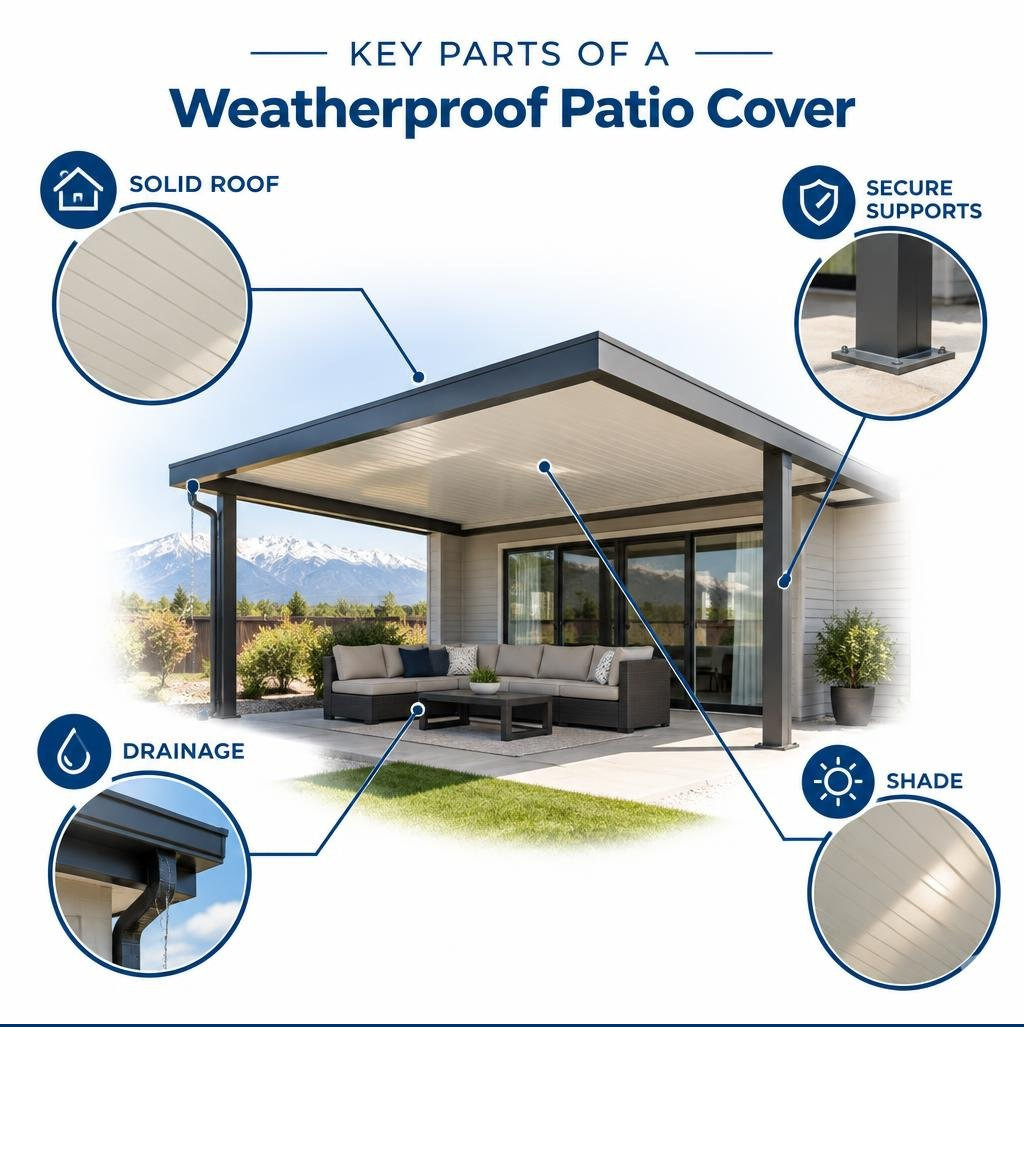
Weatherproof patio covers work best when a solid roof, secure supports, and integrated drainage systems are specifically designed for local wind gusts and seasonal snow accumulations. For reliable year-round use across Utah backyards, choosing an engineered cover sized precisely for your patio footprint and keeping its perimeter gutters clear provides dependable protection. A well-built solid overhead roof delivers dense cooling shade and keeps direct rain, sleet, and falling snow off the outdoor living space below, though natural wind-driven precipitation can still reach an open patio perimeter.
We’re Awnings Unlimited, a Salt Lake City-based family business that has installed custom outdoor shade structures and protective awnings since 1976. Our decades of hands-on experience with Weatherproof patio covers help local homeowners plan for lasting shade, intense sun defense, and demanding Utah winters.
Comparing Weatherproof Patio Covers: Materials, Solid Structures, and Ratings
When you set out to create a sheltered, four-season outdoor retreat, selecting the right structural materials makes all the difference for performance and longevity. In regions like Northern Utah and across the Wasatch Front, residential backyards regularly face intense high-elevation summer sun, sudden mountain downpours, and heavy winter snowpacks. Temporary shade solutions or lightweight covers often tear, sag, or fail completely under severe mountain weather loads.
Investing in engineered solid aluminum patio covers ensures permanent structural resilience, maximum UV reflection, and dependable long-term durability without the continuous maintenance, peeling paint, or resealing demanded by traditional exterior timber framing.
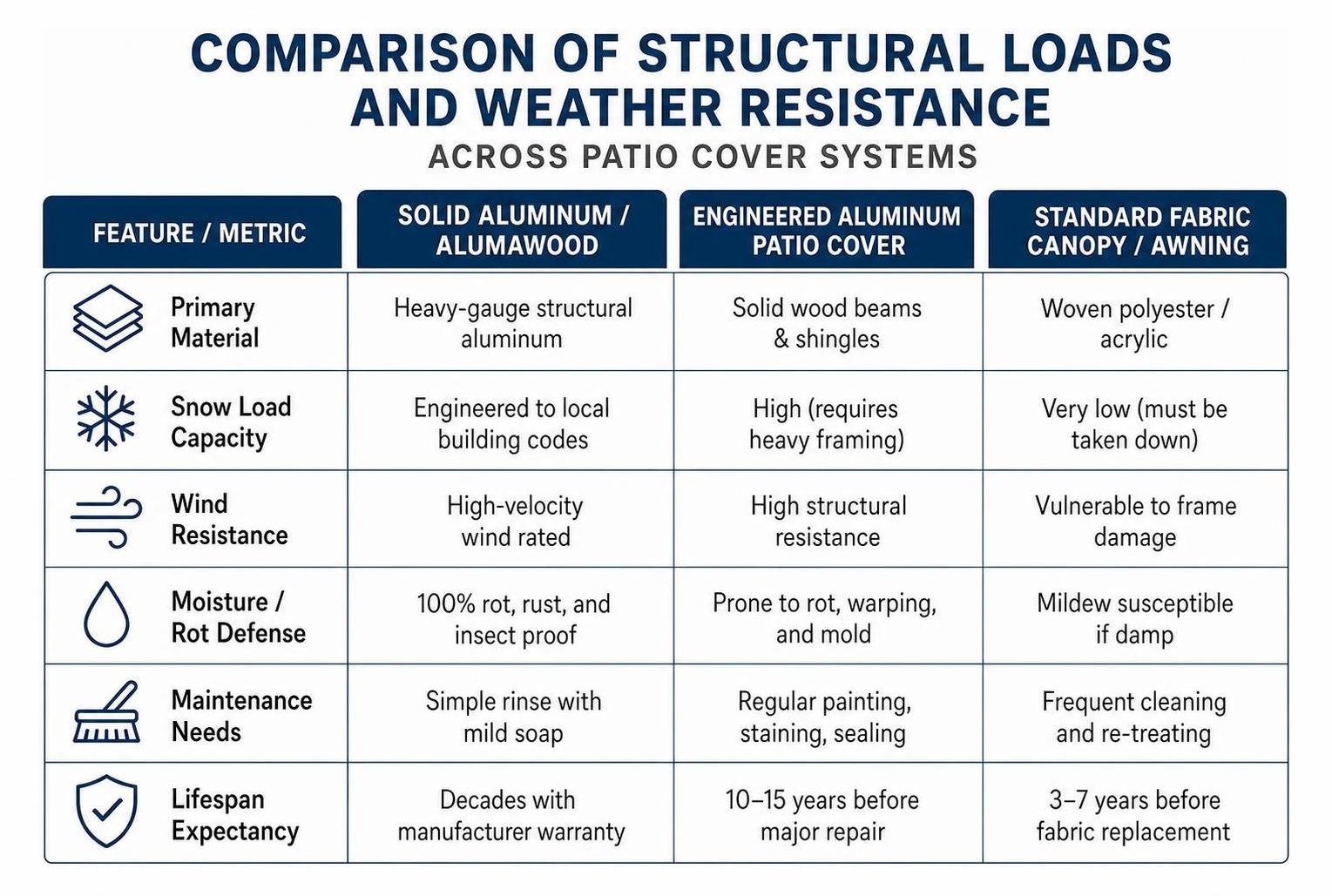
| Feature | Solid Aluminum / Alumawood Patio Covers |
|---|---|
| Primary Material | Heavy-gauge structural aluminum |
| Snow Load Capacity | Engineered to local building codes |
| Wind Resistance | High-velocity wind rated |
| Moisture / Rot Defense | Rot-, rust-, and insect-resistant |
| Maintenance Needs | Simple rinse with mild soap |
| Lifespan Expectancy | Decades with manufacturer warranty |
When designing a permanent roof extension, local municipal compliance is critical. Professional installations align directly with structural codes, including local standards outlined in regional building frameworks such as APPENDIX I PATIO COVERS – 2024 UTAH STATE BUILDING …. These vital standards govern essential structural elements, from minimum post spacing and footing depth to live snow and wind uplift requirements.
Understanding Weather Resistance in Patio Cover Roofs
A truly weatherproof structure requires more than just durable panels; it depends on an integrated moisture-management system engineered to handle volume. Even the strongest materials will cause property issues if water puddles overhead or runs down exterior walls.
- Precision Seams and Flashing: High-grade roof systems use interlocking panel joints sealed with commercial flashing where the structure connects to your home’s ledger board, preventing water penetration along siding or exterior stucco.
- Engineered Roof Slope: A gentle, calculated pitch ensures that heavy rains and melting winter snow drain smoothly away from the building rather than pooling across the roof deck.
- Integrated Drainage: Built-in perimeter channels capture runoff and guide moisture away via heavy-duty downspouts, protecting your concrete slab, paver foundation, or deck footings from soil erosion.
Homeowners exploring clean, contemporary architectural styles often select non-insulated patio roof panels to achieve reliable overhead shelter and efficient runoff redirection without unnecessary bulk.
Choosing Structural Patio Covers for Year-Round Shade
Beyond keeping out driving rain and winter snow, a high-performance patio cover functions as an essential thermal shield for your deck. During high-altitude summer months in places like Salt Lake City, Park City, Sandy, or Draper, unshaded concrete and stone absorb intense heat, making outdoor living areas uncomfortably hot.
Choosing engineered Alumawood patio cover structures delivers the rich, embossed appearance of finished wood craftsmanship without the chronic risk of splintering, cracking, or termite infestation. These advanced systems reflect intense solar radiation, significantly reducing ambient temperatures on your deck while protecting outdoor furniture and grilling equipment from UV fading. This year-round shelter expands your usable living footprint and enhances your home’s long-term property value.
Engineering Outdoor Spaces for High Winds, Snow, and Severe Storms
Winter conditions along the Wasatch Range put structural shade systems to the ultimate test. Sub-freezing temperatures, rapid freeze-thaw cycles, and heavy, wet snowpack require uncompromising structural engineering. Solid patio covers must reliably withstand substantial seasonal weight loads without sagging, buckling, or shifting over time.
Managing high volumes of runoff from melting snow also requires integrated flat pan awning systems with gutters. These specialized heavy-gauge systems gather meltwater along the roofline channels and direct it safely away from foundations, walkways, and patio seating areas, preventing slippery ice dams on surfaces below.
Sizing and Securing Weatherproof Patio Covers for High-Wind Zones
Canyon winds emerging through valleys in areas like Bountiful, Centerville, Farmington, and Spanish Fork can produce sudden, forceful gusts. A properly engineered patio structure must resist both downward gravity loads and intense dynamic wind uplift forces that can tear unanchored fixtures from their mountings.
Securing a structural patio cover against intense wind requires:
- Accurate Sizing: Sizing the perimeter profile to ensure balanced load distribution across the entire structural roof framework.
- Heavy-Duty Concrete Footings: Anchoring structural support posts directly into reinforced concrete piers poured below the local frost line.
- Engineered Support Hardware: Fastening beams and roof pans with engineered awning post supports and high-tensile brackets designed specifically to withstand severe wind gusts and shear loads.
Winter Performance and Snow Load Considerations
In high-elevation mountain communities like Heber City and Park City, building codes mandate that shade structures handle substantial snow accumulations. Low-grade covers or unanchored shade systems can buckle under sudden winter blizzards.
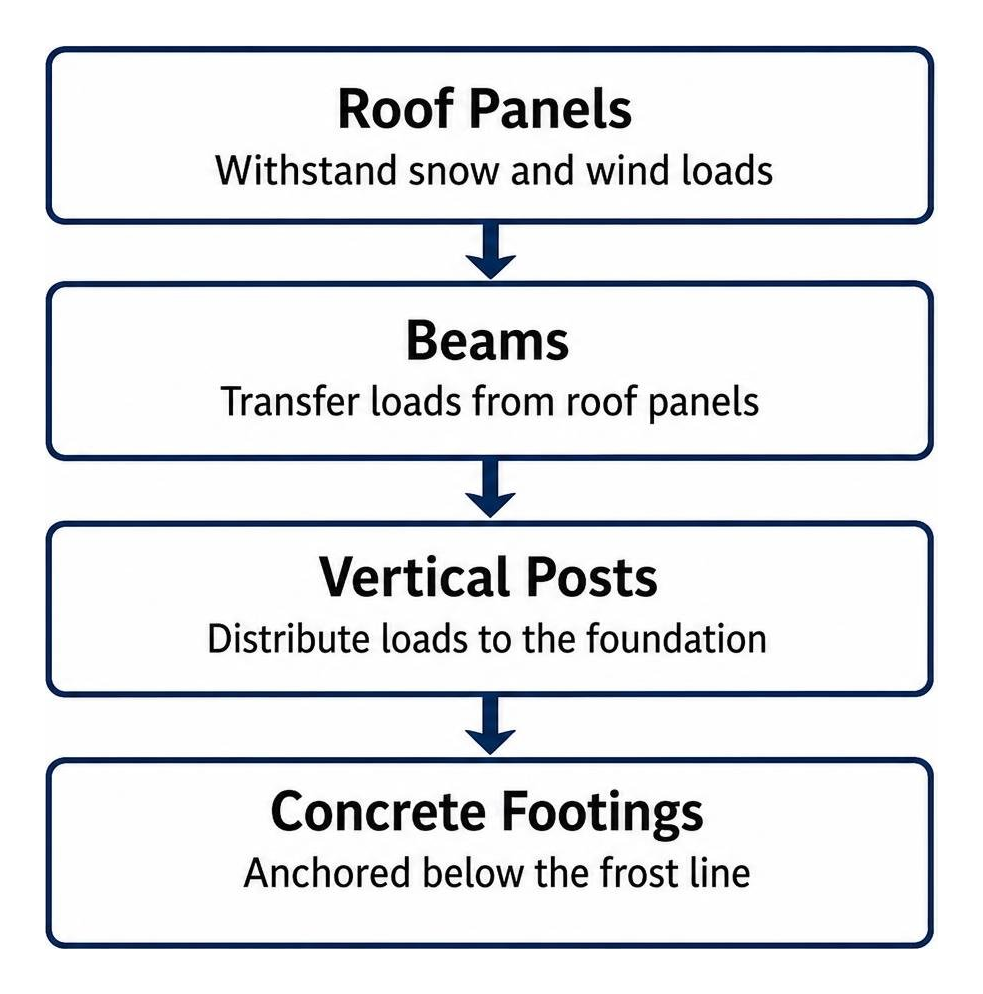
When planning your backyard shade project, structurally sound attached patio covers anchor directly into your home’s structural wall studs or rafter tails using heavy-duty lag bolts. This creates a solid architectural connection that distributes snow loads evenly down through reinforced vertical posts to the ground.
To keep your system performing smoothly throughout winter, simply sweep away excessive drift accumulation and keep downspouts clear of autumn leaves before freezing temperatures arrive.
Preventing Moisture Buildup, Mold, and UV Degradation
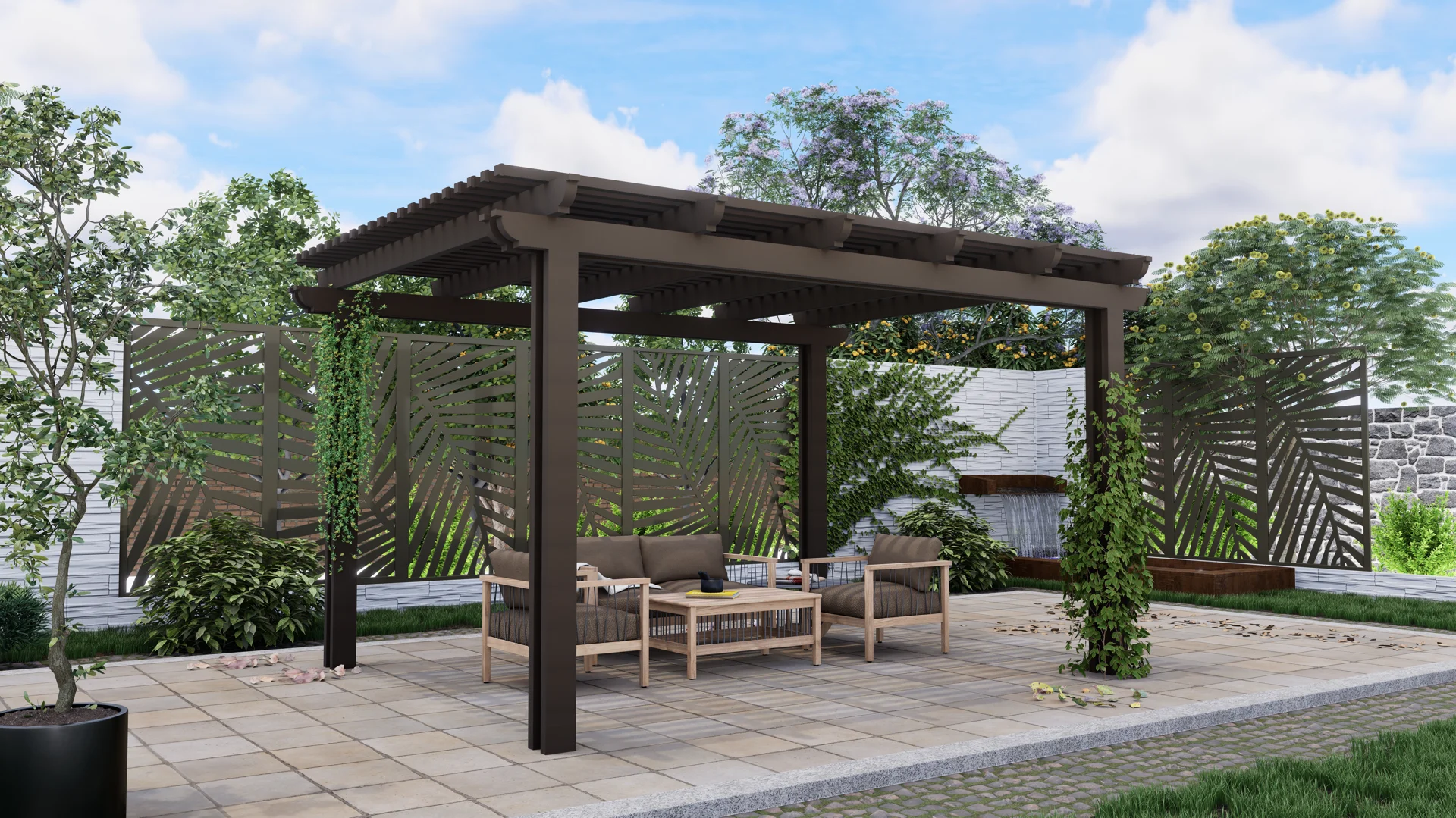
While a solid patio roof protects your outdoor area from overhead weather, proper moisture management under the cover is just as vital for long-term comfort. Trapped humidity combined with stagnant air can create an undesirable greenhouse effect, causing condensation to form beneath cold roof panels and leading to mildew on outdoor furniture, rugs, and wood decking.
Open-air structural designs promote natural cross-ventilation, allowing moisture to evaporate freely while blocking overhead precipitation and harsh solar glare. For patios that need more sunlight and airflow, an open-sided structural patio cover can provide dependable overhead protection while allowing natural vertical circulation throughout warm afternoons.
To preserve your outdoor furniture and cushions under any covered patio:
- Promote Airflow: Arrange seating and dining pieces with several inches of clearance from exterior walls to maintain continuous air movement across the patio deck.
- Store Cushions in Winter: While high-density outdoor fabrics resist moisture, storing soft cushions indoors or in dry deck boxes during winter prevents trapped condensation from causing mildew or staining.
- Keep Surfaces Dry: Clean up standing water or garden debris after severe storms so your patio floor can dry thoroughly and maintain its clean finish.
Frequently Asked Questions About Weatherproof Patio Protection
Can patio covers withstand freezing winters?
Yes. Custom-engineered structural patio covers made from Alumawood and heavy-gauge structural aluminum easily handle sub-freezing temperatures, ice formation, and heavy snow loads. Unlike temporary or non-structural covers that must be removed before winter arrives, permanent structural covers remain firmly in place year-round. To maintain peak performance throughout the coldest months, keep drainage channels clear of fallen leaves and store plush outdoor cushions indoors to protect them from winter condensation and dampness.
How does airflow help prevent moisture buildup under patio covers?
Air circulation is the most effective defense against trapped condensation, mildew, and stale heat. When warm, humid air gets trapped under a non-vented cover, sudden drops in evening temperature cause moisture to condense on metal surfaces and patio furniture. Structural patio covers feature an open-sided design that encourages natural breezes, balancing ambient temperatures beneath the canopy and allowing humidity to dissipate quickly before mold can form.
What is the most effective way to clean and maintain patio covers?
Maintaining an aluminum or Alumawood patio cover requires very little time and effort:
- Rinse Surface Dust: Use an ordinary garden hose to rinse away loose dust, seasonal pollen, and surface dirt every few months.
- Wash with Mild Soap: For stubborn spots, scrub gently using a soft-bristled brush with a mixture of warm water and mild dish soap to lift grime.
- Clear the Gutters: Remove leaves and twigs from the drainage gutters and downspout openings each spring and autumn to prevent blockages.
- Air Dry: Allow the clean surfaces to air-dry naturally in the breeze. Avoid harsh chemical cleaners, abrasive scouring pads, or high-pressure power washers, which can damage the durable factory-baked finish.
Conclusion
Protecting your backyard from blazing summer sun, torrential rain, and heavy winter snow requires a thoughtfully engineered structural solution. A permanent, professionally engineered structural patio cover transforms your outdoor area into a reliable, four-season living space for family and guests.
Since 1976, Awnings Unlimited has designed and built custom, heavy-duty shade structures, carports, and patio covers for homeowners across Salt Lake City and the surrounding communities. When you’re ready to upgrade your backyard with a durable, low-maintenance shade system, schedule a consultation for custom weatherproof patio covers with our experienced team.