

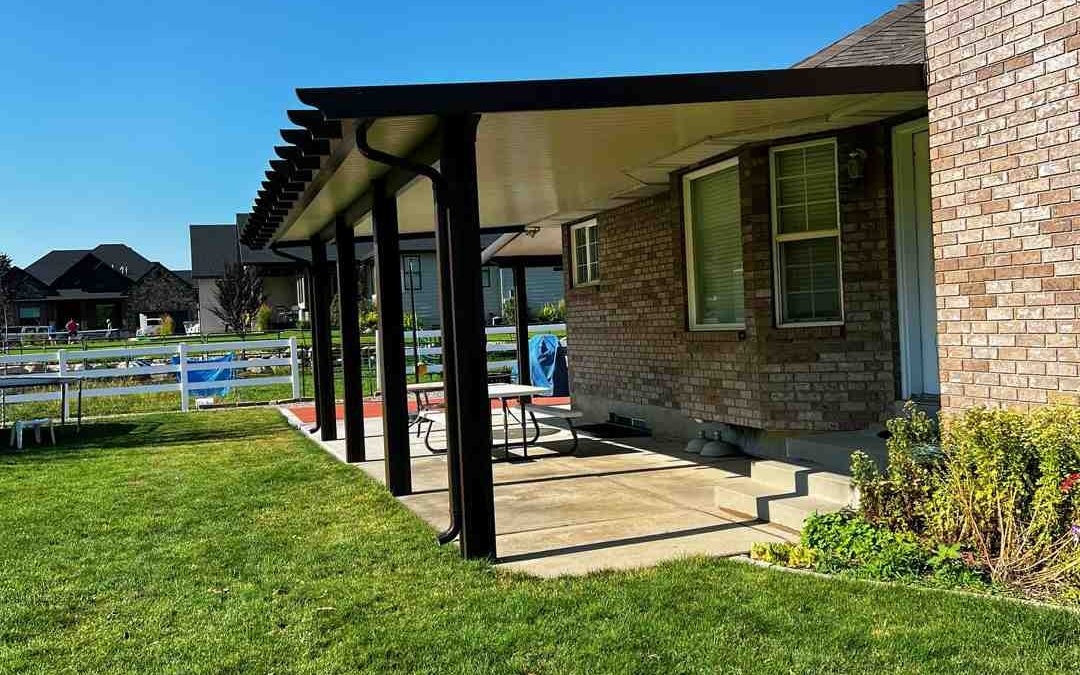
Understanding the Role of an Awning with Gutter
When we talk about an awning with gutter, we are describing more than just a piece of metal overhead. We are looking at a comprehensive water management system. For homeowners in the Salt Lake City area, where we see everything from intense summer downpours to heavy winter snow, managing moisture is the difference between a long-lasting outdoor oasis and a maintenance nightmare.
The primary purpose of an awning with gutter is to seal the gap between the structural patio cover and your home while providing a clear path for runoff. Without a rain gutter, water follows the path of least resistance–which often means it drips directly onto your door handle, pools at the base of your sliding glass door, or splashes back against your siding.
In stormy conditions, a high-quality gutter system improves functionality by:
- Gap Sealing: Structural systems use specialized flashing and rubber gaskets to close the “drip zone” between the home’s exterior wall and the awning frame.
- Entryway Dryness: By directing water sideways, you can enter and exit your home without walking through a mini-waterfall.
- Foundation Safety: Concentrated water runoff can cause soil erosion. A gutter system allows you to direct that water into a downspout and away from your home’s footings.
For those considering a new project, awning installation should always account for how water will exit the roof panels.
Choosing the Right Awning with Gutter Materials
The materials you choose for your gutter and brackets will dictate how often you have to climb a ladder for repairs. At Awnings Unlimited, we prioritize durable, weather-resistant materials like Alumawood and galvanized steel.
Galvanization involves coating the metal with zinc, which acts as a “sacrificial anode.” If the bracket is scratched, the zinc corrodes first, protecting the structural steel underneath. This is vital in Utah’s climate, where road salt and moisture can quickly eat through standard painted metal.
Comparison of Bracket Durability:
| Feature | Standard (Non-Galvanized) | Galvanized Brackets |
|---|---|---|
| Life Expectancy | 2-4 Years | 5+ Years |
| Warranty | 1 Year | 2 Years |
| Corrosion Resistance | Low | High (Zinc Coated) |
| Best For | Dry, sheltered areas | Coastal or high-moisture areas |
For structural patio covers, we often recommend Alumawood. It provides the aesthetic beauty of wood but includes the Aluma-Shield paint system, which resists weathering and keeps the integrated gutters looking new for years without the need for repainting.
Typical Dimensions and Specifications
Getting the dimensions right is the difference between a gutter that works and one that overflows. When we design an awning with gutter, we look at several key specifications:
- Standoff Distance (B-Dimension): This is the horizontal distance the bracket must reach to clear an existing house gutter or obstacle.
- Mounting Height (C-Dimension): Structural brackets often require significant mounting height, sometimes up to 400mm, to ensure stability under heavy snow loads.
- Gutter Width: Structural gutter systems are custom-sized to the length of the patio cover, often utilizing 5-inch or 6-inch troughs to ensure full coverage and prevent overflow during heavy Utah storms.
- Panel Thickness: For structural covers, heavy-duty panels are used to provide light transmission while remaining strong enough for gutter-integrated frames.
Installation Methods for Structural Patio Covers
Installing an awning with gutter is a precise process. While some kits are marketed for DIY assembly, a full structural patio cover typically requires a more robust approach. For a single person with basic DIY skills, a standard aluminum awning installation can take approximately 12 hours.

When we perform a professional awning installation, we have to consider the substrate of the home.
- Vinyl Siding: Requires specialized spacers and long screws to ensure the bracket is anchored to the house studs, not just the plastic siding.
- Board and Batten: Often requires a mounting board to create a flat, unified space for the brackets to sit flush.
- Masonry/Brick: Requires high-quality masonry bits and anchor kits to ensure the weight of the awning (and potential snow load) is safely supported.
Step-by-Step: Installing Your Awning with Gutter
If you are tackling a structural gutter kit with an integrated system, follow these general steps:
- Leveling: Use a laser level to mark your bracket heights. Even a slight tilt in the wrong direction will cause water to pool in the center of your gutter rather than flowing to the downspouts.
- Sealing: Apply a hidden rubber gasket or high-grade silicone between the awning frame and the wall surface. This prevents water from seeping behind the structure.
- Attachment: For permanent residential structures, the gutter is typically integrated into the header beam or attached via heavy-duty brackets to the fascia.
- Downspout Alignment: Ensure the gutter exit is clear and aligned with your downspout or drainage area.
Proper awning installation ensures that the “smart locking” systems found in modern structural awnings stay secure even when the gutters are full of rainwater.
Overcoming Challenges with Low Rooflines
One of the most common questions we get in Utah is, “Can I have a structural awning if I live in a bungalow?” Many homes have low fascia boards or rooflines that don’t leave much room for a standard wall mount.
This is where gutter brackets become essential. These specialized brackets allow us to mount the awning above the existing gutter line or onto the roof itself using an elevated roof mount.
- Unobstructed Views: By raising the mounting point, you maintain a higher ceiling under the patio cover.
- Proper Pitch: An awning needs a certain slope to ensure water actually runs into the gutter. If the mounting point is too low, the awning sits too flat, leading to water pooling and structural strain.
- Outward-Opening Doors: Elevated mounts provide the necessary clearance so your back door doesn’t hit the awning frame when you open it.
Performance Standards and Weather Resistance
An awning with gutter must be tough. In the Wasatch Front, our structural covers need to handle more than just a light spring shower.
- Wind Resistance: High-quality structural covers are rated to withstand winds up to 93 mph.
- Snow Load: Structural covers must support significant weight. A rating of 37 lbs/ft2 is a standard benchmark for ensuring your patio cover doesn’t buckle during a heavy Salt Lake City winter.
- UV Protection: While the gutter handles the water, the panels handle the sun. Quality panels block up to 100% of harmful UV rays while still allowing light transmission so your patio doesn’t feel like a cave.
Knowing how to winterize your awning and protect it from the elements is key to maintaining these structural performance standards year-over-year.
Maintenance and Longevity of Gutter Systems
Even the best awning with gutter requires a little TLC. If the gutter is clogged with leaves, it’s just a heavy, metal bucket attached to your house.

To ensure longevity, we recommend:
- Debris Removal: Clean your gutters at least twice a year–once in late autumn and once in spring.
- Leak Inspection: Check the seals where the awning meets the house. If the caulking is cracking, it’s time for a touch-up.
- Rust Prevention: If you have non-galvanized brackets, check for chips in the paint and touch them up immediately to prevent rust from spreading.
Consistent awnings maintenance is the best way to protect your investment. For more tips, see our guide on awning maintenance extending your awnings life. During the colder months, winter outdoor space maintenance is especially important to prevent ice damming in your awning gutters.
We cannot overstate the importance of proper maintenance for your utah awning; the dry air and intense sun here can be brutal on sealants and finishes.
Frequently Asked Questions about Awning Drainage
What are the benefits of a seamless awning with gutter system?
Seamless gutters are integrated directly into the frame of the patio cover (like our Alumawood systems). The main benefits are:
- Leak Minimization: Fewer joints mean fewer places for water to escape.
- Curb Appeal: The gutter looks like a decorative crown molding rather than an add-on pipe.
- Integrated Aesthetics: The colors match perfectly with the rest of the structure.
- Lower Maintenance: Without seams, there are no spots for rust or debris to snag and build up.
For more on keeping your system in top shape, check out our resources on proper maintenance for your utah awning.
How do I measure for a gutter bracket standoff?
To measure the “B-Dimension” (standoff), you need to measure the horizontal distance from the wall where the bracket will be bolted to the outermost edge of your house’s existing gutter. You want the bracket to “reach over” the gutter so the awning can sit in front of or above it. Always add a small buffer (about 10-20mm) to ensure the bracket doesn’t rub against your home’s guttering.
Conclusion
An awning with gutter is one of the smartest upgrades you can make for your outdoor living space. Whether you are looking for a sleek structural entryway cover to keep your door dry or a massive Alumawood patio cover to host summer BBQs, proper drainage is the key to comfort and structural longevity.
At Awnings Unlimited, we pride ourselves on providing the Wasatch Front with custom solutions that stand up to our unique climate. From Bountiful to Draper and everywhere in between, we bring nearly 50 years of experience to every installation. Our patio covers don’t just provide shade; they provide peace of mind with limited lifetime warranties and professional-grade water management.
Ready to upgrade your outdoor space? Create your outdoor oasis with a custom lattice awning or pergola and say goodbye to drips for good!