

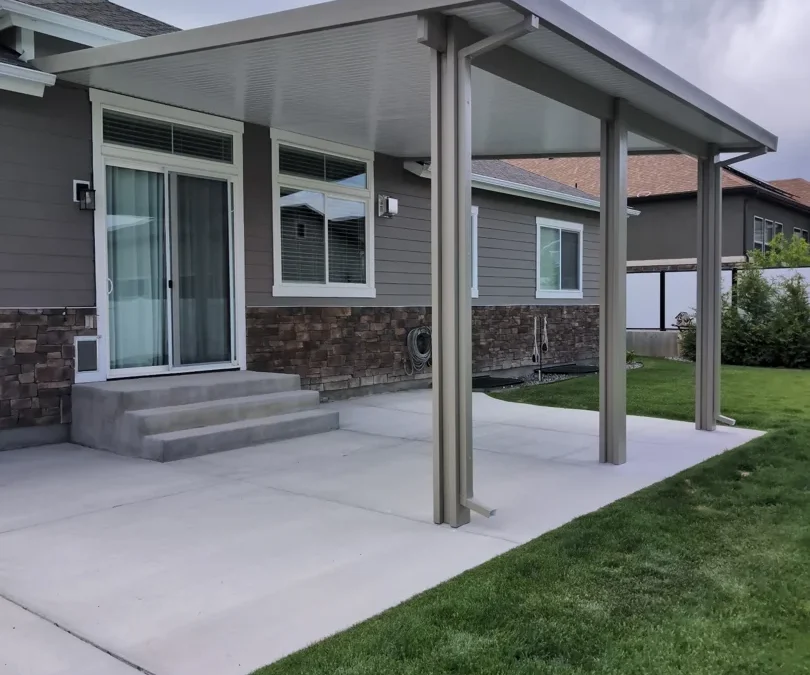
What You Should Know Before Choosing Non-Insulated Patio Covers
Non-insulated patio covers are solid roof structures built from aluminum panels — no foam core, no thermal barrier — designed to block sun and rain at a lower cost than insulated alternatives.
Quick answer: Are non-insulated patio covers worth it?
| Factor | Non-Insulated | Insulated |
|---|---|---|
| Cost | Lower (30-50% less) | Higher upfront |
| Heat reduction | Shade only | Foam core blocks heat transfer |
| Rain noise | Audible | Significantly reduced |
| Weight | Lighter, easier to install | Heavier construction |
| Span capability | Longer spans possible | Slightly more limited |
| Walk-on access | Not recommended | Yes (engineered panels) |
| Best for | Mild climates, budget builds | Year-round, extreme weather |
The short version: If you want reliable shade and rain protection without spending top dollar, a non-insulated cover is a smart, practical choice — especially in mild climates. If you need year-round comfort in extreme heat or cold, insulated is worth the extra investment.
Now for the longer story. Most homeowners come to this decision with one real question: “Am I leaving something important on the table by going non-insulated?” The answer depends entirely on how you plan to use your outdoor space, where you live, and what your budget actually allows.
At Awnings Unlimited, we’ve been installing patio covers across Northern Utah since 1976 — including a wide range of non-insulated patio covers using Alumawood by Amerimax — so we’ve seen which systems work, and where the trade-offs show up. In the sections below, we’ll walk you through everything you need to know to make a confident decision.
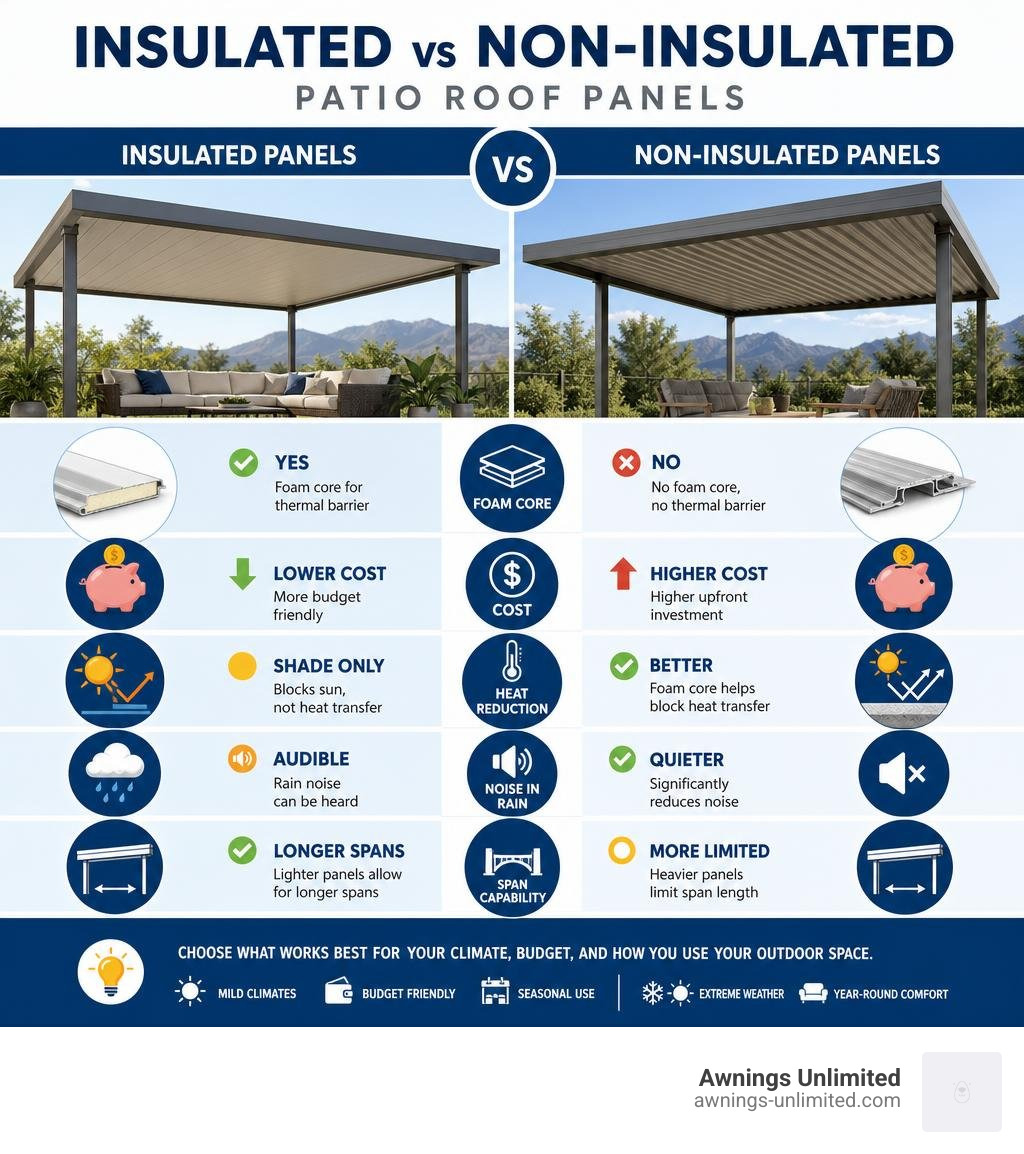
Understanding the Basics of Solid Patio Covers
When you begin researching patio covers, the sheer volume of terminology can feel a bit overwhelming. You will hear terms like “flat pan,” “V-pan,” “insulated panels,” and “extruded components” thrown around. Let’s demystify these basics so you can shop with confidence.
Solid patio covers are engineered to provide total overhead protection. Unlike pergolas or lattice covers, which feature open slots to let filtered sunlight through, a solid cover is completely watertight. This means that whether we are dealing with a sudden July thunderstorm along the Wasatch Front or a heavy winter snowstorm, your patio furniture, outdoor grill, and guests remain completely dry.
To build a solid cover, manufacturers utilize interlocking roof panels that slide together to form a seamless, leakproof barrier. The structural integrity of the entire cover relies on these panels, the heavy-duty header beams, and the supporting posts. Because we experience all four seasons in Utah, these structures must be engineered to handle heavy snow loads in the winter and high winds coming off the mountains.
What Are Non-insulated Patio Covers?
A non-insulated patio cover is constructed using single-layer aluminum panels without any interior foam insulation. These panels are typically six inches wide and feature an interlocking tongue-and-groove design. When assembled, they create a clean, continuous flat pan or V-pan ceiling that looks highly finished from underneath.
These covers are designed primarily to provide shade and complete rain and snow protection. Because aluminum is highly reflective, a solid aluminum cover blocks 100% of direct UV rays, instantly making your patio more usable during the hot summer months. However, because there is no thermal barrier inside the panels, they do not block the radiant heat of the sun from warming the air directly beneath the cover.
If you are trying to decide which style fits your backyard aesthetic, you can Learn more about patio cover types to see how non-insulated designs stack up against modern, freestanding, or louvered alternatives.
Insulated vs. Non-Insulated: Key Differences
The primary differentiator between these two options comes down to a single element: the thermal barrier.
Insulated patio covers feature a “sandwich” panel design. This consists of a high-density expanded polystyrene (EPS) foam core (usually 3 to 6 inches thick) pressure-bonded between two heavy-gauge aluminum skins. This foam core acts as an insulating shield, preventing heat from radiating downward onto your patio in the summer, and keeping warmth from escaping if you use outdoor heaters in the cooler months.
Non-insulated covers, on the other hand, are single-layer aluminum sheets. While they offer identical protection from rain, snow, and direct sunlight, they do not have the thermal resistance (R-value) of insulated panels.
Here is how that structural difference impacts performance:
- Weight Load and Structural Strength: Insulated panels are incredibly rigid due to their composite construction. They can easily support the weight of a person walking on them for maintenance. Non-insulated panels are lightweight and flexible; walking directly on them is highly discouraged as it can dent the aluminum and compromise the interlocking seams.
- Acoustics: During a heavy rainstorm, a non-insulated aluminum cover will produce a distinct drumming sound. Some homeowners find this sound cozy and relaxing, while others prefer the muffled, quiet performance of an insulated panel.
- Cost Realities: Because they use fewer materials and require a less complex manufacturing process, non-insulated systems are significantly more affordable.
For a deeper dive into the fundamental principles of buying a cover, check out our Patio Covers 101: Everything You Need to Know Before You Buy.
Choosing Non-insulated Patio Covers: Benefits and Drawbacks

Like any home improvement project, choosing the right material is about balancing your practical needs with your budget. If you are looking to shade a large area without breaking the bank, non-insulated aluminum is tough to beat. If you are shopping for options in Northern Utah, you can Explore our patio cover options to see what styles work best for our unique climate.
Advantages of Non-Insulated Systems
For many homeowners in Salt Lake City, Bountiful, and Sandy, non-insulated patio covers offer the perfect sweet spot of value and function. Here are the main reasons why:
- Unbeatable Affordability: On average, non-insulated covers are 30% to 50% less expensive than their insulated counterparts. For example, while a professionally installed 12×12 insulated cover can easily cost between $4,500 and $8,000, a non-insulated version provides the exact same footprint of dry, shaded space at a fraction of the cost.
- Longer Span Capabilities: Because non-insulated aluminum panels are incredibly lightweight, they place less stress on the header beams and posts. This allows the system to span further distances between support posts without sagging, giving you a cleaner, more open view of your backyard with fewer vertical posts in the way.
- Simplified DIY Assembly: If you are a handy homeowner who loves a weekend project, non-insulated kits are highly accessible. The lightweight nature of the aluminum means that transporting, lifting, and fastening the pieces can easily be handled by one to two people using basic household tools. You can find high-quality prefabricated options through resources like Solid Non-Insulated Patio Covers .
- Low Maintenance and High Durability: Aluminum does not rust, rot, warp, or crack. Unlike wood, which requires constant sanding, staining, and painting to survive Utah’s snowy winters and dry summers, high-quality aluminum features a baked-on paint finish that stays beautiful for decades. It is also completely impervious to termites and other wood-boring insects.
- Excellent UV and Weather Protection: You get complete shelter from rain and snow, and 100% protection from skin-damaging UV rays. Your outdoor furniture, rugs, and grill will be shielded from the sun, preventing fading and cracking.
To see how these benefits can be tailored to match your home’s architecture, Explore custom patio cover designs.
Limitations to Keep in Mind
To make an honest decision, you also need to understand the limitations of a non-insulated system:
- Heat Radiation: On a scorching 100-degree July day in West Jordan or Salt Lake City, the aluminum panels will absorb heat from the sun. Because there is no foam core to block it, some of this heat will radiate downward. While the space will be significantly cooler than standing in direct sunlight, it will feel warmer than the space beneath an insulated cover.
- The Rain Noise Factor: As mentioned, rain and hail will make noise on a single-layer metal roof. If your patio cover is installed directly outside a bedroom window, this is something to keep in mind.
- Condensation: In highly humid conditions or during rapid temperature swings, moisture can occasionally condense on the underside of non-insulated metal panels. Fortunately, in Utah’s dry climate, this is rarely a major issue.
- No Walk-On Access: You cannot climb onto a non-insulated cover to wash upper-story windows or clear off leaves. You must perform all maintenance from a ladder positioned at the edge of the structure.
How to Plan and Customize Your Patio Cover

Just because you are choosing a budget-friendly non-insulated option doesn’t mean your patio cover has to look generic. Modern aluminum manufacturing allows for incredible customization, turning a simple metal utility structure into a beautiful architectural feature that complements your home.
Materials and Color Options
Gone are the days of shiny, industrial-looking metal patio covers. Today, we utilize premium Alumawood materials that feature a realistic cedar-embossed texture. You get the warm, inviting look of natural wood grain combined with the lifetime durability of aluminum.
The paint finishes are engineered to resist chipping, peeling, and fading under intense sun exposure. You can choose from a variety of sophisticated, modern colors — such as classic white, desert sand, Mojave tan, and rich wicker — to perfectly match your home’s existing trim and siding. Many homeowners even opt for two-tone designs, using a lighter color for the ceiling panels to keep the patio feeling bright, and a darker accent color for the posts and header beams to create visual contrast.
To explore how these materials perform over time, you can read our guide on Low-Maintenance Patio Covers: Maintaining Your Outdoor Space.
Essential Accessories and Upgrades
To maximize the comfort and usability of your new outdoor space, consider incorporating these smart upgrades during the planning phase:
- Integrated Fan Beams: If you are worried about summer heat under a non-insulated roof, a ceiling fan is the ultimate solution. By installing specialized “fan beams” — hollow-core structural inserts — during the initial build, you can safely mount and wire outdoor-rated ceiling fans. The constant airflow breaks up the hot air pocket, keeping the patio incredibly comfortable.
- Recessed LED Lighting: Want to use your patio after the sun goes down? You can run electrical wiring through the support beams to install low-profile, energy-efficient LED lights.
- Easy-Clean Gutter Systems: Every solid cover needs a way to manage rainwater. While standard gutters are included in most kits, upgrading to an “Easy-Clean” extruded gutter system is highly recommended if you have overhanging trees. This prevents leaves, pine needles, and organic debris from clogging your downspouts and causing water to overflow onto your deck.
- Decorative End Caps: The ends of your rafters and header beams can be cut into custom decorative profiles. Popular options include the classic scallop cut, the clean and modern miter cut, the traditional corbel cut, and the sleek bevel cut.
Step-by-Step Guide to Installation and Maintenance
Whether you choose to hire our team of professional installers or tackle the project yourself using a DIY kit, understanding the installation process ensures a safe, structurally sound, and code-compliant build.
How to Install Non-insulated Patio Covers
Installing a patio cover requires precision, proper anchoring, and a clear understanding of your home’s structural framing. Here is a high-level overview of how we install a typical house-attached non-insulated cover:
- Mounting the Ledger Board: The first and most critical step is attaching a heavy-duty ledger board (or panel hanger) to your home’s wall or fascia. This must be secured directly into the house framing (studs or rim joists) using heavy-duty lag screws. Proper flashing must be installed above the ledger to prevent rainwater from leaking behind your siding.
- Pouring Footings or Anchoring to Concrete: The supporting posts must be anchored securely. If you have a thick, structurally sound concrete slab, the posts can be mounted directly to the surface using heavy-duty masonry anchors. If you are installing the cover over a lawn or dirt area, you must dig and pour deep concrete footings that extend below the local frost line (which is crucial for Utah’s freezing winters) to prevent the structure from shifting.
- Setting the Posts and Header Beam: Once the footings are cured, the vertical aluminum posts are erected and secured. The main horizontal header beam is then mounted across the top of the posts using structural brackets.
- Installing the Interlocking Roof Panels: With the frame complete, the non-insulated roof panels are slid into the ledger hanger and laid across the header beam. The panels lock together using their tongue-and-groove design, creating a watertight seal. They are then fastened to the header and ledger using self-tapping stainless steel screws.
- Attaching Gutters and Downspouts: The gutter system is mounted to the front fascia of the cover, and downspouts are secured to the support posts to direct water safely away from your home’s foundation.
Because our region experiences heavy snow loads, skipping steps or using inadequate fasteners can lead to structural failure. If you want to see how the pros do it, check out our Patio Cover Installers Complete Guide.
Long-Term Maintenance and Care
One of the greatest benefits of an aluminum non-insulated patio cover is how incredibly easy it is to maintain. Unlike wood, which requires a grueling cycle of sanding and sealing every few years, your aluminum cover only needs a little basic attention to stay looking brand new:
- Seasonal Gutter Cleans: At least twice a year — especially in late autumn — clear out any leaves, twigs, and debris from the gutters and downspouts. Clogged gutters can cause water to back up under the roof panels.
- Gentle Washing: Over time, dust, pollen, and spiderwebs can accumulate on the ceiling and frame. Simply spray down the structure with a garden hose. For stubborn dirt, use a soft-bristle brush, mild dish soap, and warm water. Avoid abrasive scrubbers or harsh chemical cleaners, as they can scratch the protective paint finish.
- Inspect Fasteners and Seals: Once a year, do a quick visual inspection. Check that the caulking along the house connection is intact and that all structural fasteners remain tight.
For more detailed advice on keeping your outdoor living space in pristine condition, take a look at our guide on Low-Maintenance Patio Covers: Maintaining Your Outdoor Space.
Frequently Asked Questions About Non-Insulated Covers
Can you walk on a non-insulated patio cover?
No, you should never walk directly on a non-insulated aluminum patio cover. Because these covers consist of thin, single-layer aluminum panels without a solid foam core, they are not engineered to support concentrated human weight. Stepping on the panels can easily cause permanent dents, bend the interlocking seams, and break the watertight seal, leading to leaks.
If you need to clean the roof, clear off heavy snow, or wash second-story windows, always use an A-frame ladder positioned safely on the ground next to the cover. If walk-on access is an absolute necessity for your home’s layout, you should invest in an insulated cover instead.
Can non-insulated covers support ceiling fans and lights?
Yes! However, you must plan for this during the design phase. Because single-layer aluminum panels cannot support the weight or vibration of a spinning fan on their own, we install heavy-duty, hollow-core steel or aluminum “fan beams” inside the structure.
These fan beams span between the main header and the house ledger, providing a solid, code-compliant anchor point for your fan. The hollow core of the beam also acts as a hidden conduit, allowing you to run electrical wires cleanly out of sight.
How much cooler is it under a non-insulated cover?
On a hot summer day, standing under a solid non-insulated cover can feel up to 15 degrees cooler than standing in direct, unshaded sunlight. This temperature drop is primarily due to the complete blockage of direct solar radiation (UV rays).
However, because aluminum is a conductor of heat and there is no insulation, the air directly beneath the panels can still warm up. To maximize comfort, we always recommend installing a ceiling fan to keep the air moving, preventing hot air from pooling beneath the roof.
Conclusion
If you are looking for an affordable, incredibly durable, and low-maintenance way to reclaim your backyard from the scorching summer sun and unpredictable mountain storms, a solid non-insulated patio cover is a fantastic investment. By choosing high-quality Alumawood materials, you get the beautiful look of natural wood without any of the high-maintenance headaches.
Since 1976, Awnings Unlimited has been helping families across the Wasatch Front and Northern Utah design and install custom shade solutions. From Salt Lake City and Sandy to Layton and Ogden, our experienced team understands the local snow loads, wind requirements, and building codes necessary to build a patio cover that will stand beautiful and strong for a lifetime.
Ready to transform your backyard into a comfortable outdoor oasis? Transform your backyard with Awnings Unlimited or give us a call today to schedule your free design consultation!