

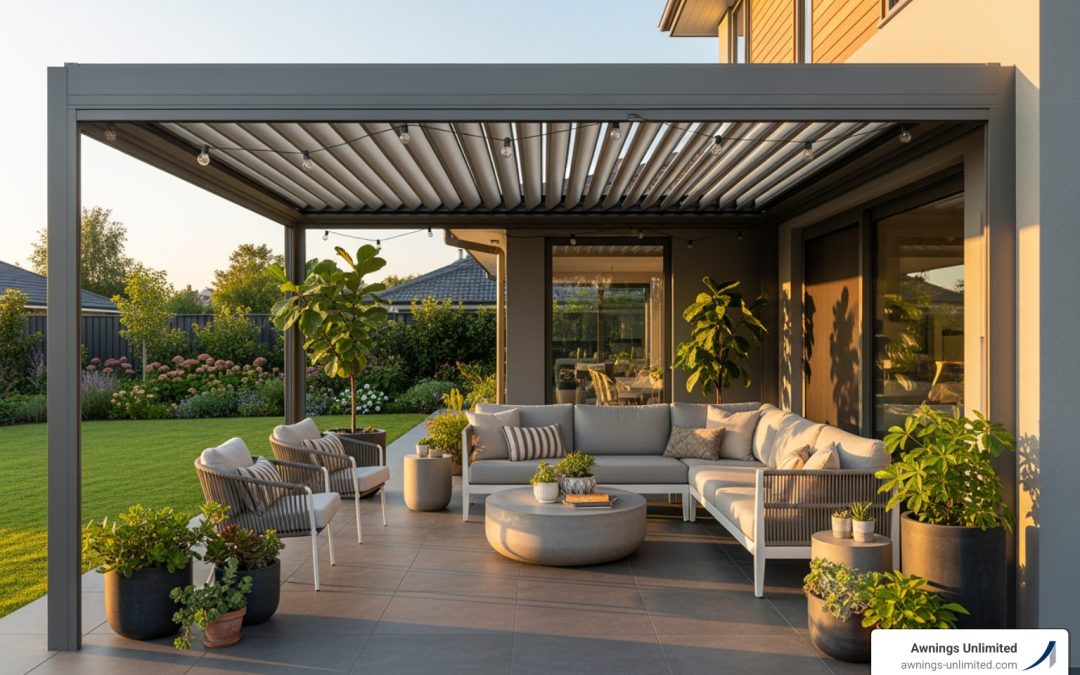
Transform Your Backyard with an Attached Patio Cover
Attached patio covers are shade structures that connect directly to your home, extending your living space outdoors while providing year-round protection from sun, rain, and snow. Unlike freestanding covers, they attach to your home’s exterior wall or roofline using a ledger board or fascia connection, creating a seamless transition between indoor and outdoor spaces.
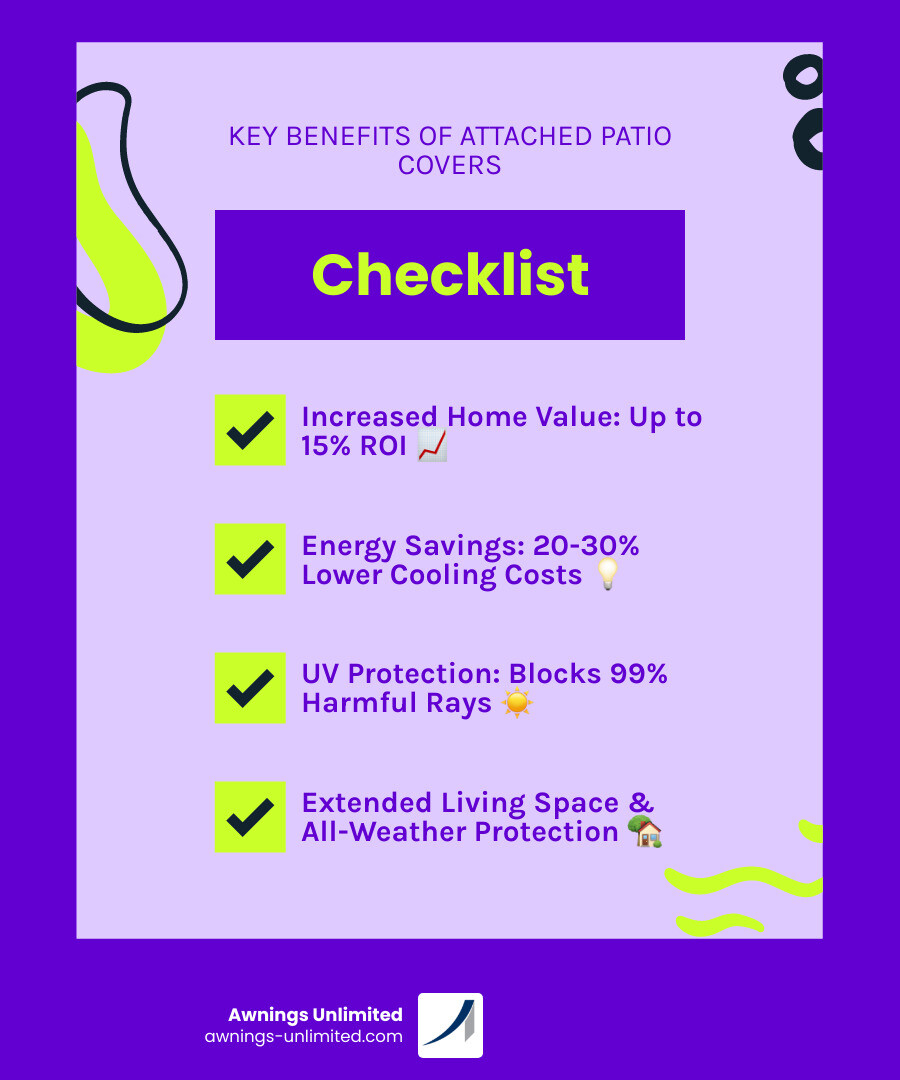
Key Benefits of Attached Patio Covers:
- Seamless Integration – Matches your home’s architecture and color
- Structural Stability – Supported by your home’s existing structure
- Weather Protection – Shields your patio from UV rays, rain, and snow
- Easy Access – Direct connection to your home through doors or windows
- Increased Home Value – Adds functional square footage to your property
- Energy Efficiency – Reduces heat gain and cooling costs
If you’re looking to maximize your outdoor living space, an attached patio cover offers a durable solution that protects against harsh weather while adding significant value to your home. This guide will walk you through everything you need to know—from choosing the right materials and understanding attachment methods to navigating building codes and planning your installation.
The most common attachment methods include ledger board attachment (bolted directly to your home’s exterior wall studs), fascia/eave attachment (ideal for single-story homes), and wall attachment (best for two-story homes). Each method requires proper flashing and waterproofing to prevent moisture damage.
Popular materials include Alumawood (aluminum with a wood-grain finish), vinyl (rot-resistant and low-maintenance), and wood (natural beauty but higher maintenance). Your choice depends on your climate, budget, and desired look.
At Awnings Unlimited, we’ve been changing outdoor spaces across Northern Utah since 1976, specializing in custom attached patio covers built with durable Alumawood materials that withstand harsh winters while requiring minimal maintenance. Our expert team ensures every installation meets local building codes and your exact specifications, backed by an industry-leading warranty.
Why Choose an Attached Patio Cover?
Choosing an attached patio cover is more than just adding a roof over your outdoor space; it’s about creating a true extension of your home. The primary benefits of attached patio covers compared to freestanding ones stem from this direct connection.
First, the seamless integration with your home’s existing structure creates a cohesive and polished look. An attached cover appears as if it was always meant to be there, matching your home’s architecture and color scheme for an aesthetically pleasing result. This isn’t just about looks; it also provides significant structural stability, as the cover is supported by the robust framework of your house. This inherent stability often means less need for additional foundational work compared to a freestanding structure, simplifying installation.
Beyond aesthetics and stability, attached patio covers offer superior weather protection. By connecting directly to your home, they create a sheltered zone that effectively shields your patio from the harsh sun, heavy rain, and even snow, which is particularly beneficial for homeowners in Utah and Wyoming. This protection extends to your outdoor furniture and belongings, preserving them from the elements and extending their lifespan.
Easy access from your home is another significant advantage. With an attached cover, you can step directly from your living room or kitchen onto a covered patio, making it effortless to transition between indoor and outdoor activities. This direct link transforms your patio into an outdoor room, blurring the lines between inside and out and expanding your usable living space. Whether you’re hosting a barbecue, enjoying a quiet morning coffee, or simply relaxing with family, your attached patio cover provides a comfortable, protected environment.
Perhaps one of the most compelling reasons to choose an attached patio cover is its ability to improve your home’s value. A well-designed and professionally installed attached patio cover can significantly increase your property’s appeal and market value, offering a solid return on investment. Curious about how much value it can add? You can learn more about how custom patio covers can increase home value on our site.
Finally, attached patio covers contribute to your home’s energy efficiency. By shading windows and exterior walls, they can reduce the amount of heat absorbed by your home during warmer months. This leads to lower indoor temperatures and, consequently, reduced cooling costs. Durable patio cover materials are necessary to lower the heat around the home and patio area, helping you save on energy bills while keeping your indoor spaces cooler and more comfortable.
Planning Your Project: Key Considerations Before You Build
Before we even think about materials or installation, a successful attached patio cover project begins with careful planning. This involves understanding your space, envisioning your desired style, and navigating the practicalities of local regulations and budget.
Sizing and Style for Your Home
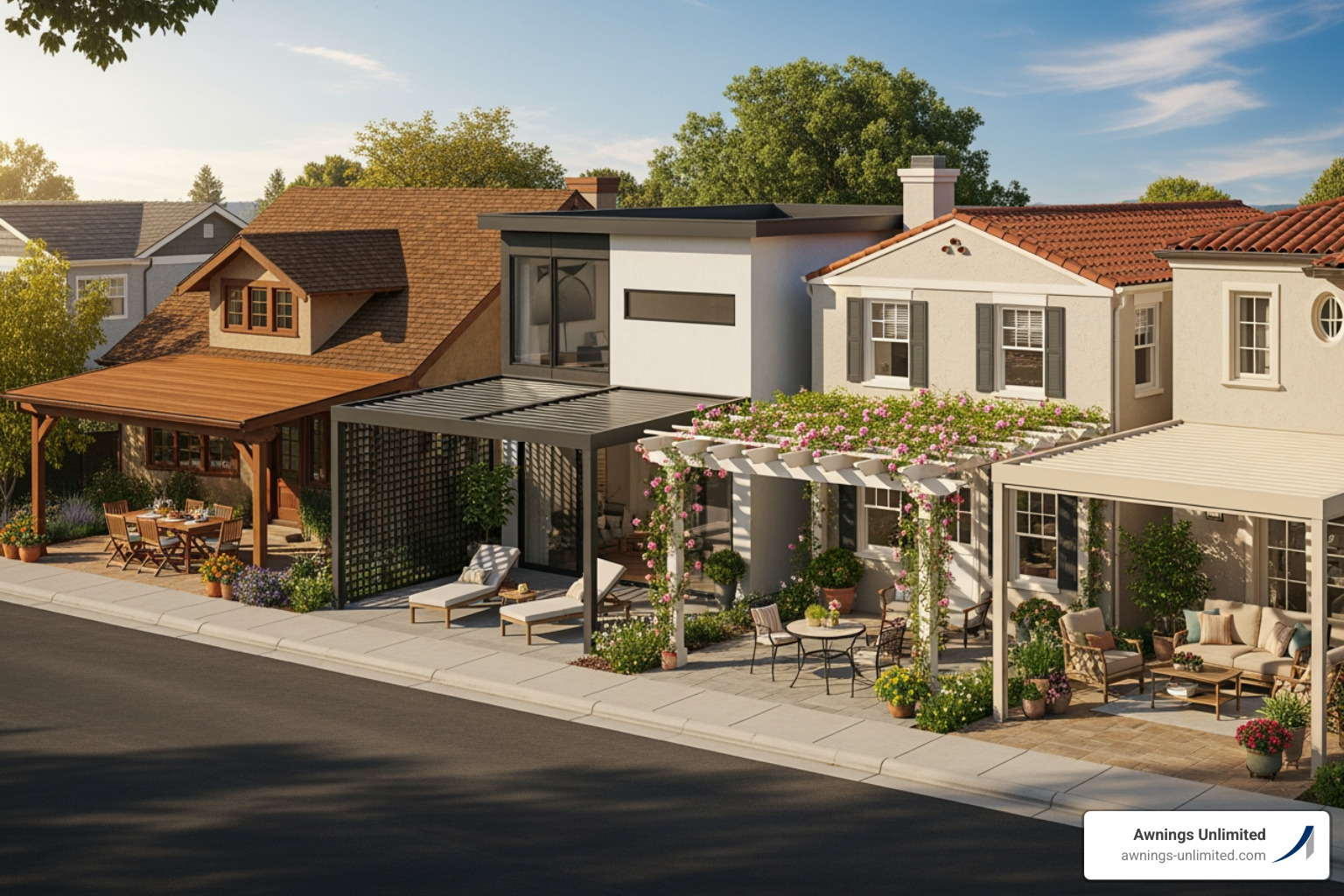
The first step in planning is accurately measuring your space to determine the ideal size for your attached patio cover. We consider three key dimensions: projection, length, and height. The projection is the distance the patio cover will extend from your house wall or eave. Length refers to how wide the cover will run parallel to your home, and height is the vertical clearance from the ground to the underside of the cover. While a typical patio cover often measures around 9 feet in height, these dimensions will be custom to your specific needs and local codes.
Next, you’ll choose a style that complements your home’s architecture. Common styles include:
- Shed Roof: A single-sloping roof that angles away from the house, offering a clean, contemporary look.
- Gable Roof: A more traditional, peaked roof that can provide a vaulted ceiling effect and excellent drainage.
- Flat Pan: A simple, often more economical option with a minimal slope, typically used for solid roof covers.
The goal is a seamless integration that makes your patio cover look like an original part of your home. This means considering custom colors that match or complement your exterior, selecting post styles that fit your aesthetic, and even choosing decorative end cuts for a touch of personalized elegance. For homeowners in Salt Lake City and across Utah, matching your patio cover to your home’s aesthetic is something we specialize in, ensuring your new outdoor space truly feels like an extension of your existing architecture.
Navigating Building Codes and Permits for Attached Patio Covers
This part might not be the most exciting, but it’s absolutely crucial! Any structural addition to your home, including an attached patio cover, is subject to local building codes and requires permits in most areas of Utah, Wyoming, and other service locations. These regulations ensure the safety, structural integrity, and proper placement of your new structure.
Key areas covered by building codes include:
- Height limits: Maximum allowed height for accessory structures.
- Setbacks: Minimum distances from property lines.
- Lot coverage: The percentage of your lot that can be covered by structures.
- Permit requirements: What documents and inspections are needed.
- Size thresholds: Some smaller structures might be exempt from a full building permit, but it’s always best to check. For example, some municipalities may exempt patio covers under a certain square footage, but this varies widely.
Navigating these local regulations can be complex, and attached pergolas, for instance, often require permits as they are considered an addition to a home. This is where professional installation truly shines. Our team ensures that all patios are engineered to meet state and local engineering standards, handling the permit process and ensuring your project is fully compliant. We recommend always checking with your local municipality for specific requirements in your area to avoid any surprises or costly rework down the line.
Understanding Costs and Factors
The cost of an attached patio cover can vary widely, ranging from a few hundred dollars for a basic kit to several thousand for a custom-designed, professionally installed system. Several factors influence the final price:
- Size: Larger covers naturally require more materials and labor.
- Material choice: As we’ll discuss, materials like Alumawood, wood, and vinyl have different price points per square foot. For instance, aluminum might cost $40-60 per square foot, while vinyl can range from $25-80, and wood from $25-40 per square foot.
- Design complexity: Simple, standard designs are less expensive than elaborate, custom-built structures with unique features.
- Custom features: Adding integrated lighting, ceiling fans, or specialized finishes will increase the overall cost.
- Installation: While DIY can save on labor, professional installation ensures quality, compliance, and often comes with warranties, which can be a valuable investment.
When budgeting, consider not just the upfront cost but also the long-term value, maintenance requirements, and lifespan of the materials.
Choosing the Right Materials for Your Patio Cover
Selecting the right material for your attached patio cover is a pivotal decision that impacts its appearance, durability, maintenance, and overall cost. We offer a range of high-quality options, each with distinct advantages.
| Material | Durability | Maintenance | Lifespan | Cost (per sq ft, approximate) |
|---|---|---|---|---|
| Aluminum (Alumawood) | Excellent, rust-proof | Very Low, occasional cleaning | Decades | $40-60 |
| Wood | Good, but susceptible to elements | High, regular staining/sealing | 5-15 years | $25-40 |
| Vinyl | Excellent, rot/insect resistant | Very Low, occasional cleaning | 20+ years | $25-80 |
Aluminum (Alumawood)
Aluminum, particularly our Alumawood products, is a fantastic choice for an attached patio cover, especially in areas like Utah and Wyoming that experience diverse weather conditions. It is incredibly durable, rust-proof, and lightweight. The secret to its resilience is that aluminum forms a protective oxide layer that prevents chemical reactions and further corrosion, making it great for patio covers against snow and rain.
One of the biggest draws of Alumawood is its low maintenance. Unlike wood, it will never rot, warp, crack, peel, or attract termites. You won’t need to paint, stain, or sand it, and it will never fade or discolor. This means more time enjoying your outdoor space and less time on upkeep. Alumawood also offers the aesthetic appeal of real wood with its textured wood-look finish, allowing you to achieve a natural, inviting look without the associated maintenance headaches. An Alumawood shade structure provides a long lifespan, often lasting for decades with just occasional cleaning. When it comes to low maintenance patio covers, Alumawood is a top contender.
Wood
Wood has an undeniable natural beauty and offers a classic, customizable aesthetic for an attached patio cover. It can be a more affordable option upfront, with costs typically ranging from $25-40 per square foot. Many homeowners love how wood blends seamlessly with natural landscaping, creating a rustic or craftsman charm.
However, wood comes with significant maintenance requirements. It is susceptible to rotting, warping, and insect damage, especially in climates with high humidity, rainfall, or snow. To preserve its beauty and structural integrity, wood requires regular staining and sealing, ideally before installation and at least once a year. Without proper care, its lifespan can be significantly shorter, often just 5-15 years, and its susceptibility to the elements can lead to frequent replacement. While the initial cost may be lower, the ongoing maintenance can make its total cost comparable to other materials over time.
Vinyl
Vinyl is another excellent choice for a low-maintenance attached patio cover. Its primary advantages lie in its exceptional durability and resistance to common outdoor problems. Unlike wood, your vinyl patio cover will never rot, warp, crack, peel, attract termites, or need painting, staining, or sanding. It will never fade or discolor, ensuring it looks great for years with minimal effort.
Vinyl is naturally waterproof, making it ideal for protecting your patio during storms. It’s resistant to rot, rust, and corrosion, ensuring a long lifespan of 20+ years. Furthermore, unlike aluminum, vinyl is quiet in the rain and will be cool to the touch under the sun, enhancing comfort. While vinyl might have more limited color options (typically available in white or beige), its practical benefits, such as being insect-resistant and incredibly durable, make it a strong contender for homeowners seeking a truly maintenance-free solution. DuraMax vinyl patio covers, for example, are specifically engineered to meet demanding weather conditions.
The Installation Process for Attached Patio Covers
Installing an attached patio cover is a complex process that demands precision, adherence to safety standards, and a deep understanding of structural integrity. While some might consider a DIY approach, we generally recommend professional installation to ensure code compliance, optimal performance, and long-term durability. Our professional patio cover installation is worth your while for peace of mind and a flawless result.
Step 1: Preparing the Attachment Point
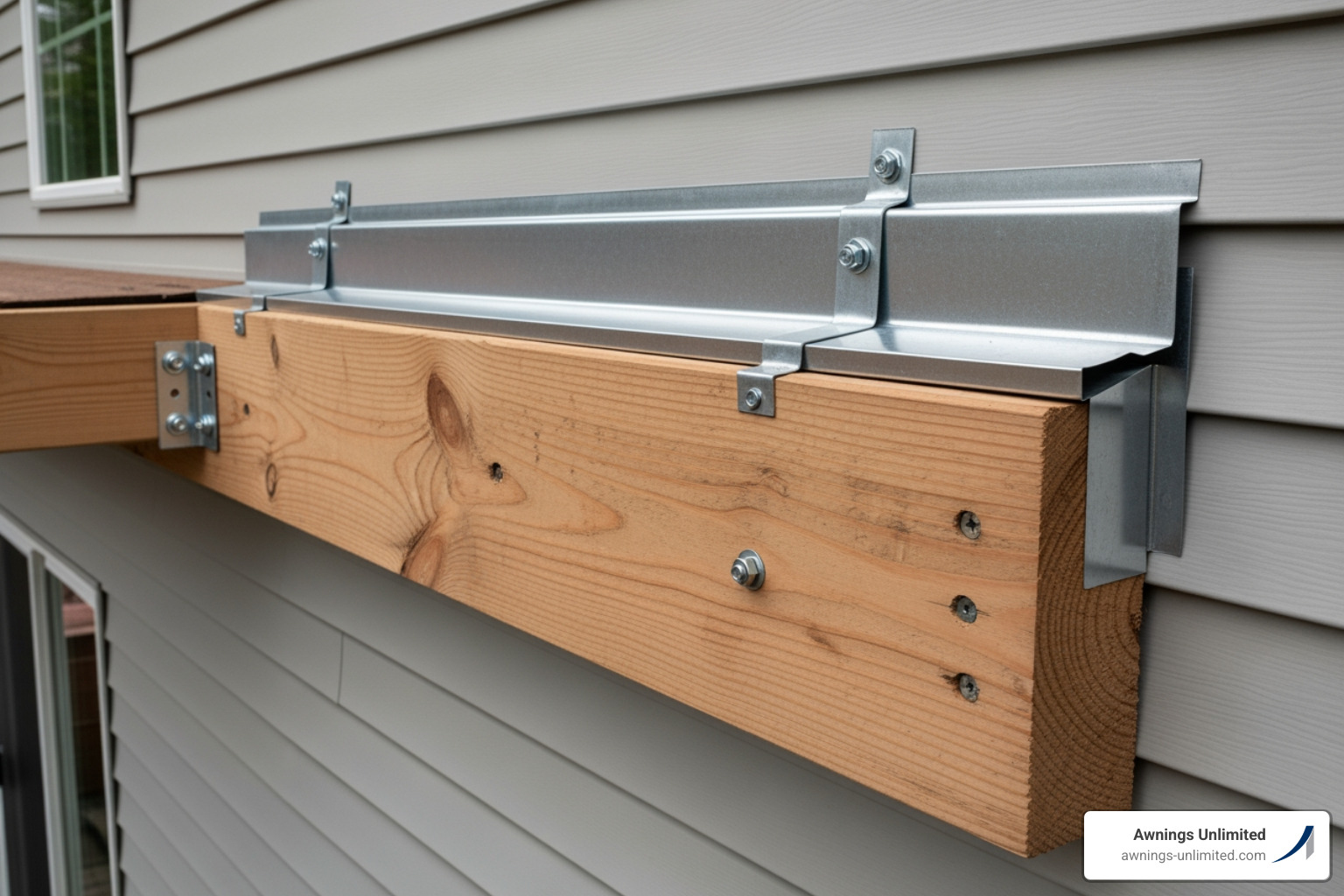
The first critical step involves preparing the part of your home where the patio cover will attach. This typically involves installing a ledger board directly to your home’s exterior wall studs. For single-story homes, a fascia/eave attachment might be ideal, while a wall attachment is often preferred for two-story homes.
Proper flashing is paramount during this stage. Flashing is a weather-resistant material installed over the ledger board and beneath your home’s siding to prevent water from seeping into your home’s structure. This step is non-negotiable for preventing water damage and ensuring the longevity of both your home and your new patio cover. Bolting the ledger board securely to the structural framing of your house is essential for transferring the load of the patio cover safely.
Step 2: Setting Posts and Beams
Once the attachment point is secure, the next phase focuses on establishing the vertical support system. This involves digging footings—holes in the ground that will be filled with concrete to create stable bases for your support posts. These footings must extend below the frost line in your area (which can be significant in Utah and Wyoming) to prevent frost heave from shifting the structure.
For instance, local codes often require concrete to meet specific compressive strengths, like 2,500 psi minimum, and footings need to be embedded at least 12 inches into undisturbed soil. Once the concrete piers are cured, the support posts (often 4×4 or 6×6, depending on height and span) are set, ensuring they are perfectly plumb and square. Finally, the main support beams are installed, connecting the posts to the ledger board or fascia at the house side, forming the primary framework of your attached patio cover.
Step 3: Installing the Roof Structure
With the main frame in place, we move on to installing the roof structure itself. This involves attaching rafters between the ledger/beam and the outer support beam. The type of roof panels then depends on your chosen material and desired functionality.
For solid roof covers, we install solid panels or insulated panels, which provide complete shade and protection from rain and snow. These panels are designed to interlock or be securely fastened, creating a watertight seal. Some systems, like those with solid panel roof systems, can span up to 20 feet. For those preferring partial shade and an open feel, lattice tubes are installed to filter sunlight, with lattice covers reducing sun exposure by 40-60%. Alternatively, louvered roof covers offer adjustable 8-inch louvers with a 160-degree range of motion, allowing you to control ventilation and sun exposure throughout the day.
The final touches involve installing gutters and downspouts to efficiently manage rainwater runoff, directing it away from your patio and home’s foundation. Throughout this process, hot-dipped galvanized or stainless steel fasteners and hardware are used to ensure corrosion resistance and long-term structural integrity.
Frequently Asked Questions about Attached Patio Covers
How long do attached patio covers last?
The lifespan of an attached patio cover largely depends on the material chosen and the level of maintenance it receives.
- Alumawood covers, being aluminum with a durable finish, are exceptionally long-lasting, often performing well for many decades with minimal maintenance. Their resistance to rot, rust, and pests contributes to their extended lifespan.
- Vinyl patio covers are also very durable, resistant to rot, warping, cracking, and fading. You can expect a vinyl cover to last 20 years or more.
- Wood patio covers, while beautiful, typically have the shortest lifespan, ranging from 5 to 15 years, depending on the wood type, climate, and how diligently it’s maintained with regular sealing and staining. Lack of maintenance will significantly shorten a wood cover’s life due to rot, warping, and insect damage.
Do attached patio covers come with a warranty?
Yes, reputable installers like us at Awnings Unlimited stand by the quality of our work and materials. When investing in an attached patio cover, you should always inquire about warranty options. We typically offer:
- Material warranties: These cover defects in the manufacturing of the patio cover materials themselves. For example, our Alumawood products come with robust warranties. Many high-quality materials, especially vinyl, can even come with a lifetime transferable warranty.
- Labor warranties: These cover the installation work performed by the contractor. A strong labor warranty provides peace of mind that any issues arising from the installation will be addressed.
The importance of warranties cannot be overstated, providing peace of mind and protection for your investment.
Can I add lights or a fan to my attached patio cover?
Absolutely! Adding lights, ceiling fans, or even outdoor heaters is a popular way to customize your attached patio cover and improve its functionality, allowing you to create a cozy retreat for outdoor spaces. These features extend the usability of your patio into the evenings and cooler months.
However, incorporating electrical elements requires careful planning. It’s crucial to ensure that all electrical wiring and equipment comply with local regulations for exterior installations, including weather-protected (WP) outlets and Ground Fault Circuit Interrupter (GFCI) protection. Integrating wiring discreetly within the patio cover’s frame during installation provides the cleanest look. Consulting with a professional installer who can coordinate with licensed electricians is the best way to safely and effectively add these desired customizations to your outdoor living space.
Conclusion: A Seamless Extension of Your Home
An attached patio cover is a powerful investment in your home and lifestyle. It offers a unique blend of practicality and aesthetics, changing an underused outdoor space into a comfortable, functional, and beautiful extension of your home. We’ve seen how these structures provide crucial weather protection, create easy-access outdoor rooms, and even contribute to your home’s energy efficiency by reducing heat gain. A well-designed and installed attached patio cover significantly increases your home’s value and improves your overall quality of life.
The journey to your dream outdoor space involves careful consideration of materials, understanding local building codes, and planning for a professional installation. We believe in the importance of quality materials that stand the test of time, like our high-quality Alumawood, which offers the beauty of wood with virtually no maintenance. And we firmly believe that professional installation ensures safety, compliance, and a flawless finish, backed by comprehensive warranties.
For Utah homeowners and those in our service areas across Wyoming, Eastern Nevada, Southern Idaho, and Colorado, Awnings Unlimited has been the trusted name in outdoor shade solutions since 1976. We are passionate about helping you maximize your backyard’s potential with custom attached patio covers custom to your unique needs and style.
Ready to transform your backyard into the outdoor oasis you’ve always dreamed of? Explore our Attached Patio Covers and get a free estimate today. Let us help you create a space where memories are made, rain or shine.