

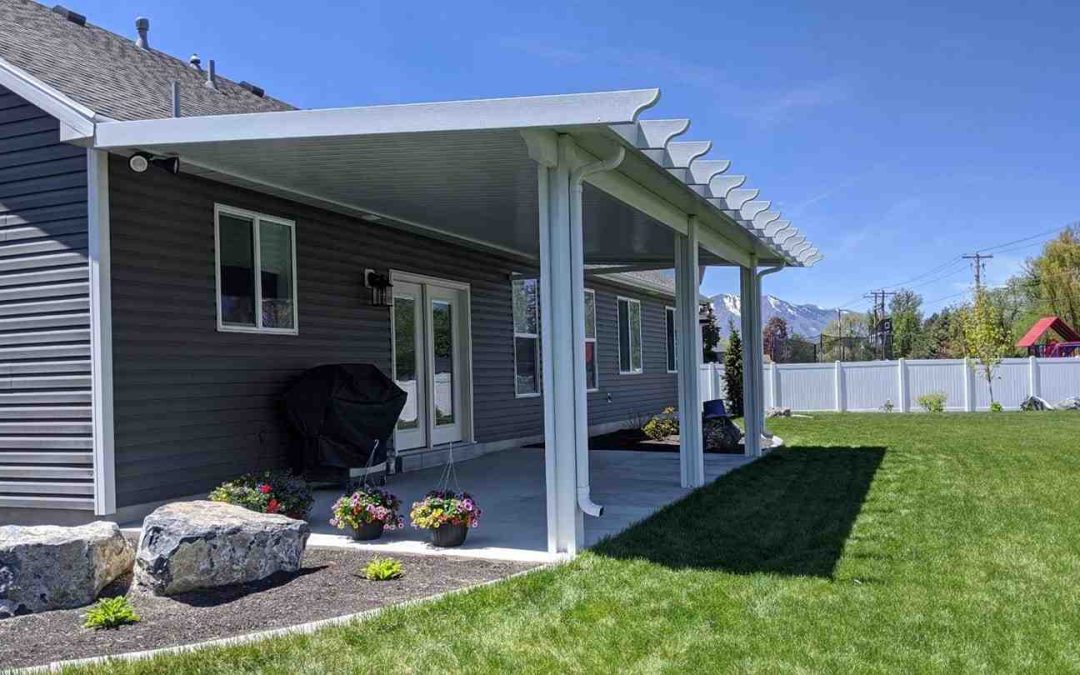
Why the Right Awning for Your Patio Makes All the Difference
Choosing the best awning for patio comfort is one of the smartest upgrades you can make to your home’s outdoor space. A quality patio cover does more than block the sun — it protects your family from UV rays, extends your usable living area, and can even lower your cooling costs.
Here are the best structural patio awning and cover options to compare:
| Option | Best For | Key Benefit |
|---|---|---|
| Solid Alumawood Patio Cover | All-weather protection | Blocks sun and rain; maintenance-free |
| Lattice Patio Cover | Hot climates needing airflow | Shade with ventilation |
| Attached Aluminum Awning | Smaller patios and entryways | Affordable, durable, low profile |
| Freestanding Patio Structure | Detached outdoor areas | Flexible placement, no wall mounting needed |
| Sun Room Enclosure | Year-round outdoor living | Full weather protection, 4-season use |
The good news? You don’t need to spend a fortune on a full room addition to enjoy your backyard in comfort. A well-chosen structural patio cover delivers lasting shade, weather protection, and real curb appeal — at a fraction of the cost.
At Awnings Unlimited, we’ve been installing custom awnings for patio spaces across Northern Utah since 1976, using durable, maintenance-free materials like Alumawood by Amerimax that are built to handle harsh Utah summers and winters alike. We’ll walk you through the best options for your space so you can make a confident, informed choice.
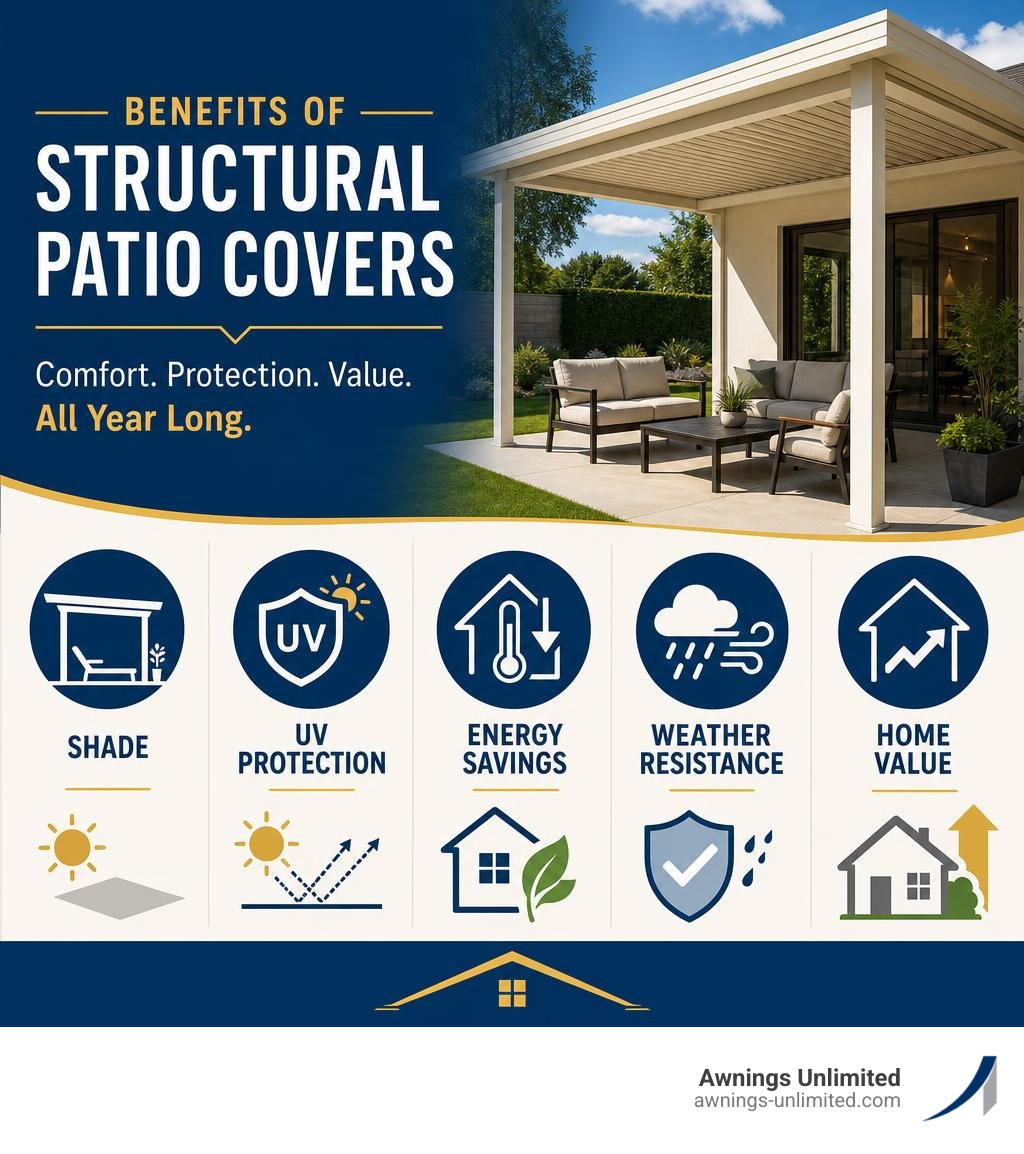
Understanding Your Options: Types of Patio Awnings and Covers
When you start shopping for an awning for patio comfort, the sheer variety of terms can be dizzying. You will hear about “patio covers,” “pergolas,” “attached awnings,” and “freestanding structures.”
To make the best decision for your home, it helps to understand how these systems differ in structure and function:
- Attached Patio Covers: These are structurally anchored to your home’s exterior wall or roofline on one side and supported by heavy-duty posts on the other. They act as a seamless architectural extension of your house, making them incredibly stable and highly effective at blocking heat before it ever reaches your windows or sliding glass doors.
- Freestanding Structures: Perfect for larger yards, pool decks, or detached seating areas, freestanding patio covers stand entirely on their own support columns. They allow you to build a dedicated outdoor oasis anywhere on your property without relying on your home’s existing wall structure.
- Structural Insulated Panels: For the ultimate all-weather protection, insulated solid panels block 100% of overhead sunlight and dramatically reduce the radiant heat beneath the cover. They can even be outfitted with ceiling fans and light fixtures to create a true outdoor room.
For a deeper dive into how these systems compare, check out our Awnings and Patio Covers Complete Guide.

Solid Roof Patio Covers vs. Lattice Pergolas
If you decide on a permanent structural cover, you’ll need to choose between a solid roof and a partial-shade lattice design (often called a pergola).
- Solid Top Covers: These provide 100% shade and absolute protection from the elements. Whether it is a blistering July afternoon in St. George or a rainy spring day in Salt Lake City, a solid cover ensures your patio furniture stays dry and your outdoor plans are never canceled.
- Lattice Pergolas: Lattice covers use spaced rafters to block roughly 40% to 60% of direct sunlight while still allowing warm air to rise and escape. This creates a beautifully dappled light effect and excellent ventilation. It is a fantastic option if you love the open-air feel of a garden path but still want to cut down on intense glare.
Many homeowners find that the perfect solution lies in a custom combination of both styles, shading a dining table under a solid roof while leaving a lounge area under a beautiful open lattice. To see how to get started on your own build, read our guide on Building an Awning Over a Patio.
Key Factors to Consider When Choosing an Awning for Patio Comfort
Before committing to a specific style or material, take a step back and evaluate your home’s unique layout, local weather patterns, and lifestyle needs.
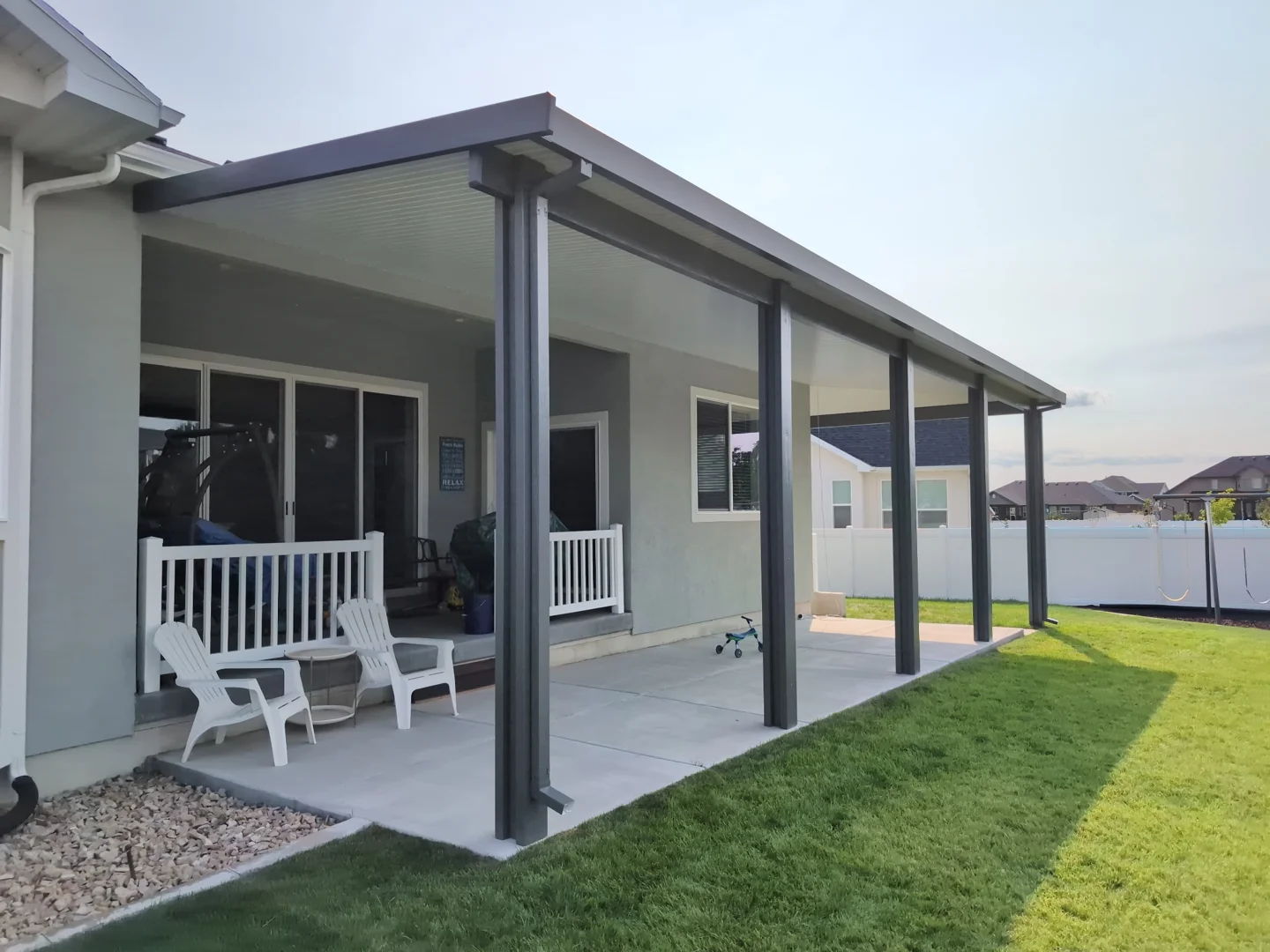
To help you navigate the planning phase, keep these vital considerations in mind:
- Local Climate & Snow Loads: In regions like Northern Utah (including Park City, Heber City, and Logan) and Wyoming, snow accumulation is a massive factor. A flimsy retail kit will buckle under a heavy winter snowpack. Your structure must be engineered to meet or exceed local building codes for snow and wind loads.
- Sun Angle and Exposure: A patio facing directly south or west will receive intense, hot afternoon sun. You will need a deeper projection or a solid insulated roof to keep the space comfortable. East-facing patios might only need a lighter lattice cover to block early morning glare.
- Energy Efficiency: By shading your home’s windows and glass doors, a structural cover blocks solar heat gain before it enters your living room. This can significantly reduce your air conditioning load during hot summer months.
Learn more about optimizing your outdoor layout in our Patio Awning Complete Guide 2026.
Sizing and Measuring Your Space
Getting the measurements right is the difference between a perfectly shaded retreat and an awkward piece of metal that blocks your view.
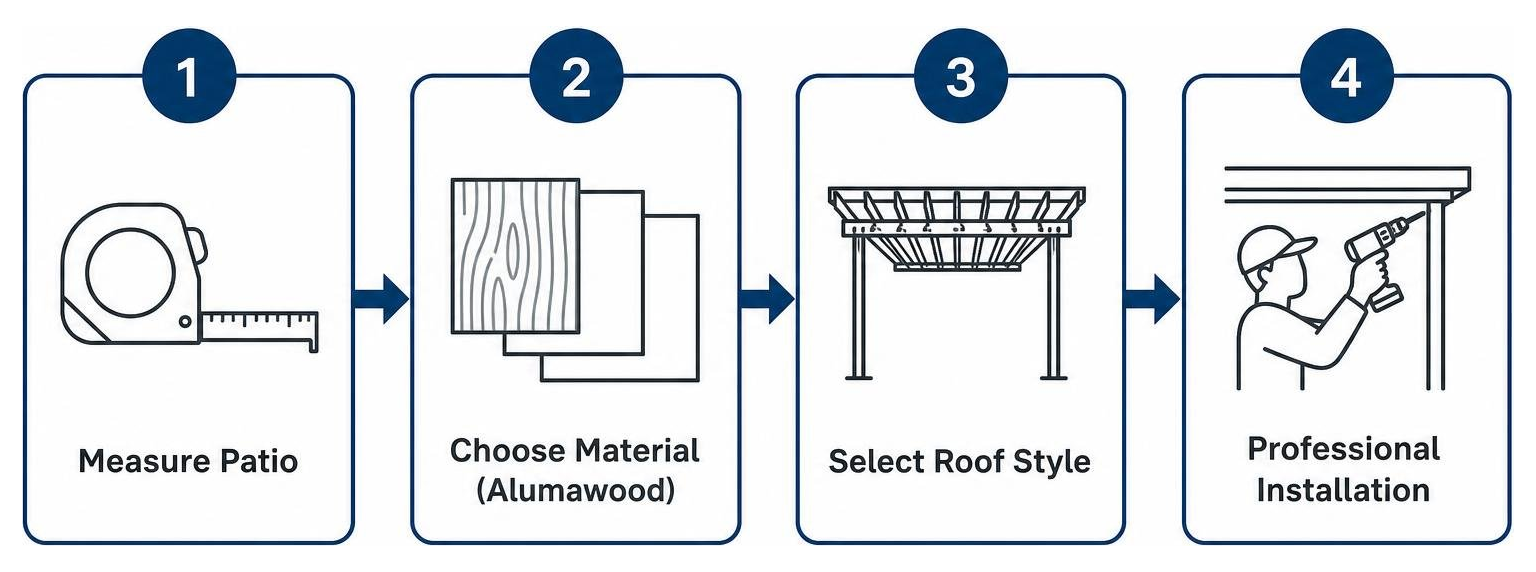
When measuring for your custom structural cover, you must consider three key dimensions:
- Width: This is the measurement along your home’s wall. To ensure adequate shade, we generally recommend extending the width of your cover at least 2 to 3 feet past the actual edge of your patio concrete.
- Projection (Depth): This is how far the cover extends out from your home. That as the sun moves throughout the day, the angle of the shade changes. A 10-foot projection might only provide 6 feet of actual shade during the late afternoon.
- Mounting Height and Clearance: The cover must be mounted high enough on your home’s wall or fascia to allow comfortable head clearance (usually a minimum of 8 feet) while sloping downward slightly to allow rain and melting snow to drain properly.
Selecting the Right Style of Awning for Patio Aesthetics
An addition of this size will dramatically change the look of your home. You want a structure that complements your existing architecture rather than looking like an afterthought.
Modern homes with clean lines benefit immensely from sleek, dark-toned aluminum frames (like bronze or slate gray) with square structural posts. Traditional or rustic homes look stunning with soft earth tones like sand, clay, or white, complete with decorative rafter tails that mimic classic woodwork. For design inspiration, check out our gallery of Modern Patio Awnings.
Comparing Materials: Durability, Maintenance, and Weather Protection
The material you choose determines how much time and money you will spend maintaining your patio cover over the next twenty years. Let’s look at how the most common materials stack up:
| Material | Maintenance Required | Lifespan | Weather Resistance | Est. Cost |
|---|---|---|---|---|
| Alumawood (Aluminum) | None (Occasional wash) | Lifetime | Excellent (Rust-proof, warp-proof) | Moderate |
| Traditional Wood | High (Staining/Painting) | 10–15 Years | Susceptible to rot, pests, and cracking | High |
| Steel | Low-Moderate | 15–20 Years | High strength; prone to rust if chipped | Moderate-High |
Aluminum and Alumawood Durability
For homeowners who want a beautiful, worry-free outdoor space, Alumawood is the gold standard.
Alumawood is heavy-duty structural aluminum that has been embossed with a realistic cedar-grain texture and finished with a durable, baked-on paint system. It gives you the warm, high-end look of traditional wood without any of the headache.
Because it is aluminum, Alumawood is completely impervious to termites and wood-boring pests. It will never rot, warp, crack, or peel, and it requires zero painting, staining, or sealing. An occasional rinse with a garden hose is all it takes to keep it looking brand new for decades.
Wood and Alternative Material Performance
While traditional natural wood looks beautiful when first installed, the harsh climate of the Mountain West takes a rapid toll on it. The intense high-altitude UV rays in Utah dry out wood fibers, causing them to warp, split, and crack.
To prevent rot and decay, a wood patio cover must be sanded, stained, or repainted every 2 to 3 years. This represents a significant ongoing cost and a major time commitment. Additionally, wood structures are susceptible to moisture damage from melting snow, which can eventually compromise their structural integrity.
Frequently Asked Questions About Patio Shade Solutions
Do patio awnings provide complete UV and rain protection?
Yes, solid structural patio covers provide 100% protection from both harmful UV rays and heavy rainfall. A solid aluminum or Alumawood cover creates an absolute barrier. Water is safely funneled into an integrated gutter and downspout system, keeping your patio dry and preventing water from pooling near your home’s foundation.
How much wind can a structural patio awning withstand?
Because our custom Alumawood and aluminum patio covers are structurally engineered and anchored directly into concrete footings and your home’s framing, they can easily withstand extreme wind speeds—often rated to handle gusts up to 90 to 110 mph depending on local building requirements. This is a massive advantage over temporary, non-structural shade options.
Is professional installation better than a DIY awning kit?
While DIY kits sold at big-box stores can look appealing on paper, they often present major challenges in the real world. Installing a structural cover requires precise leveling, proper anchoring to your home’s structural framing, and navigating local building permits and HOA guidelines.
A professional installation ensures that your cover is structurally sound, safe under heavy winter snow loads, and backed by a comprehensive warranty. At Awnings Unlimited, we handle the entire process from engineering to final cleanup, ensuring your project is built to last. Learn more about our professional Patio Awning services.
Conclusion: Invest in Lifetime Comfort with Awnings Unlimited
Investing in a high-quality, custom awning for patio use is one of the best ways to upgrade your home’s livability and long-term property value. By extending your indoor comfort to the great outdoors, you create a beautiful, functional space where your family can gather, entertain, and relax for decades to come.
Since 1976, Awnings Unlimited has helped homeowners across Salt Lake City, Sandy, Draper, Ogden, Provo, and the entire Wasatch Front build their dream outdoor spaces. Our experienced team uses only the highest-quality Alumawood materials, backed by professional installation and an industry-leading warranty.
Ready to transform your backyard into a cool, shaded oasis? Contact us today to get your free, no-obligation estimate.