


Why the Right Awning for a Patio Can Transform Your Outdoor Space
Shopping for a patio cover? Here’s a quick look at your best structural options:
| Type | Best For | Typical Cost Range |
|---|---|---|
| Aluminum solid cover | Year-round weather protection | $3,000 – $10,000+ installed |
| Alumawood lattice cover | Partial shade, natural look | $2,500 – $8,000+ installed |
| DIY aluminum kit | Budget-conscious homeowners | $1,000 – $4,000 kit only |
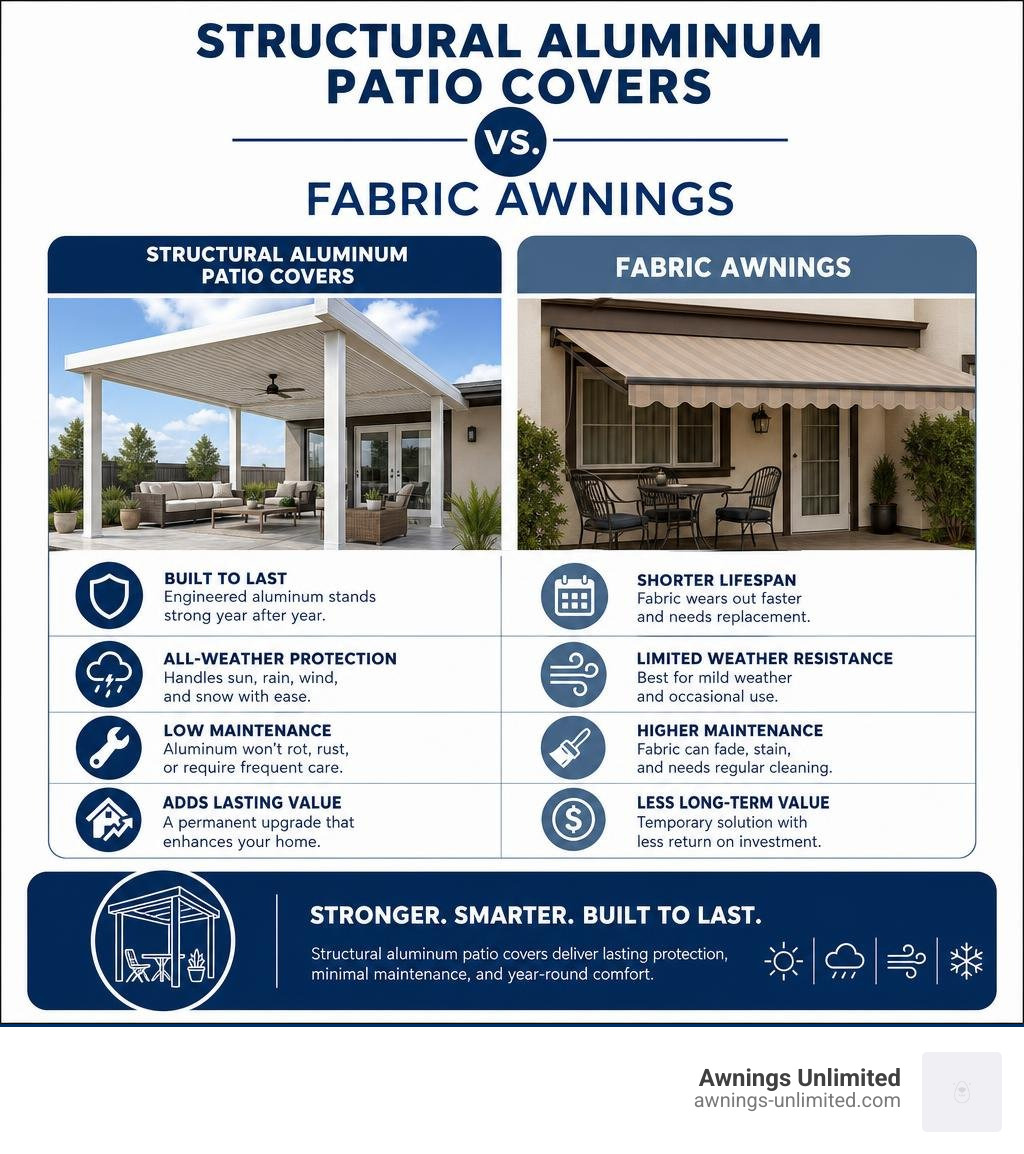
Most homeowners who want lasting protection choose a structural aluminum cover — it handles harsh weather, requires almost no maintenance, and adds real value to the home.
Your patio should work for you 365 days a year. But without proper shade, summer heat, UV rays, and unexpected rain can push you back inside fast.
The good news? A quality awning for a patio doesn’t have to mean a massive budget or a months-long renovation. Whether you’re eyeing a DIY aluminum kit or a fully custom patio cover, there are solid options at nearly every price point — and the right choice can genuinely extend your usable outdoor space while protecting your home and furniture.
The key is knowing what to look for before you buy.
At Awnings Unlimited, we’ve been helping Northern Utah homeowners find the right awning for a patio since 1976 — building durable, custom patio covers and shade structures using maintenance-free materials designed to handle everything from blazing summers to harsh winters. In this guide, we’ll walk you through the best structural options available so you can make a confident, informed decision.
Choosing the Right Structural Awning for a Patio
When you begin searching for the perfect awning for a patio, focusing on permanent, structural options ensures long-term durability. You will encounter various heavy-duty, permanent aluminum and Alumawood structures designed to withstand the elements. To make the best decision for your home along the Wasatch Front or in Wyoming, you first need to understand how these systems differ in design, permanence, and function.
For a comprehensive breakdown of your initial choices, we highly recommend checking out our guide on Patio Covers 101 Everything You Need to Know Before You Buy.
Permanent structural awnings and patio covers offer a level of stability that temporary options simply cannot match. A structural patio cover is engineered to mount directly to your home’s wall studs or roof rafters, supported by heavy-duty posts anchored into a concrete patio or footings. This structural integration means the system becomes a true extension of your home’s architecture.
Solid vs. Lattice Structural Awning for a Patio Options
One of the first decisions you will face is choosing between a solid roof structure and a lattice system. Both have distinct advantages depending on how you plan to use your outdoor living space.
- Solid Patio Covers: These are permanent structures typically made of structural aluminum. Once installed, they remain in place year-round, providing 100% shade and complete protection from rain and snow. They are built to withstand heavy snow loads—which is incredibly important if you live in places like Park City, Heber City, or Wyoming—and high wind speeds. A solid cover provides continuous, reliable protection for your outdoor kitchen, patio furniture, and electronics.
- Lattice Covers (Pergolas): These systems offer partial shade, allowing filtered sunlight to pass through while still reducing heat. They provide a more open, traditional aesthetic while maintaining the same structural integrity and wind resistance as solid covers.
For a deeper dive into these different approaches to shade, you can read our Patio Shade Solutions Complete Guide.
Fixed vs. Operable Louvered Systems
If you want the best of both worlds, you can choose between a fixed structural cover and an operable louvered system.
Fixed covers remain completely open (lattice) or completely closed (solid) at all times. They are highly reliable and require zero mechanical components.
Operable louvered systems, on the other hand, offer ultimate convenience. With the press of a button, a wall switch, or even a smartphone app, the structural aluminum louvers rotate to let in sunlight or close completely to seal out rain. Many modern motorized louvered covers can be integrated with smart home ecosystems, allowing you to schedule adjustment times or control the system remotely. Furthermore, these high-end structural systems can be equipped with automatic rain sensors that close the louvers at the first drop of water—a lifesaver if an unexpected storm sweeps through Salt Lake City while you are away from home.
Materials and Durability of Patio Covers
The longevity of your awning for a patio depends almost entirely on the quality of the materials used in its construction. Because outdoor structures are constantly exposed to UV radiation, moisture, temperature fluctuations, and wind, choosing cheap materials will cost you more in repairs and replacements down the road.
To help you compare your options, here is a breakdown of how the two most common structural patio cover materials stack up against each other:
| Feature | Structural Aluminum / Alumawood | Traditional Wood |
|---|---|---|
| Lifespan | 20 to 30+ Years | 10 to 15 Years (with maintenance) |
| Maintenance Required | Virtually none (occasional rinse) | Annual sanding, staining, or painting |
| Rot & Insect Resistance | 100% Resistant | Vulnerable to termites and rot |
| Snow Load Capacity | High (engineered for local climate) | High (if heavily timbered) |
| UV Resistance | Excellent (won’t fade or crack) | Paint/stain will fade and peel |
Aluminum and Alumawood Frames
For homeowners in Northern Utah, structural aluminum and Alumawood are the gold standards for outdoor shade structures.
Traditional wood looks beautiful, but the dry mountain air and intense UV rays in Utah cause wood to warp, crack, split, and peel. This means you have to spend your weekends sanding, staining, and painting just to keep it looking decent.
Aluminum completely solves this problem. It does not rust, warp, rot, or attract termites. “Alumawood” is a specialized structural aluminum that is embossed with a realistic wood-grain texture and finished with a durable, multi-stage baked-on paint finish. You get the warm, classic look of a traditional wood pergola or patio cover without any of the maintenance. It stays looking brand new for decades with nothing more than an occasional rinse with a garden hose.
If you want to explore how custom aluminum structures can elevate your property, check out The Ultimate Guide to Custom Patio Covers.
Sizing, Features, and Installation Requirements
Getting the right fit for your awning for a patio involves more than just picking a color you like. Proper measurement and feature selection ensure that your shade structure functions beautifully and stays securely attached to your home.
Before making any final decisions, take a look at our Custom Patio Shade Complete Guide to understand how different sizes and layouts impact your overall shade coverage throughout the day.
How to Measure Your Patio Space
When measuring for a patio cover, you must consider three primary dimensions:
- Width: This is the measurement along the wall of your house. For optimal coverage, we recommend extending the width of your structural cover at least 5 inches past each side of the window, door, or patio area you wish to shade.
- Projection: This is how far the structure extends outward from the wall. Common projections range from 8 feet to 16 feet or more. The sun is rarely directly overhead; a longer projection ensures you still have shade in the late afternoon when the sun sits lower in the sky.
- Mounting Height and Clearance: You need sufficient vertical space on your wall to mount the structure. A heavy-duty structural cover typically requires a solid connection to your home’s wall studs or roof rafters. If you are mounting a structure below an eave, make sure you have enough clearance so that the support beams don’t hang too low, obstructing your view or walkway.
Key Features to Look For
When shopping for a high-quality structural patio cover system, look for these premium features that enhance usability and durability:
- Integrated Gutter Systems: High-quality solid aluminum covers feature built-in gutter and downspout systems that channel rainwater away from your patio, keeping your outdoor living space completely dry.
- Integrated Drop Shades: Some advanced structural patio covers feature vertical drop shades built into the perimeter beams. These can be rolled down to block low-angle morning or evening sun and provide extra privacy from neighbors.
DIY Installation vs. Professional Setup
While purchasing a DIY aluminum patio cover kit online can save you upfront labor costs, the installation process is not a simple weekend project for a novice.
Properly mounting a heavy structural cover requires securing heavy-duty brackets directly into your home’s structural framing—such as wall studs or header bands. Attempting to mount a heavy structural cover directly into siding, stucco, or unrendered brick without finding the studs can result in catastrophic structural failure, potentially ripping a section of your home’s exterior wall right off.
Furthermore, local building codes in Utah and Wyoming are strict regarding wind and snow load ratings. A professional installation team—like our crew at Awnings Unlimited—understands these local engineering requirements. We handle the permitting, HOA approval processes, and ensure that your structure is anchored securely using professional masonry expansion bolts or heavy-duty lag screws.
For some expert tips on making this choice, check out Our Guide to Choosing the Perfect Patio Cover for Your Home.
Cost Analysis and Retailer Comparison
When deciding how to buy your awning for a patio, you will generally find yourself choosing between two distinct paths: buying a mass-market, pre-packaged structural kit from a big-box retailer, or partnering with a custom shade manufacturer.
To see some of the creative ways homeowners have utilized custom structures, explore our Patio Cover Ideas Ultimate Guide.
Retailer vs. Custom Manufacturer Pros and Cons
- Big-Box Retailers and Online Kits: Retailers like Home Depot offer affordable, mass-produced aluminum patio cover kits. These are excellent options for budget-conscious DIYers. However, these kits are limited to standard, pre-set sizes, offer fewer color choices, and use lighter-grade materials that may not withstand heavy Utah snow or high winds over time.
- Custom Manufacturers (Awnings Unlimited): Choosing a custom-built Alumawood or structural aluminum cover means your system is built to the exact inch of your space. The frame components are made of thick, heavy-duty structural aluminum, and you have access to industry-leading warranties (often up to 10 or 20 years on structural parts). While the initial investment is higher, the long-term durability and custom fit provide significantly better value and curb appeal.
Maintenance and Long-Term Value
A high-quality structural awning is not just an expense—it is an investment that pays dividends.
By shading your home’s windows and sliding glass doors, a patio cover blocks intense solar heat before it ever enters your living room. This can reduce indoor temperatures and lower your summer air conditioning costs.
Additionally, a permanent patio cover effectively expands your home’s usable square footage. It creates a comfortable, protected outdoor living room where you can host dinners, relax, and enjoy the fresh air, even during a summer downpour. This functional space increase can boost your home’s overall market value and appeal to future buyers.
To learn more about maximizing your property’s potential, read about how to Maximize Your Outdoor Living with a Custom Patio Cover.
Frequently Asked Questions about Patio Awnings
How much wind can a structural patio awning handle?
Fixed structural aluminum and Alumawood patio covers are engineered to meet strict local building codes along the Wasatch Front, meaning they can easily handle winds exceeding 90 to 115 mph when properly anchored. This ensures your outdoor living space remains safe and secure even during severe storms.
Do aluminum patio covers require regular maintenance?
No! That is the beauty of aluminum and Alumawood. Unlike wood structures that require annual sanding, painting, or sealing, aluminum covers only need an occasional rinse with a garden hose to clear off dust and pollen. The durable powder-coated finish is designed to resist chipping, peeling, rust, and fading for decades.
Can I install a DIY patio cover kit on any wall surface?
No. Structural patio covers must be mounted directly into solid structural members, such as your home’s wood studs, header boards, or solid concrete/brick masonry. They should never be anchored solely into siding, stucco, or hollow decorative brick, as these materials cannot support the weight and wind-uplift forces acting on the cover.
Conclusion
Finding the perfect awning for a patio is all about balancing your budget, your aesthetic style, and the climate demands of where you live. A heavy-duty structural aluminum or Alumawood cover offers a lifetime of maintenance-free beauty, weather protection, and home value.
At Awnings Unlimited, we have spent nearly 50 years building custom shade solutions tailored specifically to the unique weather of Utah and Wyoming. We handle everything from custom design and engineering to professional, worry-free installation.
Ready to take your backyard to the next level?
- Create the Perfect Outdoor Space with a Custom Patio Cover
- Explore our full range of durable shade structures on our Products Page or call us today to get a custom quote for your home!