

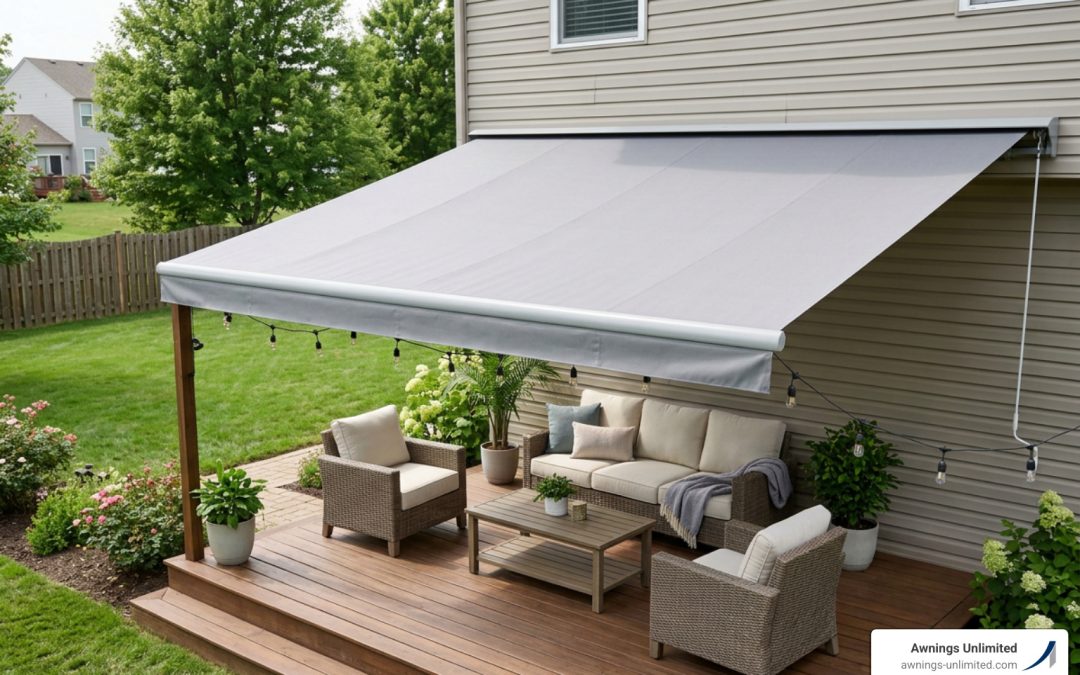
What to Know Before Buying a Patio Awning
A patio awning or structural cover is one of the most effective ways to extend your outdoor living space, protect against harsh sun and weather, and add lasting value to your home. Whether you’re comparing materials, sizes, or installation options, here’s a quick overview of what matters most:
Quick-Reference: Structural Patio Cover Options at a Glance
| Type | Best For | Key Advantage |
|---|---|---|
| Solid Aluminum Cover | Year-round protection & complete shade | Maximum durability, zero maintenance, snow load capacity |
| Lattice / Pergola Cover | Partial shade & classic aesthetic | Beautiful wood-like appearance, filtered light |
| Polycarbonate Cover | Rain protection with natural light | Translucent panels let light through while blocking UV |
Patio awnings and structural covers are fully engineered systems built to handle wind, rain, heavy snow, and intense UV exposure. The right choice depends on your climate, your home’s architecture, and how much protection you actually need.
This guide covers everything — types, materials, sizing, costs, installation, and maintenance — so you can make a confident decision.
At Awnings Unlimited, we’ve been designing and installing custom patio awning and structural cover solutions for homeowners across Northern Utah since 1976, using durable, maintenance-free materials like Alumawood by Amerimax. Every installation is backed by an industry-leading warranty and built to handle Utah’s demanding climate year-round.
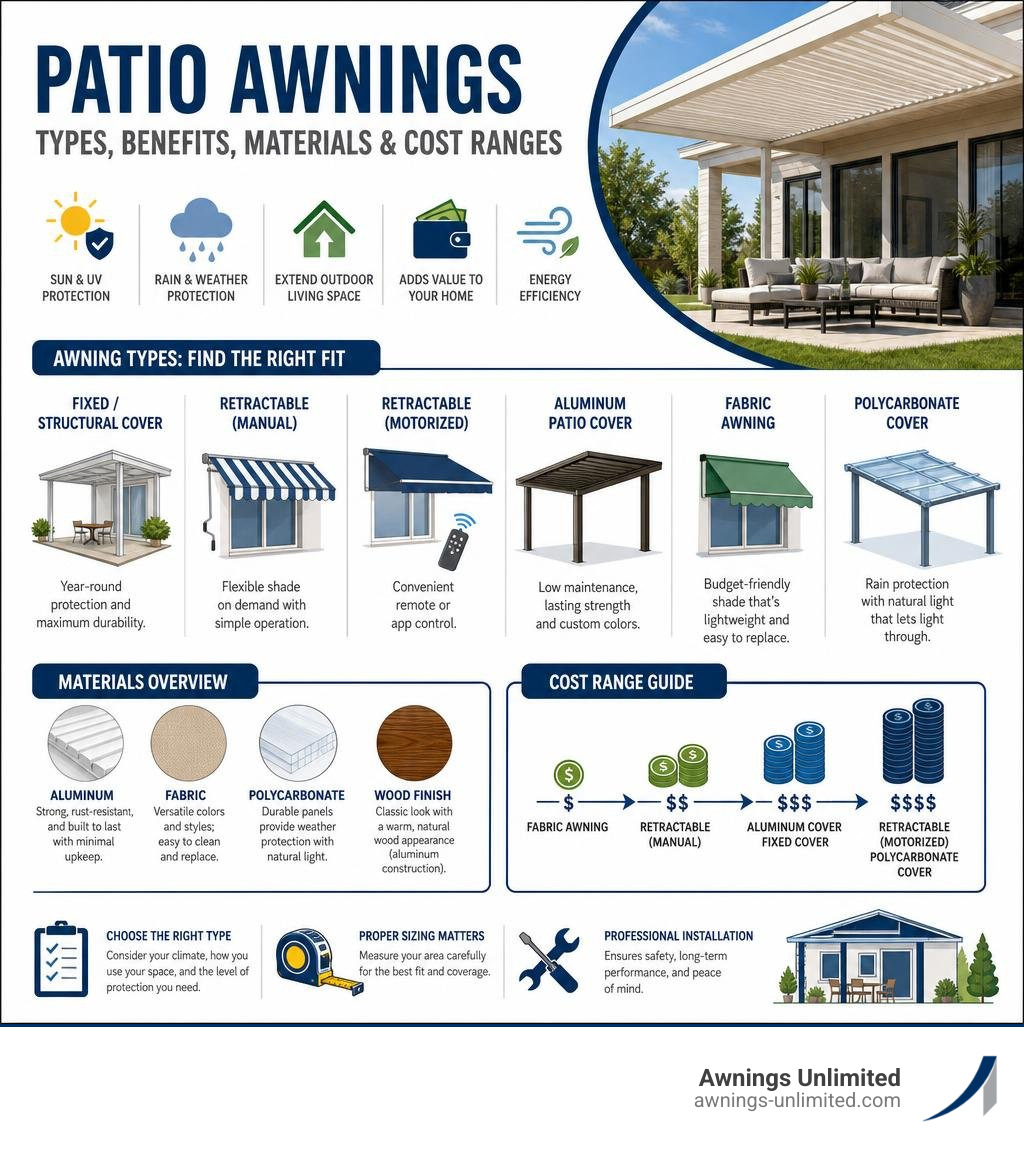
Key Benefits of Installing a Patio Awning
Investing in a patio awning is about more than just throwing some shade over your backyard deck. It completely changes how you interact with your home’s outdoor spaces. If you have ever had to abandon a backyard barbecue because the afternoon sun was melting the potato salad (and your guests), you already know how crucial reliable shade can be.
By adding a structural cover, you are essentially building an outdoor room that remains comfortable even during the hottest summer days. Exploring these upgrades is a great way to Transform Your Outdoor Space: The Benefits of Home Awnings without the massive price tag of a full home addition.

Sun Protection and UV Blockage
The summer sun along the Wasatch Front can be incredibly intense. High-quality patio covers and structural awnings act as a defensive shield for your family. Premium acrylic fabrics and solid aluminum covers block up to 98% of harmful UVA and UVB rays, boasting a UPF 50+ rating. This level of protection is essential for keeping kids and pets safe from sunburns while they play outside.
In Utah, where high elevation means even stronger UV exposure, having a dedicated shade structure is not just a luxury—it is a health-conscious decision. For more details on why local homeowners prioritize these structures, see our article on 5 Reasons Awnings Are a Must-Have for Utah Homes.
Energy Savings and Climate Control
Many homeowners do not realize that a patio awning can dramatically lower indoor utility bills. When direct sunlight streams through your windows and sliding glass doors, it creates a greenhouse effect that forces your air conditioning system to work overtime.
By blocking that solar heat gain before it ever touches your glass, a strategically placed awning can reduce indoor temperatures by up to 15 degrees. This simple addition keeps your home naturally cooler and slashes your monthly cooling costs during our hot dry summers. To learn more about how shading your exterior walls boosts thermal efficiency, check out how Residential Awnings: Boost Your Curb Appeal and Comfort go hand-in-hand.
Extending Your Outdoor Living Space
A custom awning effectively extends your home’s usable square footage. It creates a reliable sanctuary for backyard entertainment, family dinners, or quiet morning coffees.
Beyond keeping you comfortable, a patio cover protects your outdoor furniture, grills, and electronics from fading, cracking, and water damage. Instead of constantly rushing outside to rescue your couch cushions from a sudden rain shower or watching your expensive patio set warp under the sun, you can rest easy knowing your outdoor living space is permanently shielded.
Types of Structural Patio Covers and Awnings
When choosing a permanent patio awning or structural cover, you have several design options to match your lifestyle and home architecture. Selecting the right structural style ensures your outdoor space is both functional and beautiful year-round. For a deep dive into comparing these primary categories, read our guide on Choosing the Right Awning for Your Home.

Solid Patio Covers for Maximum Protection
If you are looking for a true “set-it-and-forget-it” solution, a solid fixed patio cover is the gold standard. A permanent structural cover—especially one engineered from heavy-duty aluminum—remains deployed 365 days a year to provide complete shade and total protection from rain, snow, and sun.
Fixed solid covers are built to withstand heavy snow loads, making them incredibly popular in mountain regions like Park City and Heber City. They require zero daily adjustments and provide reliable shelter through rain, wind, and winter blizzards. Because they are anchored directly into your home’s framing and concrete footings, they offer unparalleled structural integrity and long-term value. To help you weigh your options and find the ideal match for your property, read through The Perfect Awning for Your Home and How to Find It.
Lattice and Pergola Covers for Filtered Light
For homeowners who want to define their outdoor living space without completely blocking out the sky, structural lattice covers (often called pergolas) are an exceptional choice. These structures feature spaced rafters that provide partial shade, allowing warm, filtered sunlight to pass through while still reducing overall heat.
Engineered for Durability and Peace of Mind
Unlike temporary shade options, structural patio covers are engineered to meet strict local building codes. They are designed to handle high-velocity winds and heavy snow accumulation without bending, warping, or collapsing. This permanent durability makes them a seamless, high-value addition to your home’s footprint.
Choosing the Right Materials, Sizes, and Styles
The materials you select will dictate how much maintenance your patio awning or structural cover requires and how many years it will last. In Utah’s climate—where we experience freezing winters, blazing summers, and dry winds—material choice is everything. For a look at how we tailor these options to individual properties, see our page on Custom Outdoor Awnings.
Material Comparison: Aluminum and Polycarbonate
| Material | Pros | Cons | Maintenance Level | Expected Lifespan |
|---|---|---|---|---|
| Aluminum (Alumawood) | Extremely durable, handles heavy snow, will not rust, warp, or rot | Higher upfront cost | Virtually Zero | 30+ Years |
| Polycarbonate | Lets in natural light, blocks UV rays, highly impact-resistant | Can scratch; requires occasional washing | Low | 15–20 Years |
For permanent, low-maintenance structures, we highly recommend Alumawood. It gives you the gorgeous, rustic look of real wood but is built from durable, powder-coated aluminum. This means you get the classic charm of a wooden pergola or solid cover without ever having to worry about termites, painting, peeling, or wood rot.
Sizing and Styling Your Patio Awning
To find the perfect size for your structural cover, start by measuring the width of the wall where you want to mount it and the footprint of your concrete pad or deck. As a general rule of thumb, we recommend extending the cover at least 5 inches beyond each side of your primary seating area to ensure complete shade coverage as the sun angles change throughout the day.
You will also need to consider the “projection”—which is how far out the cover extends from the wall—and the slope or pitch. A steeper pitch is excellent for shedding rain and snow, while a shallower pitch works well for low-clearance rooflines.
Styling is where you can get creative. From sleek, modern dark bronze and black frames to classic white or desert sand finishes, choose a design that complements your home’s existing architecture and color palette.
Popular Accessories and Custom Features
To make your outdoor living space truly feel like an extension of your living room, consider adding a few popular upgrades:
- Integrated LED Lighting: Built directly into the structural beams or posts, these lights let you transition your shaded patio into a cozy evening hangout space.
- Ceiling Fans and Heaters: Mounting outdoor-rated ceiling fans or infrared heaters directly to the structural frame allows you to control your climate year-round.
- Pull-Down Side Screens: Perfect for blocking low-angle evening sun and keeping pesky mosquitoes away from your dinner table.
Cost, Top Models, and Installation Options
When budgeting for a patio awning or structural cover, it helps to understand the general market landscape. While some homeowners look at retail options like the 9100 Power Patio Awning with Polar White Weathershield – 17 ft., Onyx Linen Fade for temporary shade, permanent structural covers offer a completely different level of durability, wind resistance, and snow load capacity.
For a complete breakdown of what goes into professional pricing for permanent structures, review our Awning Installation Costs Complete Guide.
Market Price Ranges and Custom Options
The total cost of a custom, professionally installed patio cover or architectural awning depends on several key factors:
- Material Quality: High-grade, powder-coated aluminum (like Alumawood) costs more upfront but lasts decades longer than basic retail materials.
- Size and Projection: Larger spans require heavier structural support beams and more material.
- Site Complexity: Mounting a structural cover to a complex roofline, stucco wall, or second-story deck requires specialized brackets and engineering.
- Permitting and Engineering: Fixed structures often require local building permits and stamped engineering plans to ensure they meet local wind and snow load codes.
DIY vs. Professional Installation
While putting together a cheap retail kit might seem like a fun weekend project, structural installations are incredibly demanding. A large patio cover acts like a giant sail; if it is not securely anchored into your home’s structural framing and concrete footings, a strong gust of wind can easily rip it off the wall, causing thousands of dollars in damage to your roof or siding.
Professional installation ensures that your structural awning is mounted safely, leveled perfectly, and fully compliant with local building codes. To understand why having an experienced crew handle the heavy lifting pays off in the long run, read our article on Why Professional Awning Installation Is Worth It.
Frequently Asked Questions about Patio Awnings
How do I clean and maintain my structural patio cover?
To keep your structural cover looking brand new, we recommend giving it a gentle rinse with a garden hose once a month to wash away loose dirt and pollen. For a deeper clean, scrub the aluminum frame or polycarbonate panels with a soft-bristle brush, warm water, and a mild, non-detergent soap (like Dawn). Because these are permanent, fixed structures, they require very little maintenance compared to temporary shade options.
For a complete checklist on preserving your investment, read our guides on Awning Maintenance: Extending Your Awning’s Life and How to Extend the Life of Your Home’s Awning with These Tips.
What wind speeds can a structural patio cover withstand?
Unlike temporary shade structures, professionally engineered structural patio covers are built to withstand extreme weather. Depending on local building codes and engineering specifications, our heavy-duty aluminum covers are designed to handle wind loads of 115 mph or higher, as well as heavy snow loads, ensuring they remain safe and secure year-round.
Do I need a permit to install a fixed patio cover?
In most Utah municipalities along the Wasatch Front, permanent, fixed structural patio covers do require a building permit to ensure they meet local snow load and wind engineering standards. If you live in an HOA-governed community, you will also need to submit your design plans for HOA board approval before construction begins. When you work with us, we handle the permitting and engineering processes for you to ensure everything is fully compliant.
Conclusion
A high-quality structural patio awning or cover is one of the best investments you can make to improve your home’s comfort, energy efficiency, and curb appeal. By choosing the rugged, lifetime durability of an Alumawood fixed patio cover, you ensure your outdoor space is protected and usable for decades to come.
Since 1976, Awnings Unlimited has helped families across Salt Lake City, the Wasatch Front, and Wyoming design custom shade solutions built to last. Ready to upgrade your backyard? Explore Our Custom Patio Cover Products and contact our team today for a free, no-obligation estimate!