


How Much Do Carports Cost — And What Should You Look For?
If you’re comparing carports and trying to find an affordable option that actually holds up, here’s a quick overview:
| Type | Starting Price | Best For |
|---|---|---|
| Basic steel carport kit | ~$1,000–$2,600 | Budget-conscious buyers, DIY |
| Mid-range metal carport | ~$2,600–$5,500 | Most homeowners, 1–2 vehicles |
| Wood/Alumawood carport | ~$5,500–$10,000+ | Curb appeal, durability, longevity |
| Large or custom carport | $9,000+ | RVs, multi-car, commercial use |
Key things to look for:
- Material (steel, aluminum, Alumawood, wood)
- Roof style (regular, boxed-eave, or vertical)
- Wind and snow load ratings for your local climate
- Warranty length on frame and finish
- Whether permits are required in your area
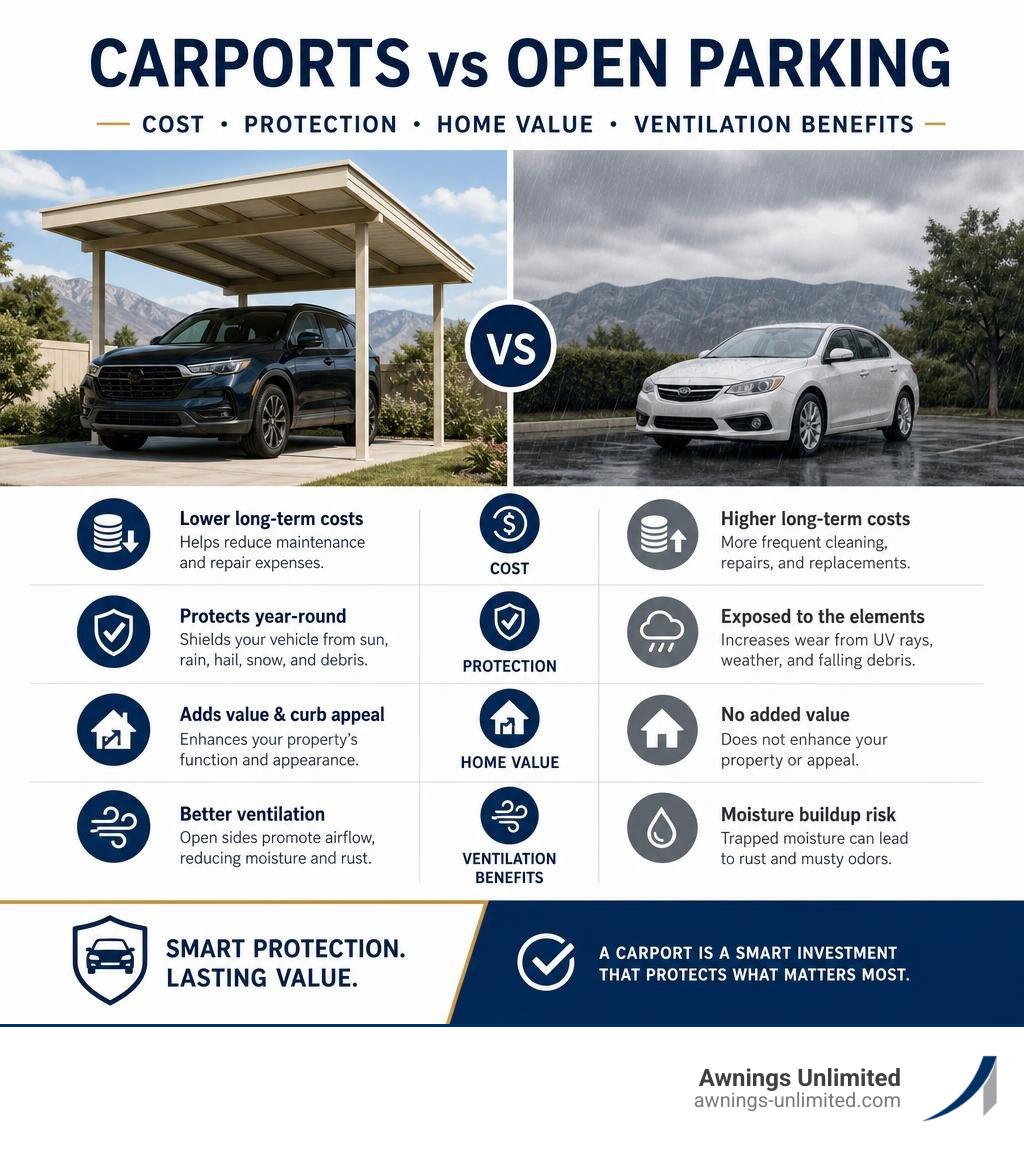
Your vehicle sits outside every day — exposed to UV rays, hail, snow, and freezing temperatures. A quality carport changes that, offering reliable protection without the cost or complexity of a full garage. And unlike a garage, a well-designed carport still lets air circulate freely, which actually helps prevent moisture buildup and rust on your vehicle.
The range of options today is wider than ever. You can pick up a basic steel kit for around $1,000, or invest in a custom-built structural carport that adds real value to your home and looks like it was always meant to be there.
At Awnings Unlimited, we’ve been designing and installing custom carports and structural patio covers for Northern Utah homeowners since 1976 — and we build ours using durable Alumawood by Amerimax, backed by an industry-leading warranty. If you’re ready to protect your vehicle with something built to last through Utah winters, we’re here to help.
The Benefits of Installing Protective Carports
Leaving your vehicle parked out in the open is a recipe for accelerated wear and tear. Over time, the elements will take a toll on your vehicle’s paint, interior, and mechanical parts. Installing a protective carport is one of the smartest, most budget-friendly home improvements you can make.
Here are the primary reasons homeowners across the Wasatch Front are choosing to install carports:
- UV and Sun Protection: The high-altitude sun in Utah is intense. Constant exposure to UV rays causes car paint to fade, clear coats to peel, and dashboards to crack. A carport acts as a permanent shield, keeping your car’s interior significantly cooler during scorching summer days.
- Heavy Snow and Ice Defense: Scraping ice off your windshield at 6:00 AM in freezing temperatures is a chore no one enjoys. By installing a carport, you can protect your vehicle from snow and ice and completely eliminate the need for morning windshield scraping.
- Hail and Storm Protection: Sudden mountain storms can bring damaging hail. A sturdy steel or Alumawood cover provides a reliable overhead shield, saving you from costly insurance claims and dented hoods.
- Superior Ventilation: Traditional garages can trap heat, humidity, and road salt under your car, which can accelerate rust. Because carports are open-sided, they allow continuous airflow. This natural ventilation dries off wet vehicles quickly, helping to prevent moisture-related corrosion.
- Increased Property Value: Adding a permanent, professionally installed shade structure is a great way to boost curb appeal. Home buyers love covered parking, meaning you can boost your home’s value with a new carport.
- Versatile Outdoor Living Space: When your car is parked elsewhere, your carport can easily double as a covered patio pavilion. It provides a great shaded spot for family gatherings, backyard barbecues, or a covered outdoor workspace.
Understanding the benefits of installing a carport at home is the first step. Next, you need to choose the right material to withstand our unique mountain climate.
Comparing Carport Materials: Metal, Wood, and Alumawood
The material you choose determines how long your structure will last, how much maintenance it will require, and how much it will cost. Here is how the three most common carport materials compare:
| Feature | Galvanized Steel | Traditional Wood | Alumawood (Aluminum) |
|---|---|---|---|
| Average Lifespan | 20–30 years | 15–25 years (with maintenance) | Lifetime |
| Maintenance Required | Low (occasional wash) | High (sanding, staining, painting) | None (wipe down only) |
| Rust & Rot Resistance | High (if galvanized) | Low (prone to rot and termites) | Maximum (never rusts or rots) |
| Curb Appeal | Industrial / Utility | High / Rustic | High / Modern & Elegant |
| Installation Time | 1–2 Days | 3–5 Days | 1 Day |
Galvanized Steel
Steel is highly durable and cost-effective. Many standard steel carports utilize a 14-gauge galvanized frame (with 12-gauge upgrades available for extra-heavy snow loads) and 29-gauge metal roof panels. While extremely tough, steel can look a bit industrial or commercial, which might not match the aesthetic of every residential neighborhood.
Traditional Wood
Wood carports, often constructed from cedar or redwood, offer a beautiful, natural look. However, they are the most expensive option and require constant upkeep. Without regular sanding, staining, and sealing, wood will warp, crack, rot, and become susceptible to wood-boring pests.
Alumawood
For homeowners who want the gorgeous texture of natural wood without the endless maintenance, Alumawood carports are the perfect solution. Alumawood is heavy-duty aluminum embossed with a realistic cedar grain texture.
It is finished with a factory-cured paint system that won’t peel, warp, rot, or rust. It is incredibly lightweight yet engineered to handle the heavy snow loads common along the Wasatch Front. If you want a premium look that lasts a lifetime with zero maintenance, Alumawood is the gold standard.
Key Factors to Consider Before Your Carport Installation

Before you purchase a kit or schedule an installation, there are several technical factors you must consider to ensure your new structure stands strong for years to come.
1. Roof Styles
When shopping for steel or aluminum covers, you will generally run into three different roof styles:
- Regular Roof: This style features rounded eaves and horizontal roof panels running from front to back. It is the most economical option but is best suited for areas with mild weather, as snow can accumulate in the horizontal ridges.
- Boxed-Eave Roof: This design features an A-frame style roof with horizontal panels. It offers a more traditional residential look at a moderate price point.
- Vertical Roof: Highly recommended for Utah winters. A vertical roof features an A-frame design where the panels run vertically from the ridge to the eave. This allows heavy snow, ice, rain, and debris to slide off easily, preventing dangerous weight buildup on the structure.
2. Wind and Snow Load Ratings
Utah’s winter weather requires highly resilient outdoor structures. A standard carport should be engineered to withstand local conditions. High-quality steel and Alumawood structures can be engineered to handle wind speeds up to 115–170 MPH and ground snow loads from 35 up to 90+ PSF (pounds per square foot).
If you live in higher-elevation areas like Park City or Heber City, choosing an engineer-certified carport with upgraded truss bracing is essential.
3. Anchoring Options
To prevent your carport from shifting or catching wind like a sail, it must be anchored properly:
- Concrete Slab/Footings: This is the most secure method. The structure is anchored directly into concrete using heavy-duty wedge anchor bolts.
- Ground/Gravel: If installing on soil or gravel, installers typically use long rebar anchors driven deep into the ground, often reinforced with concrete backfill in post holes.
Planning ahead and choosing the right specifications will save you time and money. For a complete breakdown of the planning process, check out our carport installation Utah guide.
Frequently Asked Questions About Carports
How much do custom carports cost to install?
The average cost of a metal carport ranges from $1,599 to $9,199 depending on the size, materials, and customization features. A basic single-car steel carport kit can cost between $1,000 and $2,600.
For a custom, professionally installed Alumawood or heavy-duty steel carport designed to match your home’s architecture, prices typically range from $5,500 to $10,000+. Factors that influence the final cost include the height of the legs, the thickness of the metal gauge, and whether you add side panels or integrated gutters. For a closer look at pricing, read our guide on carport prices installed.
Do I need a permit for residential carports?
In most Utah municipalities – including Salt Lake City, Ogden, Bountiful, and Provo – yes, you will typically need a building permit for any permanent carport installation. Local building departments enforce strict regulations regarding setbacks, which are the required distances between the structure and your property line, as well as snow load requirements. You can also review statewide code resources through the Utah Uniform Building Code Commission.
Additionally, if you live in a community governed by a Homeowners Association (HOA), you must obtain HOA approval for the style, color, and placement of your carport before installation begins.
Working with a professional installer who understands local building codes ensures your structure is fully compliant. If you are ready to move forward, you can explore professional options for getting metal carports installed in your area.
What are the standard sizes for single and multi-car covers?
Carport dimensions vary depending on the number and type of vehicles you plan to shelter:
- Single Car: Typically measures 12 feet wide by 20 to 24 feet long. This provides plenty of space for a standard sedan, SUV, or light truck.
- Double Car (2-Car): Typically ranges from 18 to 24 feet wide by 20 to 24 feet long. A 20×20 structure is a highly popular residential size.
- Triple Car (3-Car): Measures at least 30 feet wide by 20 to 24 feet deep to allow all three vehicles to park comfortably without door-dinging.
- RV and Camper Covers: These require extra height clearance. Leg heights usually start at 12 to 14 feet, with lengths stretching from 30 to 40 feet to protect large motorhomes, travel trailers, or fifth wheels.
No matter what you drive, custom carports come in all sizes to perfectly match your vehicle clearance and driveway footprint.
Conclusion
Investing in a carport is a highly practical, cost-effective way to protect your vehicles, add value to your property, and make your daily routine a little easier. Whether you want to escape the morning routine of scraping winter ice or shield your car’s paint from the blistering summer sun, a custom carport delivers year-round peace of mind.
While DIY kits are available, a professional installation ensures your carport is properly anchored, fully permitted, and engineered to withstand heavy Utah snow loads. At Awnings Unlimited, we specialize in designing and installing premium Alumawood custom carports and structural patio covers that stand the test of time.
If you live along the Wasatch Front — from Logan down to Provo — we are ready to help you build the perfect shelter. Contact us today to get a free estimate and get ready for winter with a new carport designed just for your home!