

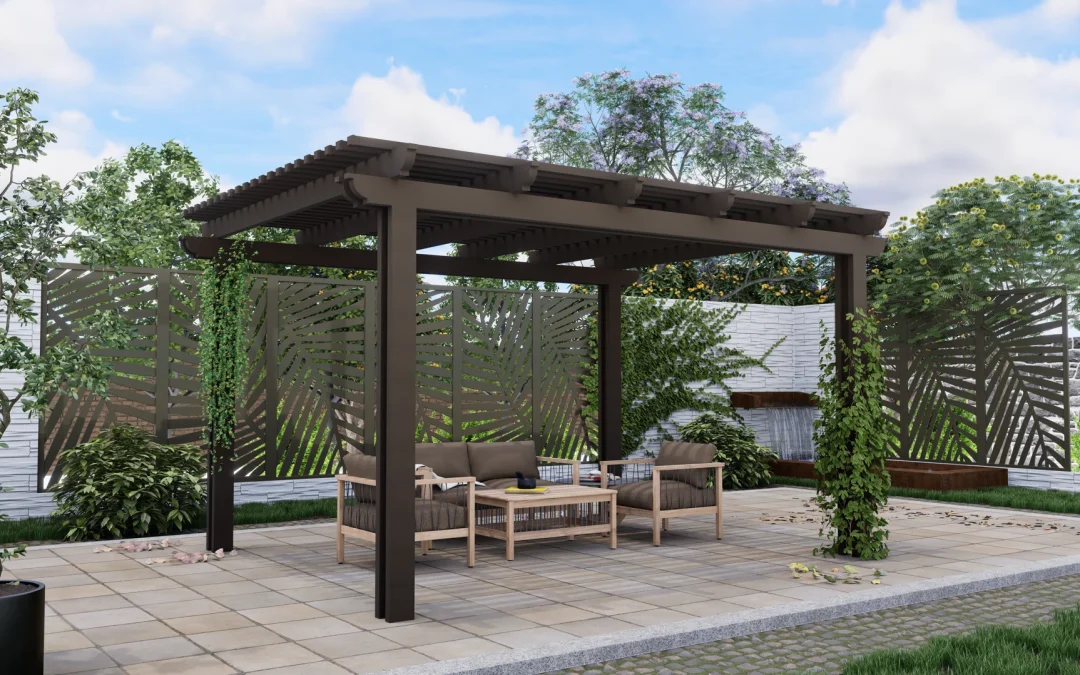
Why Understanding the Carport Installation Process Matters in Utah
Carport installation Utah homeowners consider is more than just adding a covered parking space—it’s about protecting valuable assets from one of the nation’s most extreme climates. Whether you’re facing 60 inches of winter snowfall or intense summer sun exceeding 100 degrees, understanding the installation process ensures you make informed decisions that result in a durable, compliant, and valuable addition to your property.
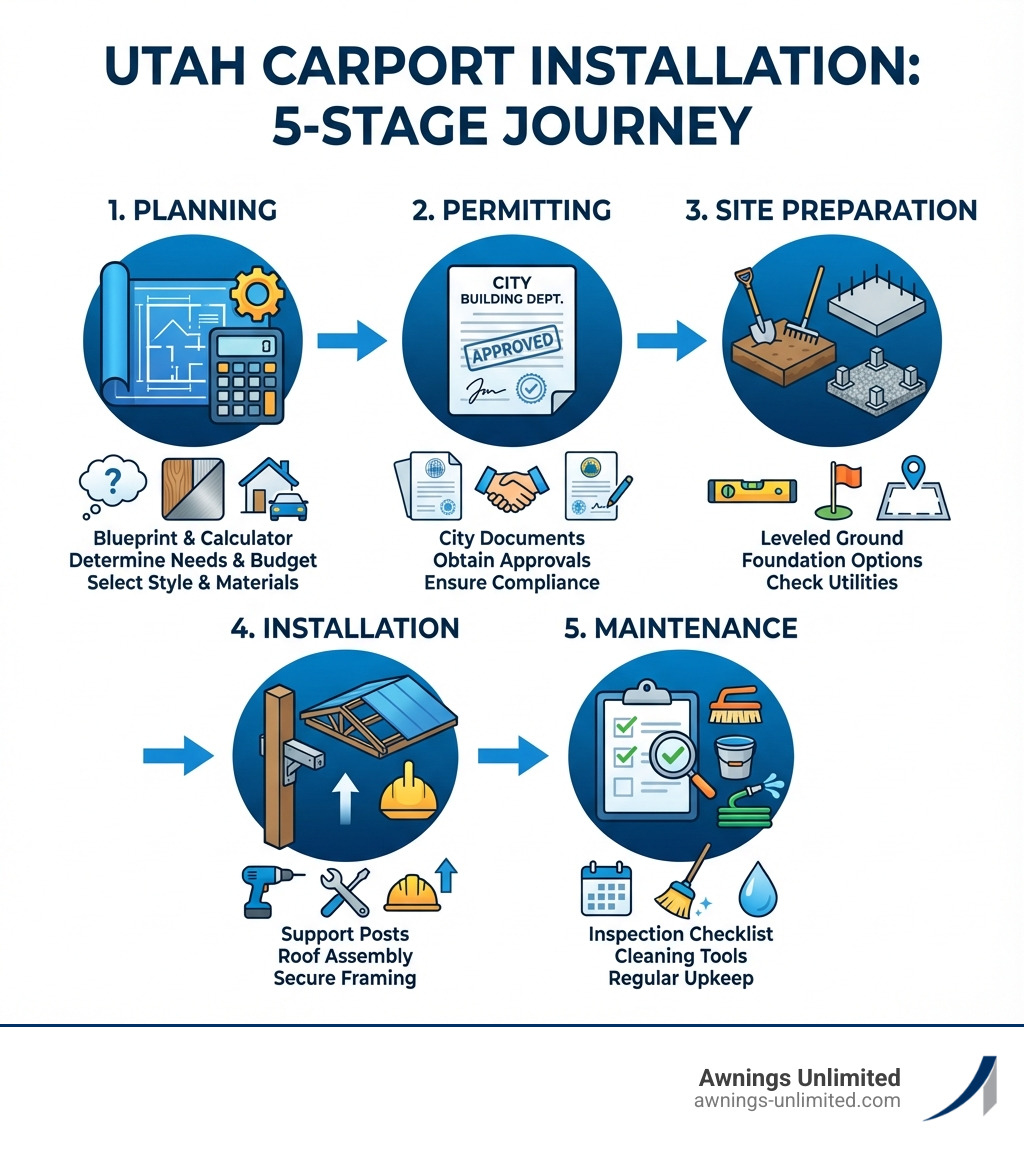
The carport installation process in Utah typically involves:
- Planning – Choosing style, materials, and size while determining your budget
- Permitting – Obtaining necessary approvals from local building departments and ensuring compliance with snow load requirements
- Site Preparation – Leveling the ground, checking utilities, and preparing the foundation
- Installation – Setting posts, assembling frames, and securing roofing (usually 1-3 days with professionals)
- Maintenance – Regular inspections and cleaning to ensure longevity
Key considerations unique to Utah:
- Engineering for heavy snow loads (up to 60+ inches annually in many cities)
- Anchoring systems for varying foundation types
- Material selection for extreme temperature swings (30°F winters to 100°F+ summers)
- Local zoning regulations and permit requirements
As Awnings Unlimited, we’ve been serving Salt Lake City and Northern Utah since 1976, specializing in carport installation Utah homeowners trust, using durable Alumawood materials engineered to withstand harsh winters and intense summers. Our nearly 50 years of local experience means we understand exactly what it takes to build structures that last in Utah’s unique climate.
Step 1: Planning Your Perfect Utah Carport
Before any post hits the ground, the most crucial step in any carport installation Utah project is thorough planning. This section covers the crucial decisions you’ll make before any construction begins, ensuring your carport meets your needs and complies with local standards.
Why a Carport is a Smart Investment in Utah
Utah’s climate is nothing if not dramatic. From scorching summer heat to heavy winter snowfalls, our vehicles are constantly battling the elements. This is precisely why a carport isn’t just a luxury; it’s a smart, protective investment.
- Heavy Snow Protection: With cities in Utah experiencing approximately sixty inches of snow during the winter, a robust carport is essential. Without proper cover, snow and ice can accumulate on your vehicle, leading to potential damage, frozen locks, and the tedious task of clearing it every morning. Our carports are designed with proper load-bearing beams to withstand Utah’s heavy snow, ensuring your vehicle stays protected and accessible.
- Intense Sun and UV Protection: Utah summers can see temperatures soar above 100 degrees. Prolonged exposure to intense UV rays can cause paint to fade, dashboards to crack, and interiors to degrade. A carport provides vital shade, preventing sun damage and helping your vehicle retain its value and appearance. It also means you won’t be stepping into a scorching hot car after a long day!
- Hail Damage Prevention: While less frequent, hail storms can cause significant damage to vehicles in minutes. A sturdy carport acts as a shield, deflecting hailstones and saving you from costly repairs and insurance claims.
- Increased Home Value: A well-designed carport isn’t just practical; it significantly improves your home’s curb appeal and overall market value. It’s a desirable feature for potential buyers, showing that your property offers thoughtful protection for vehicles and outdoor assets.
- Versatile Outdoor Space: Beyond vehicle protection, carports offer versatile covered space. They can serve as a shaded play area for children, a workspace for DIY projects, an outdoor entertaining area for family gatherings, or simply extra storage for outdoor equipment.
Choosing the Right Carport Type and Material
The type and material of your carport will largely depend on your aesthetic preferences, functional needs, and budget.
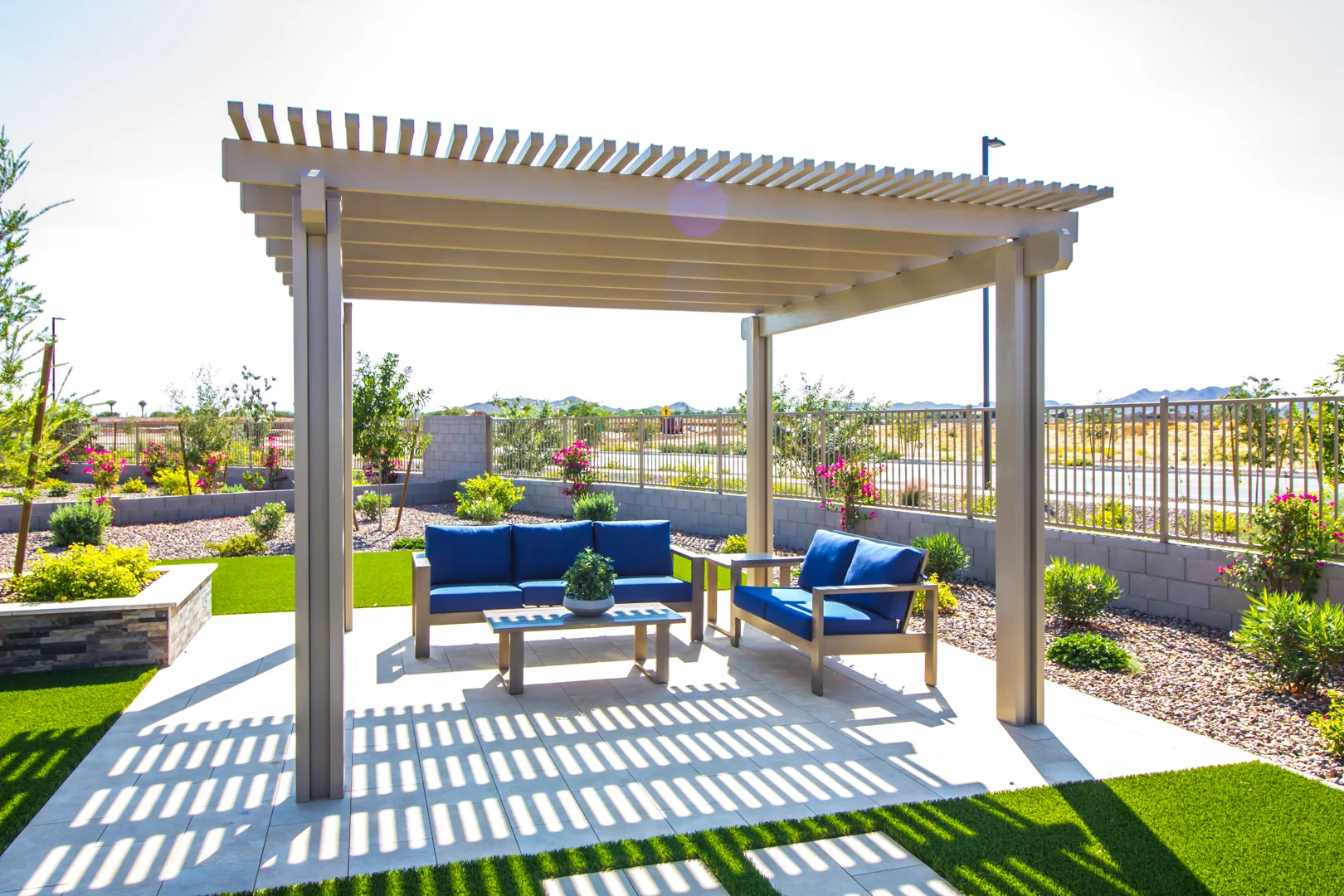
- Attached Carports: These carports are connected directly to your home, often appearing as a seamless extension of your existing architecture. They offer convenient access from your house to your vehicle and can even help lower interior home temperatures by providing additional shade to a side of your home.
- Freestanding Carports: For those who prefer flexibility or have specific site requirements, freestanding carports are independent structures not connected to the main house. This versatility means they can be placed almost anywhere on your property, and in some cases, can even be relocated if your needs change. They are excellent for creating dedicated covered spaces away from the main dwelling.
- Premium Metal Carports (Steel, Aluminum): Metal carports are renowned for their durability and minimal maintenance requirements. They come in various gauges and finishes, offering robust protection. We work with high-quality steel and aluminum frames that are built to last.
- Alumawood Benefits: At Awnings Unlimited, we frequently recommend Alumawood for its unique blend of aesthetics and resilience. Alumawood is an innovative material that offers the beautiful look of real wood without the typical maintenance. It’s made from structural aluminum that is factory-finished to retain its color, gloss, and texture. This means it will never rust, warp, crack, or rot, making it an ideal, low-maintenance choice for Utah’s climate. In fact, our Alumawood carports come with a limited lifetime warranty on the materials used, providing you with long-term peace of mind.
To help you decide, here’s a quick comparison of common carport materials:
| Feature | Alumawood | Steel |
|---|---|---|
| Durability | High; resistant to rot, warp, crack, rust | Very High; extremely strong, rust-resistant (if galvanized) |
| Maintenance | Very low; no painting or staining needed | Low; occasional cleaning, rust checks |
| Aesthetics | Wood-like appearance, neat | Industrial, modern |
| Cost | Moderate to High | Moderate to High |
Budgeting, Financing, and Navigating Utah Permits
Understanding the financial and regulatory aspects upfront will save you headaches down the road.
- Typical Carport Costs: The cost of a carport installation Utah project varies widely based on size, materials, complexity, and whether you opt for DIY or professional installation. Generally, costs will include materials, labor, and potential permit fees. While we offer a range of solutions to fit various budgets, we always recommend getting a free quote custom to your specific needs.
- Material vs. Labor Costs: For a professional installation, labor can be a significant portion of the overall cost, reflecting the expertise and efficiency of skilled crews. Materials, especially high-quality options like Alumawood or heavy-gauge steel, also contribute substantially.
- Permit Fees: Don’t forget to factor in potential permit fees, which vary by municipality.
- Financing Options: We understand that a carport is a significant investment. That’s why we work with partners to offer various financing options. These can include traditional loans with competitive rates and terms, making it easier to manage your budget.
- Local Building Codes and Zoning Regulations: This is perhaps the most critical planning step. Before any construction, you must check with your local city or county office (e.g., Salt Lake City, Provo, Ogden, etc.) to understand their specific building codes and zoning regulations. These codes dictate everything from setback requirements (how far your carport must be from property lines) to height restrictions.
- Snow Load Requirements: Crucially, Utah has stringent snow load requirements due to our heavy winters. Your carport design must be engineered to withstand these loads. A professional installer, like us, will ensure your carport meets or exceeds these local requirements, preventing structural failure and ensuring safety. Neglecting permits or local codes is a common mistake that can lead to fines or the forced removal of your structure, so always, always check first!
The “Carport installation Utah” Process Explained
Once your planning is complete and permits are in hand, it’s time to bring your vision to life. From breaking ground to the final touches, here’s what to expect during the installation phase, whether you do it yourself or hire a professional.
Preparing the Installation Site
Proper site preparation is foundational to a successful and long-lasting carport. Skimping here can lead to instability and maintenance issues later.
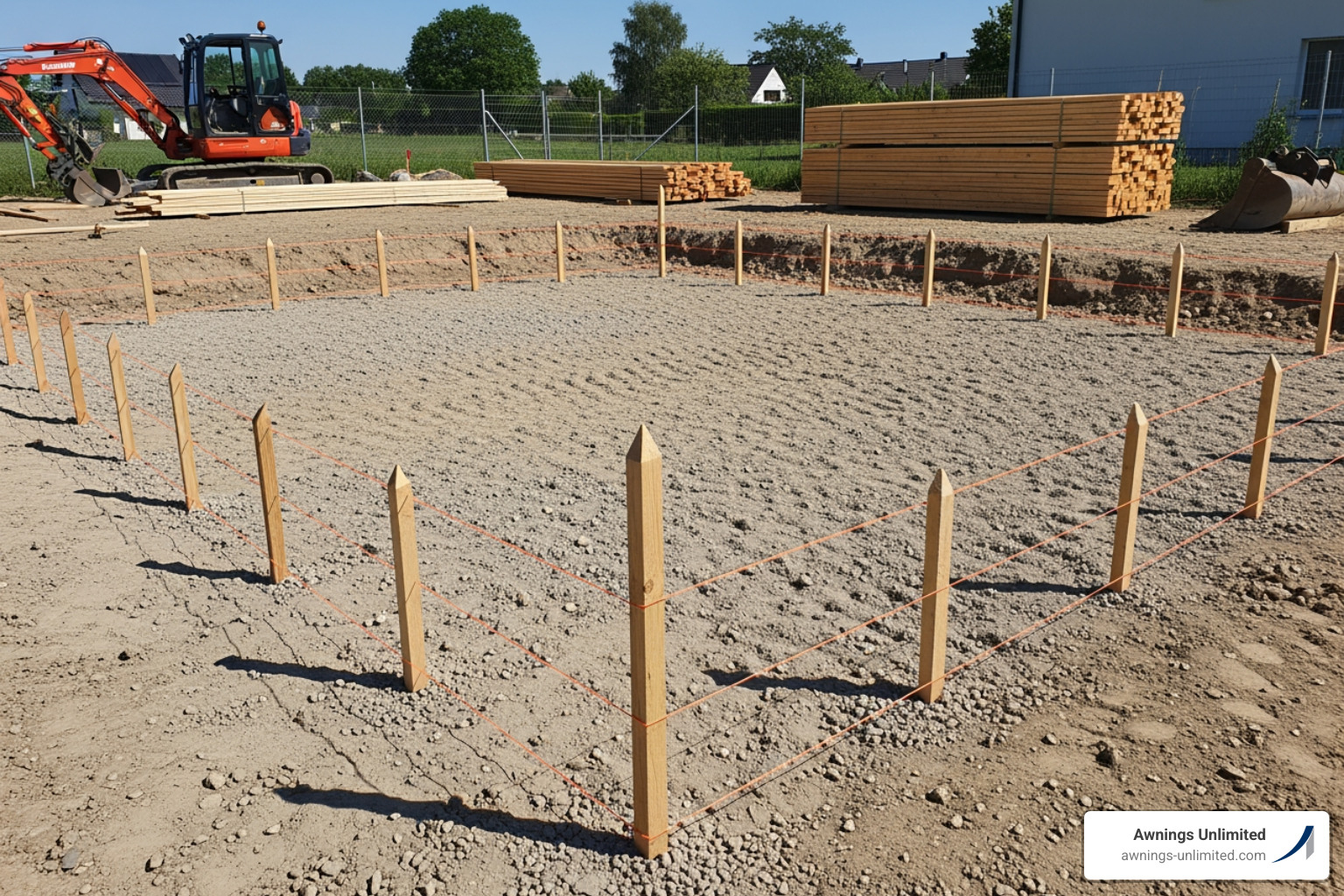
- Site Selection: We’ll help you choose the best location on your property. This involves considering factors like sun exposure throughout the day, proximity to your home, and ease of access.
- Leveling the Ground: The installation area must be as level as possible to ensure structural integrity and proper drainage. Any significant slopes will need to be graded or compensated for during foundation work.
- Drainage Considerations: Good drainage is vital to prevent water accumulation around the carport’s base, which can lead to erosion or damage over time. We’ll assess the natural flow of water on your property.
- Checking for Underground Utilities: Before any digging commences, it’s absolutely critical to call 811 (the national “Call Before You Dig” hotline) to have all underground utilities marked. This prevents accidental damage to water lines, gas lines, electrical cables, or communication wires, which can be dangerous and extremely costly.
- Foundation Types: Carports can be installed on various surfaces. Options include pouring a concrete slab, anchoring into existing asphalt, or preparing a gravel or dirt base. The choice of foundation depends on your budget, local codes, and the specific design of your carport. We ensure proper anchoring methods are used for your chosen foundation type.
A Step-by-Step Guide to Assembling Your Carport
While the specifics vary by carport design, a typical professional carport installation Utah follows a general sequence:
- Setting Support Posts: The vertical support posts are the backbone of your carport. For maximum stability, especially in Utah’s climate, these posts are often set into precisely dug holes and secured with concrete footings. We ensure they are perfectly level and aligned.
- Assembling the Roof Frame: Once the posts are secure, the horizontal beams and rafters that form the roof frame are assembled and attached to the support posts. This framework is engineered to distribute weight, particularly the heavy snow loads we experience here.
- Securing Roofing Panels: The chosen roofing material (e.g., Alumawood panels, metal sheeting) is then carefully secured to the roof frame. This step involves precise measurements and fastening techniques to ensure a watertight and durable cover.
- Ensuring Structural Stability: Throughout the entire process, our skilled crews carefully check for structural stability, ensuring all connections are tight, and the entire structure is plumb, level, and square. We understand the need to use proper load-bearing beams in construction, especially given Utah’s heavy snow, so our carports are built to last even in extreme conditions.
For those considering a DIY approach, here’s a list of essential tools you’d likely need:
- Measuring tape
- Level (long and short)
- Post hole digger or auger
- Power drill with various bits
- Wrenches and sockets
- Circular saw or metal shears (depending on material)
- Safety glasses and gloves
- Ladder
- Concrete mix and wheelbarrow (if setting posts in concrete)
How Long Does Carport Installation Take in Utah?
One of the benefits of a carport is its relatively quick installation time, especially when compared to a traditional garage.
- Professional Installation Timeline: With an experienced crew, most standard carport installation Utah projects can be completed efficiently. Many of our installations, from start to finish, are typically completed in as little as 1 to 3 days. This includes setting posts, assembling the frame, and securing the roof. While we are typically scheduling 2-3 weeks in advance, the actual on-site work is fast.
- DIY Project Duration: If you choose the DIY route, expect the project to take significantly longer. Depending on your experience level, the complexity of the design, and the amount of help you have, a DIY carport could take anywhere from a few days to several weekends.
- Factors Affecting Timeline: Several factors can influence how long your installation takes:
- Weather: Unpredictable Utah weather (heavy winds, rain, snow) can cause delays.
- Complexity: Larger or more intricate designs will naturally require more time.
- Site Preparation: Extensive site leveling or complex foundation work can add to the overall duration.
- Scheduling: Our current availability can influence when your project begins, so we always recommend requesting a free quote to get the most accurate timeline.
DIY vs. Hiring a Professional Installer
Deciding whether to tackle the project yourself or bring in experts is a major consideration for any carport installation Utah project. Here’s a breakdown to help you choose.
The Pros and Cons of a DIY Installation
For the handy homeowner, a DIY carport can be a tempting prospect.
- Pros:
- Cost Savings on Labor: This is often the biggest motivator. By doing the work yourself, you eliminate labor costs, potentially saving a significant amount.
- Sense of Accomplishment: There’s undeniable satisfaction in stepping back and admiring a structure you built with your own hands.
- Cons:
- Required Skill Level: Carport installation involves construction skills, including measuring, cutting, leveling, and safely working with tools and heavy materials. Without adequate experience, mistakes can be costly and potentially dangerous.
- Time Commitment: A DIY project demands a considerable amount of your personal time, from researching and planning to sourcing materials and executing the build. It’s often a multi-day or multi-weekend endeavor.
- Potential for Mistakes: Errors in foundation, alignment, or anchoring can compromise the structural integrity of your carport, especially when facing Utah’s snow loads. Such mistakes can be expensive to fix or, worse, lead to a dangerous structure.
- Sourcing Materials: You’ll be responsible for finding and transporting all necessary materials, which can be a logistical challenge.
- Warranty Limitations: DIY projects typically don’t come with the labor and construction warranties that professional installations offer.
Why a Professional for “Carport installation Utah” is Often Best
While DIY can save money, hiring a professional for your carport installation Utah project often provides peace of mind and a superior result.
- Expertise with Utah’s Climate: We have nearly 50 years of experience building carports right here in Utah. We understand the specific challenges posed by our extreme weather, from heavy snow loads to intense sun. Our crews are trained to build carports that are not just functional but genuinely resilient in these conditions.
- Proper Engineering for Snow Loads: This is non-negotiable in Utah. Our carports are engineer-certified and built with the proper load-bearing beams and anchoring systems to handle the significant snow accumulation. This ensures your carport remains stable and safe through the harshest winters.
- Access to Quality Materials like Alumawood and Steel: As a professional installer, we have established relationships with suppliers, giving us access to high-quality, durable materials like our Alumawood products. We ensure all materials meet stringent ASTM steel specifications and are suitable for long-term outdoor exposure.
- Safety and Insurance: Our crews are licensed and insured, protecting you from liability in case of accidents during installation. Safety is always our top priority.
- Labor and Construction Warranties: We stand by our work. Our carports come with a 5-year warranty on our construction and labor, in addition to the limited lifetime warranty on materials. This provides a level of protection and assurance that DIY projects simply cannot match.
- Efficiency: Our professional crews can complete installations quickly and efficiently, often in just 1-3 days, minimizing disruption to your daily life.
Common Installation Mistakes to Avoid
Whether you go DIY or hire a pro, it’s wise to be aware of common pitfalls:
- Neglecting Permits: As mentioned, this is a huge one. Always check with your local authorities. Failure to do so can lead to fines, delays, or even demolition.
- Inadequate Foundation: A weak or improperly prepared foundation will compromise the stability of the entire structure. Ensure the ground is level and the footings or anchors are appropriate for the soil and design.
- Choosing Materials Not Suited for Heavy Snow: Opting for cheaper, flimsy materials that can’t handle Utah’s snow loads is a recipe for disaster. Always prioritize durability and strength.
- Improper Anchoring: Your carport needs to be securely anchored to the ground or foundation to resist strong winds and prevent shifting.
- Poor Alignment: A carport that isn’t plumb, level, and square will not only look bad but can also be structurally unsound and prone to issues over time.
Post-Installation: Maintenance and Long-Term Value
Once your carport is up, a little care goes a long way in preserving its function and appearance for years to come. With proper maintenance, your carport installation Utah will continue to serve you well.
Essential Maintenance for Utah’s Four Seasons
- Regular Inspections: Periodically walk around your carport and inspect it for any signs of damage, wear, or loose components. Look for cracks in concrete footings, bent metal, loose fasteners, or signs of rust (if applicable to your material). Addressing small issues early can prevent them from becoming larger, more expensive problems.
- Cleaning Methods for Different Materials:
- Alumawood: Our Alumawood carports are incredibly low maintenance. A simple rinse with a garden hose or a gentle wash with mild soap and water is usually all that’s needed to keep them looking pristine. Avoid harsh abrasive cleaners.
- Steel: Metal carports can be cleaned with a hose or pressure washer and a gentle detergent. For painted steel, be mindful not to chip the paint. Regularly check for rust spots and address them promptly with appropriate rust-inhibiting primers and paints.
- Checking and Tightening Fasteners: Over time, vibrations or temperature fluctuations can cause bolts and screws to loosen. Periodically check all fasteners and tighten any that feel loose to maintain structural integrity.
- Safe Snow Removal Techniques: In Utah, snow removal is crucial. While our carports are engineered for heavy snow loads, it’s still a good practice to gently remove excessive accumulation, especially during prolonged heavy snowfall. Use a soft-bristled brush or a snow rake designed for roofs to avoid damaging the roofing panels. Never climb on the carport roof unless it is specifically designed for foot traffic and you have proper safety equipment.
- Regular maintenance is key to the longevity of any outdoor structure. For more general tips on keeping your home structures in top shape, check out The importance of regular maintenance for home structures.
Eco-Friendly Options and Adding Home Value
A carport can be more than just a cover; it can be an environmentally conscious addition that boosts your home’s appeal.
- Solar Panel-Ready Carports: Consider designing your carport to be “solar-ready” or even installing solar panels directly onto its roof. This transforms your carport into a mini-power plant, generating clean energy, reducing your electricity bills, and contributing to a greener environment.
- Using Recycled or Sustainable Materials: When choosing materials, inquire about options that incorporate recycled content or are sourced sustainably. Our Alumawood products, for example, offer an environmentally safer alternative compared to traditional wood, as they don’t require the same chemical treatments or ongoing resource consumption.
- How a Carport Improves Curb Appeal: A well-designed carport, with materials and colors that complement your home’s existing exterior, significantly improves curb appeal. It makes your property look more finished, functional, and aesthetically pleasing. A carport that blends seamlessly with your home’s design is a valuable asset.
- A Desirable Feature for Home Buyers: Beyond aesthetics, a carport adds tangible value. It protects vehicles, helping them retain their value by shielding them from the elements. It also provides versatile covered space that can be used for storage, recreation, or hobbies. These practical benefits make your home more attractive to potential buyers, acting as a significant selling point and increasing its overall market value.
Frequently Asked Questions about Utah Carports
We often get asked similar questions about carport installation Utah homeowners have in mind. Here are some of the most common ones:
Will a carport withstand Utah’s heavy snow?
Yes, absolutely, when properly engineered and installed. With nearly 50 years of experience building carports here in Utah, we understand the need to use the proper load-bearing beams in construction. Our carports are specifically designed and built to last, even in extreme conditions and heavy snowfall. We ensure they meet or exceed local snow load requirements, providing reliable protection for your vehicles all winter long.
How much value can a carport add to my home?
A well-designed and professionally installed carport can significantly increase your home’s market value. It not only improves curb appeal, making your home more attractive to prospective buyers, but it also provides a highly functional, protected space. This protection helps cars, boats, RVs, and other vehicles retain their value, which is a major selling point. The added versatility of the covered area for storage or outdoor activities further boosts its appeal and the overall desirability of your property.
What kind of warranty should I expect for a new carport?
When you choose a reputable installer like Awnings Unlimited, you should expect a comprehensive warranty. We offer a limited lifetime warranty on the materials used, such as our durable Alumawood, which ensures your investment is protected for years to come. Additionally, we provide a 5-year warranty on our construction and labor, guaranteeing the quality of our installation. This combination of material and labor warranties provides peace of mind and assures the longevity of your new carport.
Conclusion: Protect Your Vehicle and Improve Your Home
Installing a carport is a practical and valuable upgrade for any Utah home, offering essential protection from the elements and boosting your property’s appeal. By following these steps—from careful planning and material selection to proper installation and maintenance—you can ensure a durable and stylish addition that lasts a lifetime. For expert guidance and professional installation using premium, weather-resistant materials, consider working with a trusted local company like Awnings Unlimited.
Ready to build your perfect carport? Get a free estimate for your custom carport project today!