


Why Engineer Certified Carports Are a Critical Investment
Engineer certified carports are metal or aluminum structures professionally designed and stamped by a licensed engineer to withstand specific wind speeds and snow loads for your area. Here’s what sets them apart:
- Engineered Drawings: Stamped blueprints showing structural calculations and foundation specs
- Wind & Snow Ratings: Designed to meet minimum 80 mph wind and 20 lbs/sf snow loads (or higher)
- Stronger Construction: 12-gauge steel framing, 30% more screws, improved anchoring systems
- Permit-Ready: Required documentation for building permits in most jurisdictions
- 20-Year Warranty: Rust-through protection backed by superior materials
While a basic carport offers simple shelter, an engineer certified carport is designed for your specific climate. In regions like Northern Utah and Wyoming, where heavy snowfall and high winds are facts of life, this distinction is critical. The difference isn’t always visible externally; it lies in the internal engineering and structural integrity. Certified units feature more support braces, stronger anchors, and tighter frame spacing, all based on professional calculations. This creates a structure that doesn’t just look strong—it is strong, with the documentation to prove it.
Since 1976, Awnings Unlimited has been Northern Utah’s trusted source for custom outdoor structures, including engineer certified carports designed to withstand our region’s demanding weather. Our expertise with Alumawood materials and understanding of local building codes ensure your investment delivers both immediate protection and long-term durability.
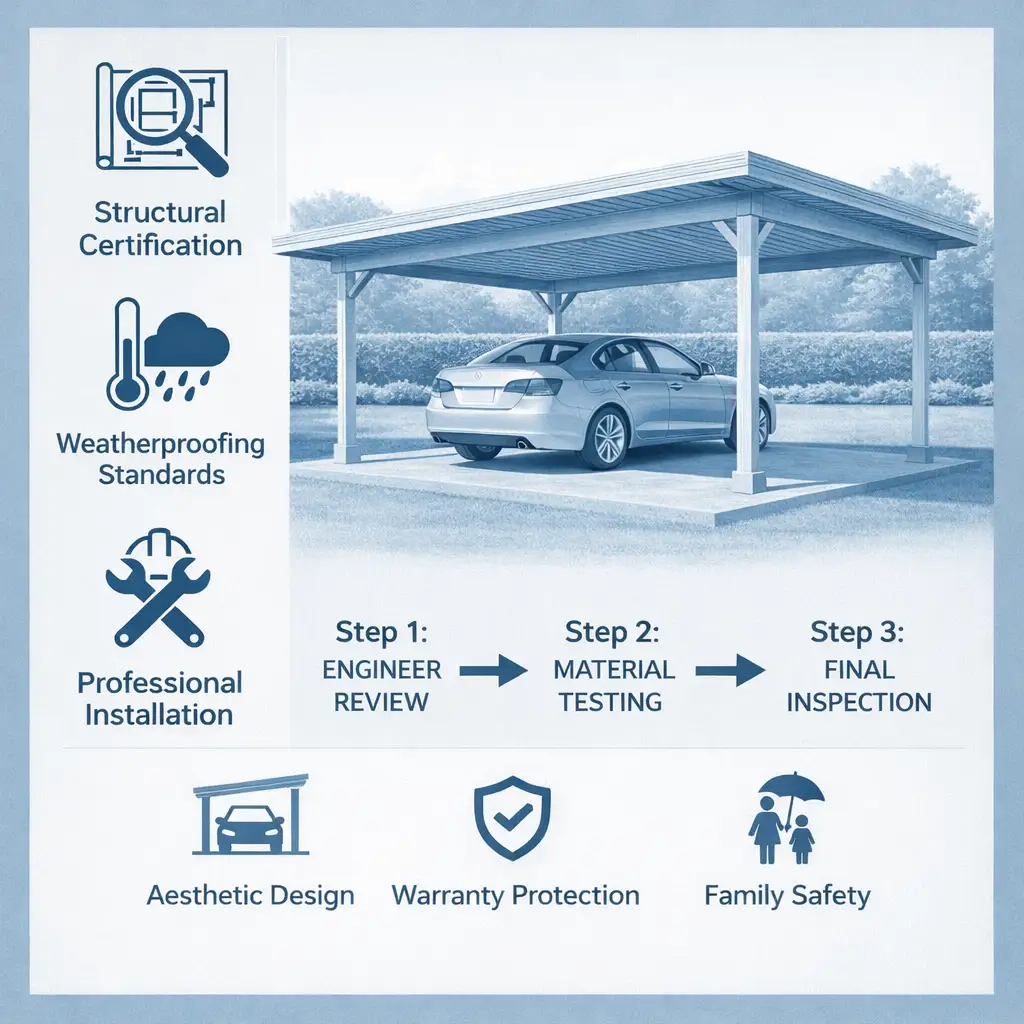
What are Engineer Certified Carports and Why Do They Matter?
An engineer certified carport is a structure that has undergone a rigorous design and approval process by a qualified professional engineer. This means its design, materials, and construction have been evaluated to safely withstand specific wind and snow loads for its intended location, attesting to its structural integrity and safety.
Why does this matter? A carport is more than a roof; it’s an investment in protecting your assets and enhancing your property. For us at Awnings Unlimited, serving communities across Utah, Wyoming, Idaho, and Eastern Nevada, we know our local climates. A certified carport ensures your structure will stand strong against the elements. It can also be a great addition to any home, whether free-standing or attached, and can double as a patio or lounging space. Choosing the right carport for your climate and home style is crucial for longevity.
The Engineer’s Role in the Certification Process
The engineer’s role is comprehensive. They review the design to ensure it meets industry standards and local codes, then perform structural calculations to determine how it will handle forces like wind and snow. Based on these calculations, they specify the exact materials, from the gauge of steel to the type of fasteners and foundation requirements. Finally, a state-certified professional engineer reviews and “stamps” the blueprints, providing an official seal of approval that the design complies with all state-specific building codes. This stamp is often required for building permits.
Decoding Wind and Snow Load Ratings
Understanding wind and snow load ratings is crucial for engineer certified carports, especially in our service areas where extreme weather is common. These ratings are specific measurements of how much force a structure can withstand:
- Wind Speed Ratings: Measured in miles per hour (mph), this indicates the maximum wind speed the carport can endure. Certified units typically have a minimum rating of 80 mph, with some designs engineered for up to 150-180 mph, which is vital for high-wind regions in Utah and Wyoming.
- Snow Load Ratings: Measured in pounds per square foot (psf), this shows the maximum weight of snow the roof can support. Certified units start at 20 lbs/sf and can go much higher (e.g., 30 lbs/sf or 90 lbs/sf) for areas with heavy snowfall, like the mountainous regions of Utah. Our Benefits of Installing a Carport in Utah article further details these local considerations.
These ratings are the result of precise engineering calculations that account for the unique climate of a given location, making your certified structure a robust shield for your belongings.
Certified vs. Non-Certified: A Structural Showdown
The differences between certified and non-certified carports are fundamental, impacting durability, safety, and performance. While they may look similar, the “bones” of a certified carport are significantly more robust, designed to endure forces that a non-certified structure might not.
At Awnings Unlimited, we emphasize that certified units are built for resilience and compliance, whereas non-certified options are often more basic.
Let’s break down the key differences:
| Feature | Certified Carports | Non-Certified Carports |
|---|---|---|
| Framing Gauge | Primarily 12-gauge steel for superior strength and structural integrity. | Often 14-gauge steel, which is thinner and less robust. |
| Anchoring System | Robust 30″ double-helix mobile home anchors for ground installations; larger, longer, and more wedge/sleeve anchors for concrete. | Basic 30″ re-bar anchors for ground installations; fewer and smaller concrete anchors. |
| Bracing | More extensive bracing, including 4′ braces on legs without gables/end walls for open units 8′ and taller, knee braces, and peak braces on every bow. | Less extensive or no specialized bracing, potentially leading to weaker points. |
| Engineering Plans | Includes engineered stamped approval blueprints and foundation specifications, essential for permits. | Generally does not include engineered plans or specific foundation specs. |
| Warranty | Typically comes with a 20-year rust-through warranty for the 12-gauge frame, along with wind and snow load ratings. | May have limited or no rust-through warranty; often only a 10-day workmanship warranty for 14-gauge non-certified buildings. |
| Wind/Snow Rating | Designed and rated to withstand specific wind speeds (e.g., 80-180 mph) and snow loads (e.g., 20-90 lbs/sf). | Not specifically rated for wind or snow loads, offering unknown performance in adverse weather. |
| Screws/Fasteners | Approximately 30% more screws used for steel panel sheeting, ensuring panels are more securely attached. | Fewer screws used, potentially compromising the security of the panels in high winds. |
| Frame Spacing | Tighter frame spacing on end walls (5′ apart or less) for improved rigidity. | Wider frame spacing on end walls (e.g., 8′ apart), which can reduce overall stability. |
The Backbone of Strength: Framing and Materials
The core difference lies in the materials. Certified carports use thicker 12-gauge steel framing, which is significantly more resistant to bending and corrosion than the 14-gauge steel in non-certified units. This makes it ideal for the demanding climates in Utah and Wyoming. We also offer Alumawood, which combines wood’s aesthetic with aluminum’s durability, engineered for comparable strength. A key indicator of quality is the warranty; certified 12-gauge steel units typically include a 20-year rust-through warranty, a level of protection rarely offered with non-certified options.
Securing Your Investment: Anchors, Bracing, and Fasteners
A carport is only as strong as its connections. Certified units use superior anchoring systems, such as 30″ double-helix mobile home anchors for ground installations and more numerous, larger wedge anchors for concrete. This provides greater uplift resistance against high winds. They also feature more extensive bracing, including knee and peak braces on every bow, to improve rigidity and prevent deformation. Finally, certified carports use about 30% more screws and have tighter frame spacing (5 feet or less). These details create a more rigid, stable structure and are why we prioritize them during installation. For more on this, see our Carport Installation: Everything You Need to Know Before You Start guide.
The Real Payoff: Durability, Safety, and Legal Compliance
Choosing an engineer certified carport is a smart, long-term investment that pays dividends in durability, safety, and legal compliance. For property owners in Salt Lake City, the Wasatch Front, and our other service areas, these benefits are significant. The long-term value of a certified structure, built to endure harsh weather, far outweighs the initial cost difference, leading to less maintenance and a longer lifespan. Most importantly, certified buildings meet rigorous safety standards, giving you peace of mind during extreme weather. They also come with the necessary engineer’s drawings to streamline the building permit process, helping you avoid fines or legal issues from non-compliant structures.
Why Invest in a Certified Carport Even When Not Required?
Even if local codes don’t require it, we at Awnings Unlimited strongly recommend a certified carport. Here’s why:
- Future-proofing: A certified carport is robust enough for future extreme weather, even if current codes are lenient.
- Increased Property Value: A well-built, certified structure is a functional asset that can be a major selling point.
- Insurance Advantages: Some insurance providers may offer better rates for certified structures due to their reduced risk of damage.
- Superior Protection: The additional anchors, bracing, and stronger framing offer unparalleled protection for your vehicles from hail, falling branches, or heavy snow.
- A Smarter Investment: The longevity, durability, and reduced risk of a certified building translate to long-term savings and greater satisfaction. Our article on how to Maximize Your Space: The Benefits of a Custom Carport highlights this value.
When are Engineer Certified Carports a Must-Have?
While always a wise choice, certified carports are an absolute necessity in certain situations:
- Stringent Building Codes: Many cities, like Salt Lake City, require engineer certification for any permanent outdoor structure.
- High-Wind Zones: Areas prone to strong winds, like the Wasatch Front or open plains in Wyoming, demand structures engineered to resist uplift. A certified carport with a high wind rating is essential.
- Heavy Snow Regions: For customers in places like Park City, UT, or mountainous parts of Idaho, a certified carport rated for heavy snow loads is non-negotiable to prevent roof collapse. Our Get Ready for Winter with a New Carport advice is particularly relevant here.
- Large or Custom-Sized Structures: Larger or custom carports face greater stresses, and engineering ensures their stability. We recommend certifying any structure over 24 feet wide, 31 feet long, or with legs 8 feet or taller.
Navigating Permits and Verifying Certification
Navigating building permits is easier with an engineer certified carport.
- Permit Requirements: Many jurisdictions require a building permit, and certified carports include the stamped engineered blueprints that building departments need.
- Implications of Non-Compliance: Installing a non-certified unit where a permit is required can lead to fines, removal orders, and issues with insurance or property sales.
- How to Request Stamped Drawings: When you purchase a certified carport from us, we provide the necessary engineer’s drawings and calculations with a state-certified professional engineer’s stamp.
- Identifying an Engineer’s Seal: A true certification includes a professional engineer’s (PE) stamp or seal on the blueprints. Always look for this official seal to verify your carport is certified.
Frequently Asked Questions about Certified Carports
We understand that investing in a carport, especially a certified one, brings up many questions. Here are some of the most common inquiries we receive at Awnings Unlimited.
How much more do engineer certified carports cost compared to non-certified ones?
Certified carports typically have a slightly higher upfront cost. This covers the engineer’s fees, stronger 12-gauge steel framing, more robust anchoring, and additional bracing. While the exact increase varies, it’s a modest portion of the total investment. We view this not as an expense, but as a value proposition. The long-term savings from increased durability, reduced maintenance, and avoiding permit issues make a certified carport a smarter investment. You’re paying for a superior product designed to last and provide peace of mind.
Are non-certified carports unsafe or a bad choice?
Not necessarily. The suitability of a non-certified carport depends on your location and needs.
- Suitable Applications: In mild climates with no significant wind or snow, and where building permits aren’t required, a non-certified carport can be a cost-effective solution for basic protection from sun and light rain.
- Climate Considerations: However, for our service areas across Utah, Wyoming, and Idaho, where extreme weather is common, we strongly advise against non-certified options. They are not engineered to withstand the high winds and heavy snowfalls common to the region.
- Risk Assessment: The main drawback of a non-certified carport is the unknown. Without an engineer’s stamp and specific ratings, you have no guarantee of its performance under stress. For the challenging climates we serve, an engineer certified carport is the superior option for true durability and safety.
Can a carport be certified after it has already been installed?
Unfortunately, certifying a carport after installation is generally not feasible. The certification process is a pre-engineering requirement, where an engineer approves the design, materials, and foundation before construction.
A non-certified unit installed without these specifications would likely require a complete rebuild to meet certified standards. This would involve an engineer’s assessment, significant structural modifications, and a new permitting process. The cost and complexity would likely exceed that of installing a new certified carport from the start. Therefore, we always recommend making the decision for certification at the time of purchase to ensure it’s built to spec and properly documented from day one.
Your Strongest Choice for Vehicle Protection
When protecting your vehicles across Utah, Wyoming, Idaho, Eastern Nevada, and Colorado, the choice is clear: an engineer certified carport is your strongest and smartest investment. The differences are significant: thicker 12-gauge steel, robust anchoring, and meticulous engineering provide superior strength, safety, and durability. This ensures legal compliance and delivers unparalleled peace of mind.
Since 1976, Awnings Unlimited has specialized in top-quality outdoor shade solutions. Our expertise with durable Alumawood materials and our understanding of local climates mean we deliver engineer certified carports that truly stand the test of time, offering enduring value and security.
Don’t settle for less when protecting your investment. Choose the proven strength and documented reliability of an engineer certified carport. Let us help you select and install a structure that provides the ultimate protection and peace of mind you deserve. Protect your vehicles with our custom carports designed for the unique challenges of our region.