

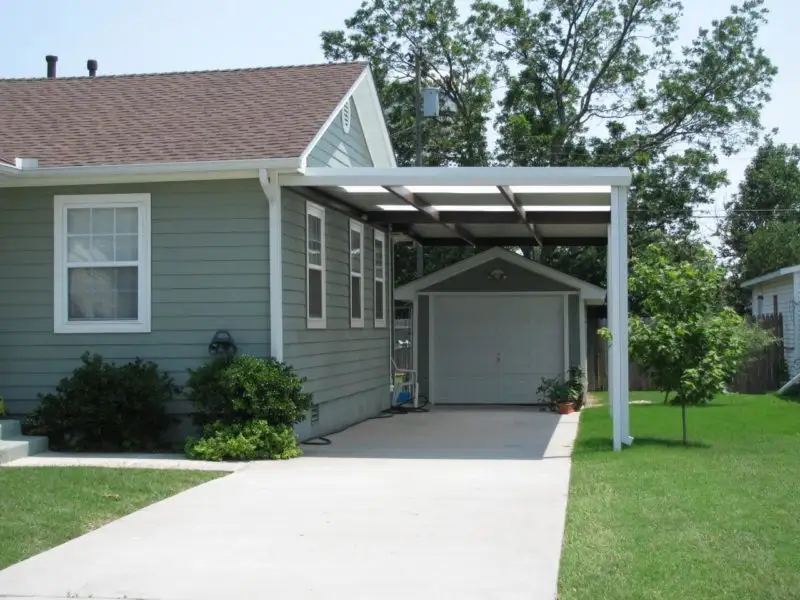
Why Freestanding Carport Ideas Are Worth Exploring
Freestanding carport ideas give homeowners a flexible, affordable way to protect their vehicles and expand their outdoor living space — no garage required.
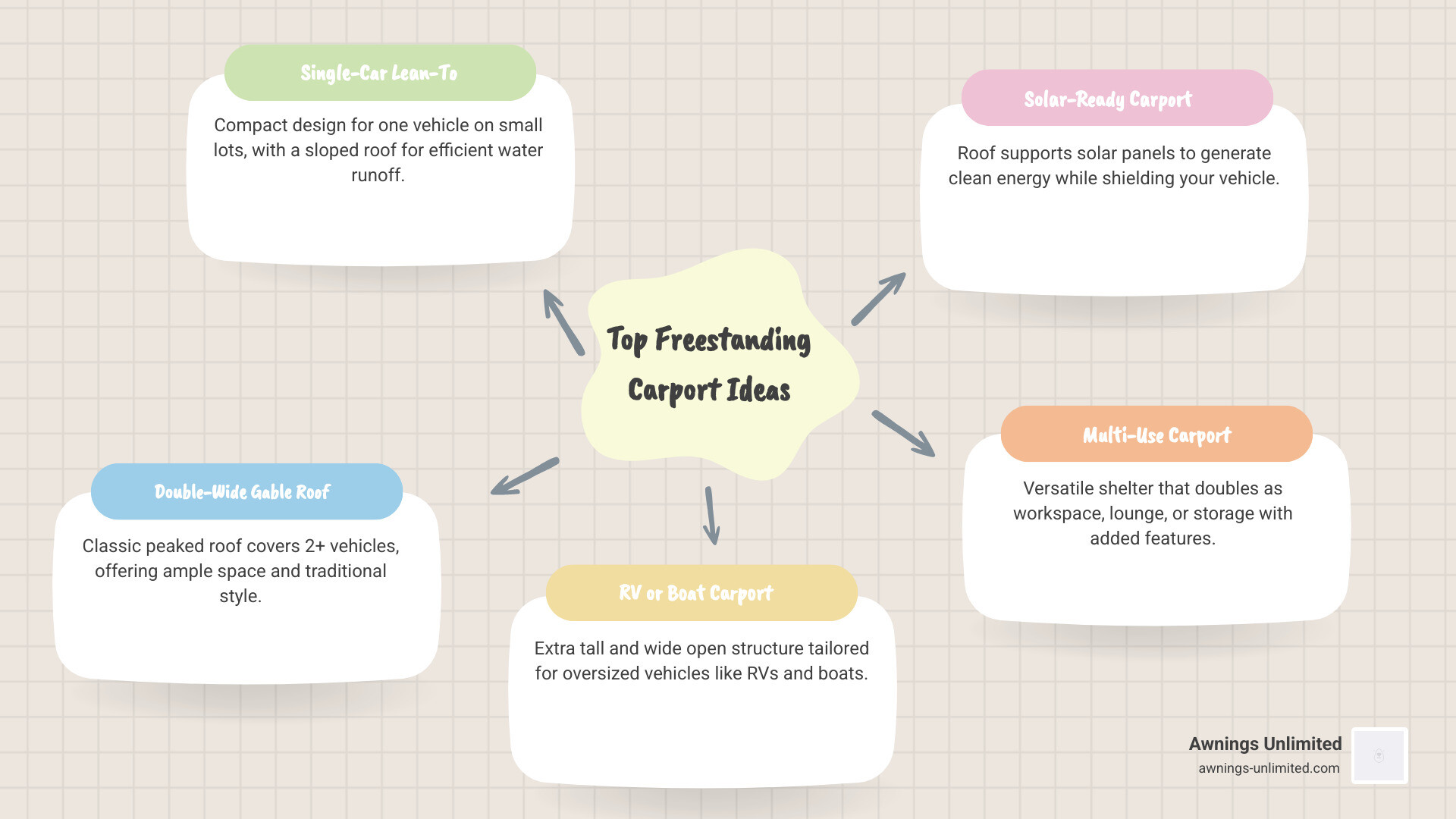
Here are the most popular freestanding carport ideas to consider:
- Single-car lean-to – Compact, clean design for one vehicle on smaller lots
- Double-wide gable roof – Covers two or more vehicles with a classic peaked roof
- RV or boat carport – Tall, open structure built for oversized vehicles
- Solar-ready carport – Roof-mounted panels that generate power while providing shelter
- Multi-use carport – Doubles as a shaded workspace, lounge area, or storage zone
- Modern minimalist – Sleek flat or low-pitch roof with clean lines and neutral colors
- Rustic wood-look – Warm, natural aesthetic using wood-grain aluminum materials
- Carport with storage – Integrated side walls or cabinets for tools and gear
These structures stand on their own — they aren’t attached to your home. That means you can place them anywhere on your property, from the driveway to the backyard.
Carports protect against sun, rain, hail, and snow. They also add curb appeal and can increase your home’s value at a fraction of the cost of a full garage.
At Awnings Unlimited, we’ve been designing and installing custom carports across Northern Utah since 1976 — bringing the same craftsmanship to freestanding carport ideas that we apply to every patio cover and structural awning we build. If you’re ready to protect your vehicles and upgrade your outdoor space, you’re in the right place.
Why Choose Freestanding Carport Ideas Over Attached Structures?
When you begin looking at vehicle protection, the first big decision is whether to bolt a structure to your house or let it stand on its own four (or six) legs. While attached carports are great for direct access to the mudroom, freestanding carport ideas offer a level of site versatility that attached versions simply can’t match.
Placement Flexibility
A freestanding unit can be placed anywhere your local zoning allows. Do you have a long driveway that terminates far from the house? Or perhaps a side lot perfect for a boat? Because these aren’t tied to the home’s roofline, you aren’t limited by the existing architecture. This is particularly helpful for homes in Salt Lake City or Bountiful where older lot layouts might not have a convenient attachment point near the kitchen or side door.
Superior Airflow and Natural Light
Because freestanding carports are open on all sides, they allow for maximum ventilation. This is a huge benefit during our Utah summers. An attached carport can sometimes trap heat against the side of the house, but a detached structure stays significantly cooler. Research suggests that a well-ventilated carport can reduce a vehicle’s interior temperature by 20 to 30 degrees compared to sitting in the direct sun.
Site Versatility and Curb Appeal
For many homeowners along the Wasatch Front, maintaining the aesthetic of a historic or custom-designed home is a priority. Attached structures can sometimes look like an afterthought if the rooflines don’t match perfectly. Freestanding carports, however, can be treated as a separate architectural feature. You can browse the Houzz Carport Gallery to see how homeowners use detached designs to complement their landscaping rather than competing with the home’s primary facade.
Choosing a standalone structure also means you don’t have to worry about the structural integrity of your home’s existing walls or fascia. To learn more about how these structures perform in our local climate, check out the Benefits of Installing a Carport in Utah.
Top Material and Design Styles for Your Structural Carport
The “look” of your carport is defined by the materials you choose and the architectural style you follow. In the past, people associated carports with flimsy tin sheds. Today, freestanding carport ideas have evolved into high-end structural additions.
The Alumawood Advantage
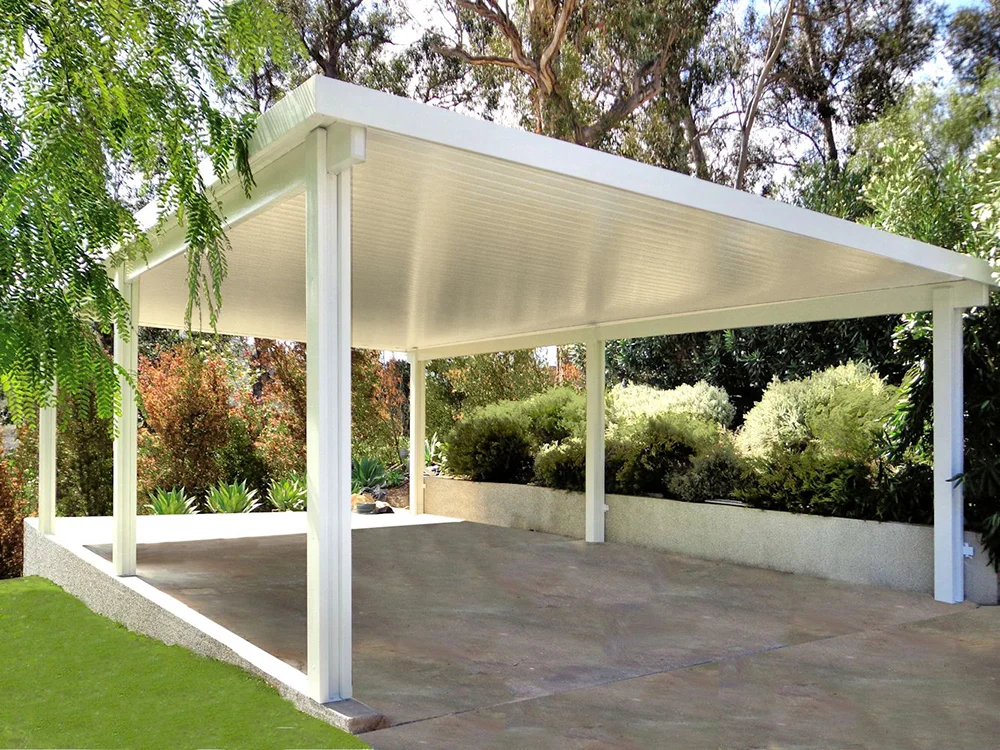
At Awnings Unlimited, we specialize in Alumawood. This material offers the best of both worlds: the embossed, textured look of real wood with the zero-maintenance durability of high-grade aluminum. In the harsh snow of Logan or the intense UV rays of St. George, traditional wood requires constant staining and painting to prevent rot and peeling. Alumawood, however, is resistant to pests, fire, and rust.
| Feature | Traditional Wood | Standard Metal/Steel | Alumawood (Wood-Look Aluminum) |
|---|---|---|---|
| Maintenance | High (staining/painting) | Low (rust checks) | Zero (occasional rinse) |
| Durability | Subject to rot/pests | Subject to rust | Weatherproof & Rustproof |
| Aesthetics | Warm, natural | Industrial/Basic | Premium wood-grain finish |
| Lifespan | 10–15 years (with care) | 20+ years | Lifetime |
Popular Design Styles
- Modern: Features flat or very low-pitch roofs, clean lines, and dark colors like charcoal or slate. This style is booming in areas like Draper and Sandy.
- Farmhouse: Often utilizes a gable roof with white or light gray finishes. It looks fantastic next to homes with lap siding.
- Rustic: Leverages the deep wood-grain textures of Alumawood to mimic a timber-frame structure. This is a top choice for mountain properties in Park City or Heber.
- Traditional: Simple post-and-beam construction that blends into any neighborhood without standing out too much.
For more inspiration on how to match your home’s aesthetic, explore these Innovative Carport Installation Ideas: Shield Your Vehicle in Style.
Essential Freestanding Carport Ideas for Every Vehicle Type
Not all carports are created equal. The size of your “fleet” and the types of vehicles you own will dictate the dimensions and height of your structure.
Single-Car Minimalist Freestanding Carport Ideas
If you have a compact lot in Ogden or Salt Lake City, a single-car design is usually the way to go. A standard 12×20 footprint provides plenty of room for a sedan or a mid-sized SUV.
- Lean-to Roof: A popular choice for single-car setups. The roof slopes in one direction, making it easy to manage water and snow runoff.
- EV Friendly: These open structures are perfect for electric vehicle owners. It is much easier (and often cheaper) to run a charging circuit to an open carport than to ventilate a garage for heat management.
Double-Wide and Multi-Car Freestanding Carport Ideas
For families with multiple drivers, a 20×20 or 20×30 structure is ideal. These larger designs often employ a Gable Roof, which provides a classic peaked look and handles heavy snow loads exceptionally well.
- Side-Entry Access: On wider lots, you can design the carport so vehicles enter from the side, which can be a great way to hide the vehicles from the street view.
- Protection from the Elements: In Utah, we don’t just worry about rain; we worry about “lake effect” snow and summer hail. A double-wide structure offers a massive “shield” for your investments. You can find more details on this in our guide on how to Protect Vehicle Snow Ice Carport.
RV and Boat Storage
Standard garages are rarely tall enough for a modern RV or a boat on a trailer. Freestanding carport ideas can be customized with extra-tall legs (12 to 14 feet) to accommodate these larger toys. Because we offer Custom Carports Come in All Sizes, we can tailor the height and width to ensure you aren’t squeezing into a tight space.
Multi-Use and Integrated Storage
Who says a carport is only for cars? We see many homeowners in the Wasatch Front using their carports as covered workspaces for DIY projects or even as shaded pavilions for summer BBQs. You can even add integrated storage lockers or a slatted “privacy wall” on one side to hide lawnmowers and tools. For those looking for more enclosure, there are options for Beyond the Basics: Exploring 2-Car Carport Kits with Sides and More.
Planning Your Installation: Foundations and Permits
A carport is only as stable as the ground it stands on. Before we arrive to install your custom Alumawood structure, site preparation is key.
Foundation Options
- Concrete Slab: This is the gold standard. A level concrete pad provides the cleanest look and the most stable surface for your vehicle.
- Gravel: A more budget-friendly option. If you choose gravel, we typically still need to pour concrete “footings” for the posts to ensure the wind doesn’t lift the structure.
- Post-and-Beam: This refers to the structural method where posts are anchored deep into the ground (usually 3 feet deep in Utah to get below the frost line).
Permits and Building Codes
In almost every city we serve—from Provo to Layton—a permanent freestanding structure requires a building permit.
- Zoning: You must respect “setbacks,” which are the required distances between your carport and the property line.
- Snow Loads: In Utah, carports must be engineered to handle specific snow weights. A design that works in St. George might not be legal in the heavy snow zones of Park City.
Before you start digging, read through Carport Installation: Everything You Need to Know Before You Start to ensure you are compliant with local laws.
Frequently Asked Questions about Freestanding Carports
How do I maintain my carport for longevity?
If you choose a traditional wood carport, you’ll need to sand and restain it every 2–3 years. However, our Alumawood carports are virtually maintenance-free. Because the color is baked into the metal, it won’t peel or flake. To keep it looking new, a simple spray with a garden hose once a season to remove dust and cobwebs is usually all it takes. This is one of the primary Carports and Benefits of Professional Installation—we set it up so you don’t have to work on it later.
What is the typical cost range for installation?
The price of freestanding carport ideas varies based on size, material, and site prep. A basic single-car metal kit might be inexpensive, but a custom-engineered, professionally installed Alumawood structure is a long-term investment that adds real value to your home. Factors like roof style (Gable vs. Flat) and the height of the posts will impact the final quote. For a detailed breakdown, see our page on Carport Prices Installed.
Do I need a permit for a freestanding structure?
Yes, in most Utah jurisdictions, any structure over a certain square footage (usually 120–200 sq. ft.) requires a permit. This ensures the structure is safe during high winds and heavy snow. We recommend checking with your local town hall or consulting our Home Improvement: Top Tips for New Carport Installation guide for more specifics on the process.
Conclusion
Investing in a freestanding carport is one of the smartest ways to protect your vehicles from Utah’s unpredictable weather while simultaneously boosting your property value. Whether you need a simple spot for your daily driver or a massive shelter for an RV, the right design can transform your driveway from a slab of asphalt into a functional, stylish extension of your home.
At Awnings Unlimited, we take pride in being Utah’s premier choice for structural awnings and patio covers. From our home base in Salt Lake City, we’ve spent decades perfecting the art of the custom carport. Our use of durable Alumawood, combined with our professional installation and industry-leading warranty, ensures that your new carport will stand strong against the wind and snow for years to come.
Ready to turn your freestanding carport ideas into reality? Explore our Carport Products or contact us today for a custom estimate!