

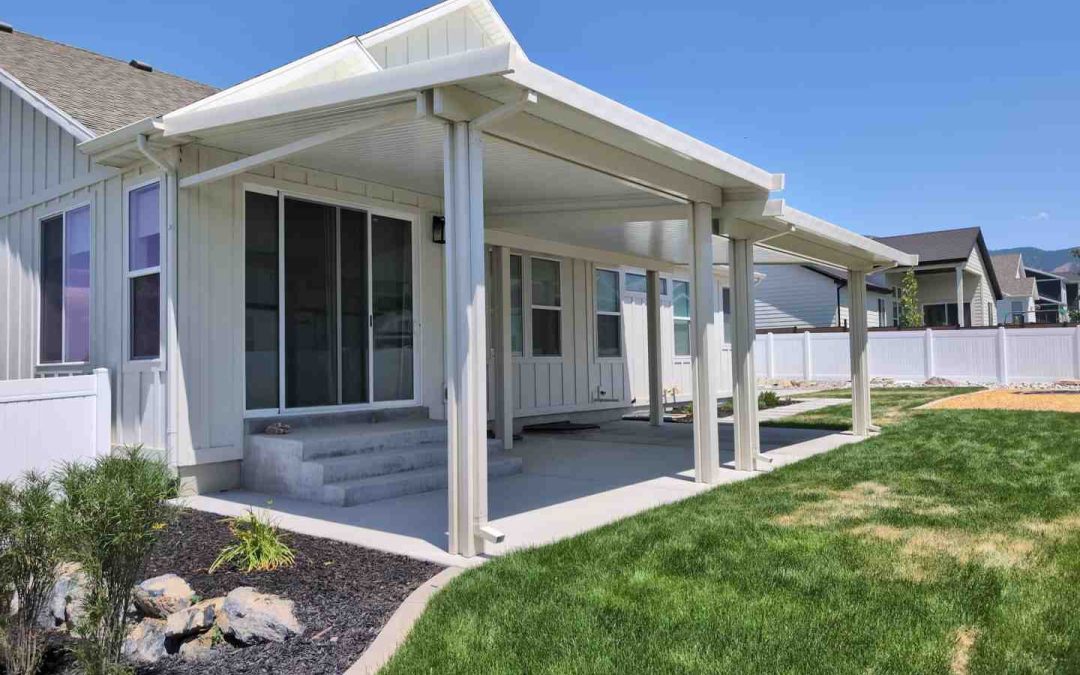
The First Thing Guests Notice: Why Exterior Door Awnings Matter
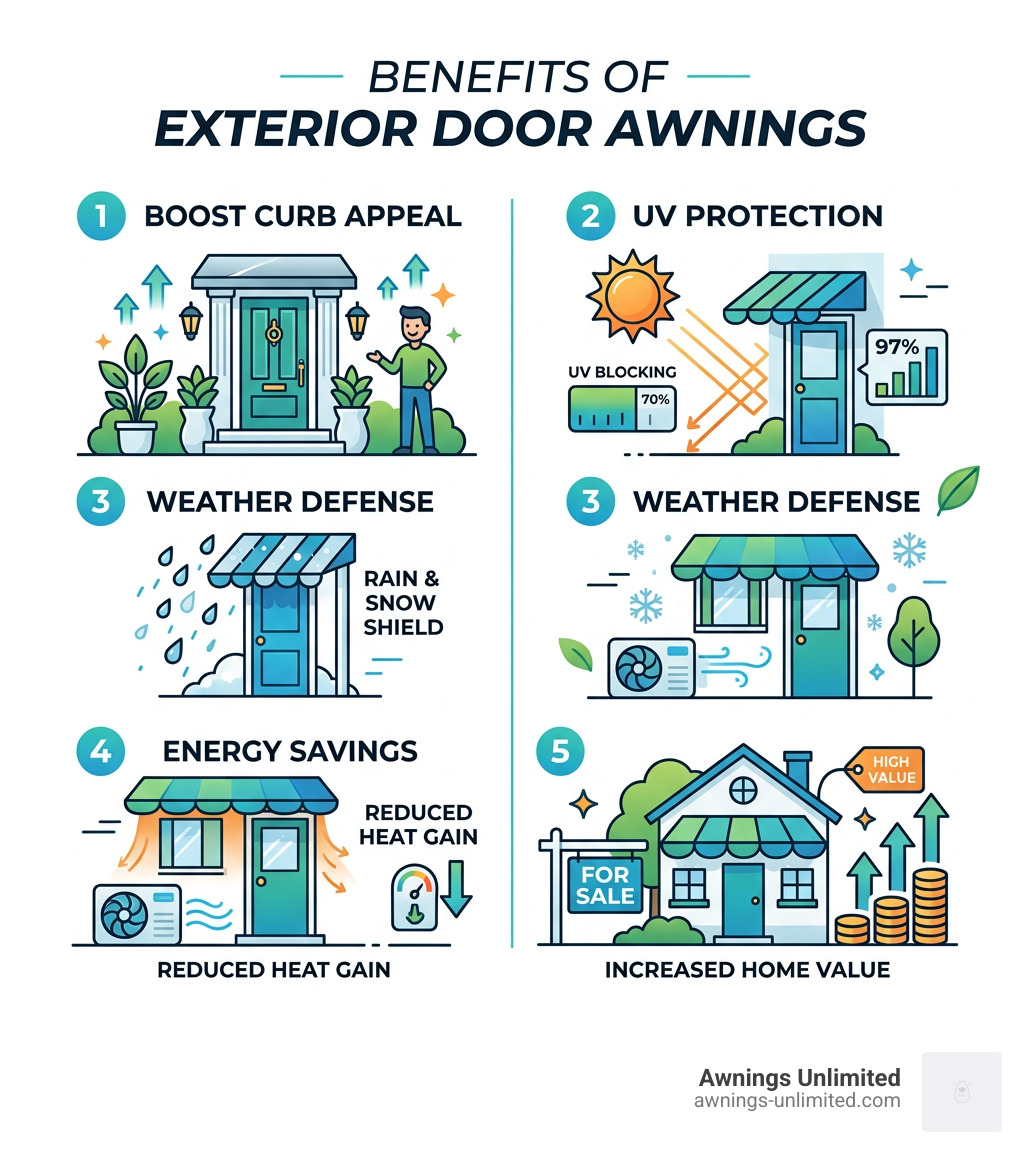
Exterior door awnings are one of the simplest upgrades you can make to protect your home and boost curb appeal at the same time. Here’s a quick look at what they do and why homeowners choose them:
- Weather protection – Keeps rain, snow, and harsh sun off your doorway
- UV blocking – Quality awnings block up to 100% of harmful UV rays
- Energy savings – Shade at the entry reduces heat gain near doors and windows
- Curb appeal – Adds a finished, welcoming look to your home’s entrance
- Door protection – Extends the life of your door by reducing weather exposure
- Snow and wind resistance – Structural models handle 41–44 lbs/ft² snow loads and winds up to 75 mph
Your front door is the first thing visitors see. A bare entryway with no cover can mean wet guests, a weathered door, and wasted energy. A well-chosen door awning solves all three problems at once.
At Awnings Unlimited, we’ve been designing and installing custom structural awnings across Northern Utah since 1976, and exterior door awnings are one of the most popular improvements our residential customers request. We’ll walk you through everything you need to choose, size, and install the right one for your home.
Why Your Home Needs Exterior Door Awnings
If you’ve ever fumbled for your keys during a Wasatch Front downpour or a heavy snowstorm in Park City, you already know the most practical reason to install an awning. But beyond keeping you dry, exterior door awnings serve as a frontline defense for your home’s infrastructure.
One of the primary reasons why your home needs an awning is the protection of the door itself. Constant exposure to the Utah sun can cause expensive wooden doors to warp, crack, or fade. Even high-quality paint and finishes will peel prematurely without shade. By installing a structural canopy, you effectively double the lifespan of your door’s exterior finish.
Furthermore, living in Utah means dealing with extreme temperature swings. During our blazing summers, the sun hitting a south-facing door can turn your entryway into an oven. Awnings provide significant UV protection, blocking up to 100% of harmful rays and reducing the heat that enters your home every time the door opens. This small change can lead to noticeable energy savings on your cooling bills.
For those looking for aesthetic inspiration, you can find various front entry awning ideas on Pinterest that showcase how these structures integrate with different architectural styles. Whether you have a modern farmhouse in Draper or a classic Cape Cod in Bountiful, there is a style that fits perfectly.
Popular Styles of Exterior Door Awnings
Choosing a style is about more than just looks; it’s about how the awning handles the local environment. Here are the most common styles we see across the Wasatch Front:
- Fixed Aluminum Awnings: These are the workhorses of the industry. Built from structural aluminum, they are permanent fixtures designed to stay up year-round, regardless of the weather.
- Standing Seam Awnings: These offer a clean, industrial, or rustic look. They feature raised ribs (seams) that are excellent at shedding heavy snow and rain.
- Dome-Shaped Awnings: These provide a traditional, elegant curve that adds a touch of classic charm to a residence.
- Flat Panel Canopies: Perfect for modern architecture, these offer sleek lines and a minimalist profile while providing maximum overhead coverage.
When deciding, it is helpful to look at the 3 awning styles that work best in Utah’s climate. In our experience, fixed structural models are almost always the superior choice for Utah homes because they are built to remain in place and handle heavy snow loads year-round.
Choosing the Right Materials for Utah’s Climate
In the outdoor shade industry, material is everything. You want something that won’t just look good for one season but will stand up to the “Greatest Snow on Earth” and the high-altitude UV rays we experience in places like Heber City and Logan.
We specialize in durable awnings in Utah made from high-quality structural aluminum and Alumawood. Unlike wood, which can rot, warp, or require constant painting, structural aluminum is virtually maintenance-free. It won’t rust, peel, or crack, making it an ideal long-term investment.
Another popular modern choice is the use of polycarbonate panels. These high-impact panels are often used in “Sophia XL” style awnings or clear-view canopies. They allow for up to 92% light transmission—meaning your entryway stays bright—while still blocking 100% of harmful UV rays. This is a fantastic option for homeowners who want protection but don’t want to darken their interior hallway.
There are many reasons awnings are a must-have for Utah homes, but durability tops the list. When you choose materials like factory-finished aluminum, you are choosing a product that retains its color, gloss, and texture for decades.
Weather Resistance and Material Durability
When shopping for exterior door awnings, always check the technical specs. A flimsy awning from a big-box store might look okay in the aisle, but it won’t survive a Utah canyon wind.
- Wind Resistance: Quality structural awnings are tested to withstand winds up to 75 mph. This is crucial for homes in wind-prone areas like Farmington or the Point of the Mountain.
- Snow Load Capacity: This is the most important stat for Utahns. Look for awnings with a snow load capacity between 41 and 44 lbs/ft². This ensures the structure won’t buckle under a heavy overnight accumulation.
- Rust Prevention: Aluminum and galvanized steel components are non-negotiable. Traditional iron or untreated steel will rust quickly when exposed to melting snow and salt.
- Impact Resistance: High-quality acrylic or polycarbonate panels are often tested against hail, ensuring that a summer storm doesn’t leave your new awning full of holes.
How to Select and Install Your Door Canopy
Once you’ve settled on a material and style, the next step is getting it on the wall. While many products are marketed as “DIY-friendly,” the reality of Utah construction—with our variety of stucco, brick, and stone exteriors—can make installation tricky.

If you are considering doing it yourself, our residential awning installation guide covers the basics. You will generally need a power drill, masonry bits (if mounting to brick or stone), a level, a ladder, and a second set of hands. However, there are many reasons why professional awning installation is worth it. A professional installer ensures the awning is anchored into the structural studs of the house, not just the facade, which is the only way to guarantee it stays put during a windstorm.
Measuring for Your Exterior Door Awnings
Getting the measurements right is the difference between a functional cover and a decorative mistake. You need to consider three main dimensions:
- Width: Measure the door including the trim. We recommend adding at least 4 to 6 inches to the total width to ensure rain doesn’t “wrap around” the edges and hit the door.
- Projection: This is how far the awning sticks out from the wall. A standard projection is around 36 to 50 inches. If you have an outward-opening door, you must ensure the projection is deep enough so the door doesn’t hit the awning’s support arms or the front edge.
- Drop/Height: This is the vertical distance the awning covers. You need to ensure you have enough “headroom” so tall guests don’t feel like they have to duck.
Table: Clearance Guide for Outward-Opening Doors
| Door Width | Awning Projection | Required Mounting Space Above Door |
|---|---|---|
| 36″ | 36″ | 12″ |
| 36″ | 43″ | 10″ |
| 36″ | 50″ | 8″ |
Note: Always ensure at least 2 inches of flat mounting space is available above the door frame for the mounting rail.
Common Installation Mistakes to Avoid
We’ve seen it all in our 45+ years of service. One of the most frequent errors is an incorrect mounting height. If the awning is too low, the door hits it; if it’s too high, rain blows right under it.
Another mistake is ignoring local snow loads. A non-structural or low-quality awning might work in milder climates, but it will collapse under the heavy snow loads in Sandy or Salt Lake City. Always buy for the worst-case weather scenario.
Finally, don’t forget about water management. An awning with a gutter system is a game-changer. Without a gutter, water simply pours off the front edge, often creating a splash zone exactly where you are trying to walk. A built-in gutter channels that water to the sides, keeping your entryway truly dry.
Long-Term Value: Costs, Maintenance, and Warranties
Investing in exterior door awnings is an investment in your home’s value. Beyond the immediate curb appeal, these structures are viewed as permanent improvements that buyers appreciate.
Maintenance for structural aluminum is incredibly simple. Unlike wood, which requires regular maintenance, you don’t need to sand, stain, or take it down for the winter. To extend the life of your home’s awning, we recommend a simple seasonal cleaning. Use a garden hose to wash away dust, salt, and spider webs. For more stubborn dirt, a soft brush and mild soap are all you need. Check out our full guide on awning maintenance for more detailed tips.
Pricing and Warranty Coverage
How much does a door awning cost? Prices vary wildly based on size and material.
- Economy Models: Small, fixed-size polycarbonate kits can start as low as $250–$300.
- Mid-Range Aluminum: Custom-sized aluminum awnings typically range from $600 to $1,500.
- Premium Custom Structures: Large, heavy-duty architectural canopies can range from $2,500 upward depending on the complexity and mounting requirements.
For a detailed breakdown of what influences the price, see our awning installation costs complete guide.
When comparing products, the warranty is your best indicator of quality. Cheap imports might offer a 1-year limited warranty, but high-quality structural aluminum often comes with a lifetime warranty on paint and materials. This ensures the finish won’t rust, warp, crack, or rot for as long as you own the home.
Conclusion
Exterior door awnings are more than just a decorative touch; they are a practical necessity for Utah homeowners. From blocking 100% of UV rays to protecting your entryway from heavy snow, the benefits are clear. Whether you choose a sleek flat panel or a rugged standing seam aluminum design, you are making a long-term investment in your home’s comfort and value.
At Awnings Unlimited, we take pride in being a Salt Lake City-based family business that understands the local climate. Since 1976, we have helped thousands of neighbors across the Wasatch Front and into Wyoming find the perfect shade solutions. From Salt Lake awnings to custom carports and lattice awnings or pergolas, we bring decades of expertise to every project.
Ready to upgrade your entryway? Give us a call or visit our West Valley City showroom. We’d love to help you make a great first impression.