

Transform Your Outdoor Space with Residential Awning Installation
Residential awning installation is the process of permanently mounting a structural awning or patio cover to your home to create shade, reduce heat, and expand your outdoor living space. Here’s what you need to know:
Key Steps for Residential Awning Installation:
- Plan Your Project – Choose your awning style, measure your space, and set your budget ($400-$7,000+)
- Check Requirements – Verify local building codes, HOA rules, and permit needs
- Prepare the Site – Clear the area, locate wall studs or roof rafters for secure mounting
- Install Brackets – Drill pilot holes and securely fasten mounting brackets to structural supports
- Attach the Awning – Lift the frame (can weigh up to 500 lbs) and secure it to brackets
- Final Touches – Seal brackets with caulk, check levelness, and inspect all connections
Professional installation typically takes 1-2 days and ensures proper structural support, safety, and warranty protection.
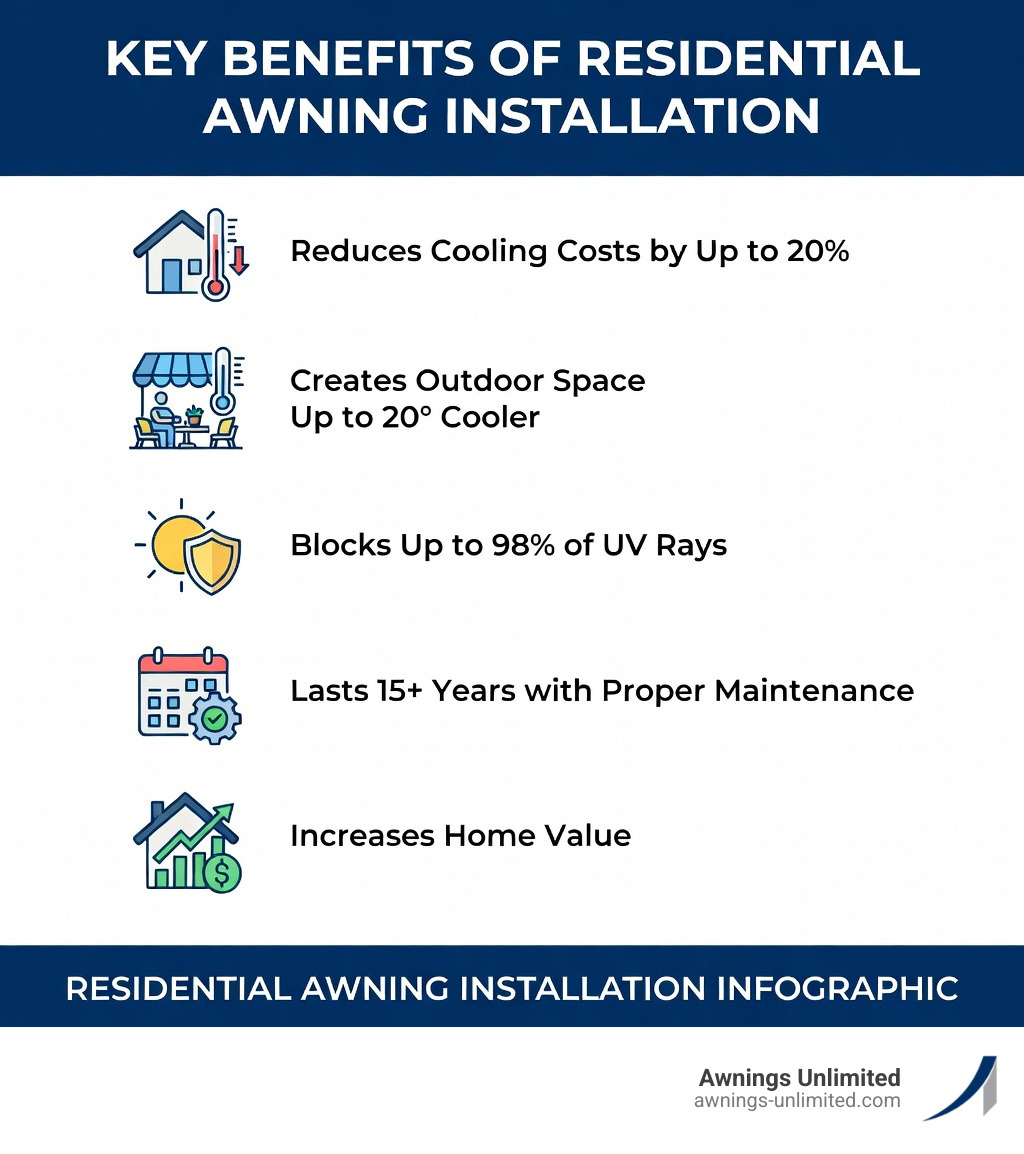
Installing a structural awning or patio cover delivers immediate benefits. Awnings can reduce your cooling costs by up to 20% by blocking direct sunlight before it enters your home. They create comfortable outdoor spaces by making your patio up to 20 degrees cooler than areas in direct sun. Plus, they block up to 98% of harmful UV rays, protecting both your family and your outdoor furniture from sun damage.
A residential awning installation is also a smart investment. A well-designed awning boosts curb appeal and can increase property value. With proper maintenance, quality structural awnings last 15+ years, providing dependable shade through Utah’s intense summers and harsh winters.
This guide covers everything from planning and choosing your awning to installation and maintenance, helping you decide between DIY and professional services. We’ll share tips to keep your awning looking great for years to come.
At Awnings Unlimited, we’ve been changing outdoor spaces across Northern Utah since 1976, specializing in custom residential awning installation using durable Alumawood materials. Our expert team handles every aspect of your project—from initial consultation to final installation—ensuring your new awning meets your exact specifications and comes with an industry-leading warranty.
Planning Your Perfect Awning: From Style to Budget
Choosing the right structural awning or patio cover involves matching your lifestyle, home architecture, and budget. A well-chosen awning can transform an underused patio into a vibrant outdoor living area, offering a cool retreat from the Utah sun or shelter from rain and snow. For guidance, explore our insights on Choosing the Right Awning for Your Home and find 4 Reasons Why Your Home Needs an Awning.
What are the Benefits of a Structural Awning or Patio Cover?
Investing in a structural awning for your home in Salt Lake City, Ogden, or our other service areas offers a wealth of advantages:
- Energy Savings and Comfort: Structural awnings reduce direct sunlight on your home, which can lower cooling costs by up to 20%. They also create a patio space that’s up to 20 degrees cooler, providing a comfortable place to create a cool outdoor space.
- Expanded Usable Outdoor Space: An awning protects your patio or deck from sun, rain, and even light snow, making your outdoor living area comfortable and accessible year-round. This is especially valuable in Utah’s dynamic climate. Learn more about Living in Utah: Why You Need Awnings.
- Superior UV Protection: By blocking up to 98% of harmful UV rays, structural awnings protect your family’s skin and prevent outdoor furniture, flooring, and indoor furnishings from fading.
- Improved Curb Appeal and Home Value: A well-designed awning instantly boosts your home’s curb appeal. By adding functional outdoor living space and improving energy efficiency, it also increases your property’s value, making it a wise investment.
What Types of Structural Awnings and Patio Covers Are Available?
We specialize in durable, long-lasting fixed awnings, structural patio covers, and carports. Our choice of materials is crucial for performance in Utah’s demanding climate.
- Alumawood: Offers the beauty of wood without the maintenance. It won’t rot, crack, or peel, making it an excellent choice for Durable Awnings.
- Aluminum: Known for its strength, light weight, and resistance to rust and corrosion.
Our Products come in various Awning Styles to complement any home:
- Modern Flat-Pan Systems: Sleek lines for a contemporary look and complete shade.
- Classic Designs: Timeless and sophisticated appearance.
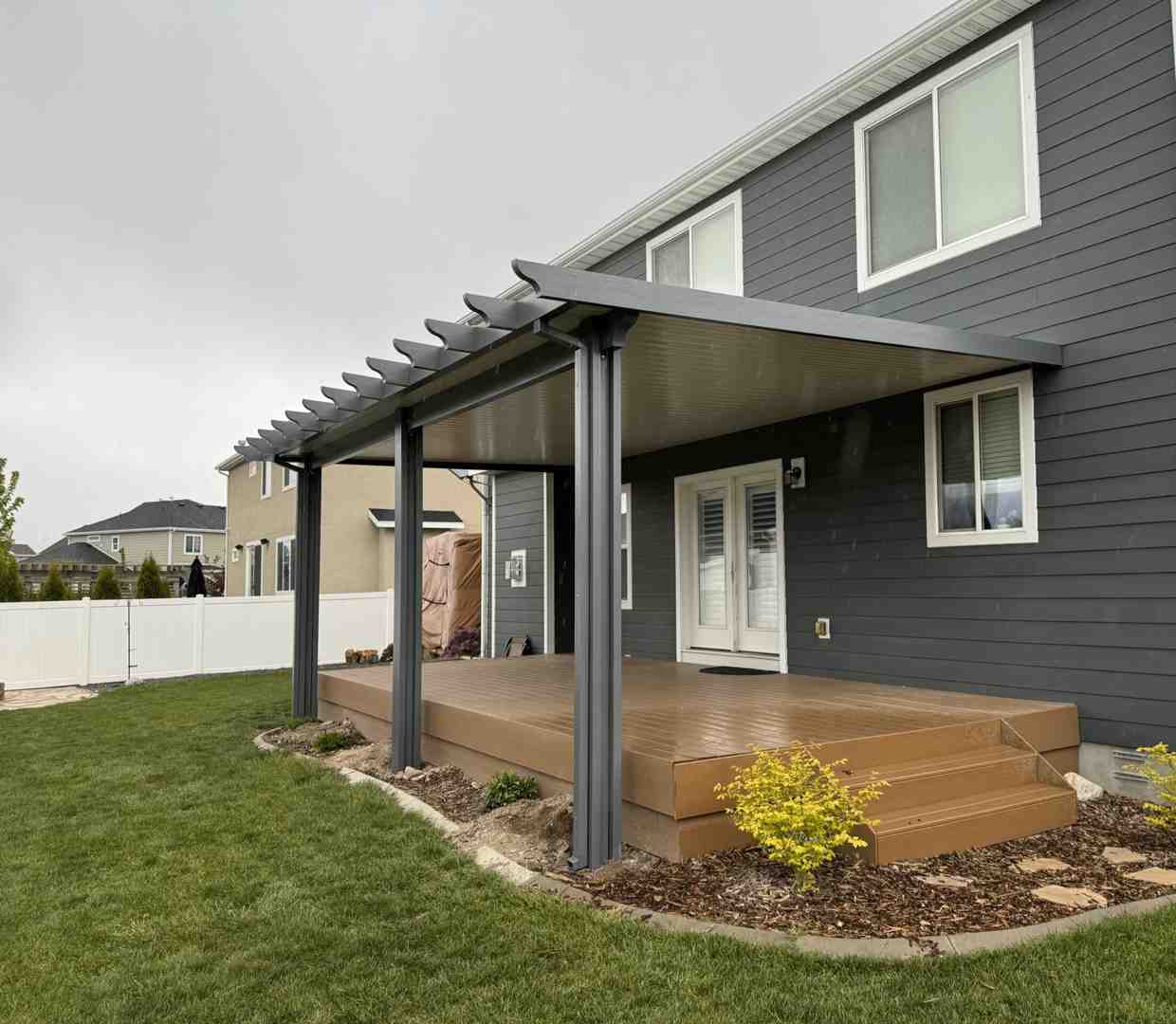
- Pergola-Style Covers: An open-lattice design for a blend of sun and shade.
- Custom Awnings: We offer Custom Awnings custom to your specific space, style, and functional needs.
What is the Average Cost of Structural Awning Installation?
The cost of residential awning installation varies based on several factors:
- Size and Material: Larger awnings and premium materials like Alumawood cost more than smaller, basic options.
- Style and Complexity: Custom designs with intricate features or complex installation sites are more expensive than basic fixed awnings.
- Accessories: Features like integrated lighting or custom finishes will add to the price.
For comprehensive structural solutions, the total cost, including materials and installation, typically runs between $400 to $7,000 or more. While this is a significant investment, the long-term value from energy savings and increased property value provides a strong return. For a detailed, personalized estimate, we encourage you to Get a Quote from us.
DIY vs. Professional Structural Awning Installation
When considering residential awning installation, homeowners often weigh DIY against hiring professionals. While a DIY approach may seem cheaper, structural patio covers present unique challenges related to complexity, safety, and warranty. We’ve put together a comparison to help you decide. For more details, check out our guide on DIY Awning Installation vs. Hiring a Pro in Utah.
| Feature | DIY Installation | Professional Installation (Awnings Unlimited) |
|---|---|---|
| Cost | Lower upfront for labor, but potential for costly mistakes or additional tool purchases. | Higher upfront for labor, but includes expertise, insurance, and specialized equipment. |
| Time | Can take several days, especially for complex structural projects or if unexpected issues arise. | Most projects completed efficiently, typically within one to two days. |
| Skill Level | Requires intermediate to advanced carpentry skills, comfort with ladders, and understanding of structural loads. | No skill required from homeowner; handled by experienced, trained, and insured technicians. |
| Tools | Requires specialized tools like heavy-duty drills, masonry bits, stud finders, and multiple ladders. | Professionals arrive with all necessary specialized tools and equipment. |
| Safety | High risk of personal injury (e.g., falls from ladders) and potential structural damage to your home. | Minimized risk; performed by trained professionals adhering to safety protocols, often with multiple crew members. |
| Warranty | Manufacturer warranty may be voided by improper installation; no labor warranty. | Full manufacturer warranty (often lifetime for materials) plus a labor warranty from the installer. |
Can I Install a Structural Awning Myself?
The residential awning installation of a heavy, permanent structural awning is a complex task best left to professionals.
- Project Complexity and Weight: Structural awnings are heavy, with components weighing up to 500 pounds. Safe installation requires multiple people, strength, and coordination, especially when working on ladders.
- Required Tools and Expertise: Installation demands specialized tools like heavy-duty drills, masonry bits, and structural fasteners. You must also have the expertise to locate and securely attach the awning to your home’s structural frame (studs, joists, or rafters).
- Significant Risks: A DIY installation carries major risks, including personal injury from falls or structural damage to your home from a collapsed awning. Improper installation can also void the manufacturer’s warranty. We strongly advise against DIY for these projects unless you have extensive construction experience.
Why Professional Installation is Worth It
For a structural awning, professional residential awning installation is an investment in safety, durability, and peace of mind.
- Expertise and Structural Integrity: Our Professional Awning Installation team has the expertise to properly anchor heavy structures to your home’s frame, ensuring your awning is secure and built to last.
- Safety First: As a trained and insured Awning Installation Company, we follow strict safety protocols, minimizing risks to your family and property during installation.
- Efficiency and Convenience: Our experienced teams work quickly, completing most projects in one to two days with minimal disruption. We handle all the tools, heavy lifting, and cleanup.
- Peace of Mind and Warranty Protection: Professional installation guarantees the job is done right and protects your investment. It preserves the manufacturer’s warranty, which can be voided by improper DIY installation, and we provide a leading labor warranty for complete peace of mind.
A Step-by-Step Guide to Structural Awning Installation
Whether you’re adding a patio cover in Lehi or a carport in Rock Springs, the process of residential awning installation for structural units follows a meticulous approach to ensure durability and safety. While we highly recommend professional installation, understanding the steps can help you appreciate the precision involved. For general insights, you can also refer to guides like How to Install an Awning.
Step 1: How to Prepare Your Home for Installation
Proper preparation is the foundation of a successful installation.
- Site Inspection and Clearing: The installation area is cleared of any obstacles like light fixtures, plants, or furniture to ensure a safe and efficient workspace.
- Check Local Regulations and HOA Approval: We help you steer local building codes and Homeowners Association (HOA) rules. Permanent structures often require permits or approval, which we can assist with.
- Accurate Measurement and Clearance: We precisely measure the area, ensuring proper clearance (typically 8-12 inches) above doors and windows and a comfortable height (7-8 feet) for headroom.
- Locate Structural Supports: Using specialized tools, we locate the wall studs, joists, or rafters. Securely fastening the mounting brackets to these load-bearing supports is non-negotiable for safety and durability.
Step 2: The General Process for a Structural Awning or Patio Cover Installation
Once your home is prepped, the actual residential awning installation begins.
- Marking a Level Guideline: We mark a perfectly level guideline on the wall or fascia to ensure the awning is installed straight. On uneven surfaces, we may use sealed wood blocks to create a flat mounting point.
- Mounting Brackets: We drill pilot holes into the located structural supports and securely fasten the mounting brackets using hardware appropriate for your home’s exterior (wood, brick, stucco, etc.).
- Assembling the Frame: Our team assembles the main frame components, connecting beams and posts to create the rigid skeleton of your new Alumawood shade structure.
- Lifting and Securing the Structure: This step requires multiple team members to safely lift the assembled frame onto the mounting brackets and bolt it securely into place.
- Installing Panels or Cover: Finally, the Alumawood panels or lattice elements are attached to the frame, completing the shade structure and making your outdoor space ready for use.
Step 3: Post-Installation Checks
Our commitment to quality doesn’t end when the last bolt is tightened.
- Final Inspection: We perform a final check to ensure the structure is level, all fasteners are tight, and the entire unit is stable and secure.
- Waterproofing and Sealing: We apply silicone caulk around all mounting points to create a weatherproof seal and protect your home from moisture.
- Cleanup: Our team removes all debris and packaging, leaving your property clean and your new outdoor oasis ready to enjoy.
Awning Care: Ensuring Longevity and Performance
Once your new structural awning is installed, a little care goes a long way in ensuring its longevity, especially in Utah’s varied climate. A well-maintained awning can provide dependable shade for 15+ years. For more tips, visit our page on the Importance of Proper Maintenance for Your Utah Awning.
How Do I Maintain My Structural Awning or Patio Cover?
Maintaining your structural awning is straightforward, especially with durable materials like Alumawood.
- Regular Cleaning: Keep your awning clean by hosing off debris every few weeks. For a deeper clean, use a soft brush with mild soap and lukewarm water, then rinse thoroughly. Avoid harsh chemicals or high-pressure washers, which can damage the finish.
- Inspections: Periodically inspect your awning for loose fasteners, signs of wear on the frame, or damage to the cover panels. Early detection prevents bigger problems.
- Lubrication (if applicable): Most structural awnings have no moving parts. If your model has adjustable features, refer to the manufacturer’s guide for lubrication.
- Seasonal Care: In Utah and Wyoming, it’s important to clear heavy snow accumulation from your awning to prevent damage from excessive weight. For more winter tips, read our guide on How to Winterize Your Awning and Protect It From the Elements. Following our Awning Maintenance tips will keep your awning in great shape for years.
How Long Do Structural Awnings Last?
The lifespan of your structural awning is a testament to its quality and care.
- Exceptional Lifespan: With proper maintenance, a high-quality structural awning can easily last 15 years or more. Our Alumawood systems are designed to stay beautiful and functional for decades.
- Material Impact: Material choice is key to longevity. Alumawood and sturdy aluminum are engineered for superior durability, as they don’t rot, rust, or peel like wood. This resilience is why we emphasize Durable Awnings in Utah.
- Robust Warranty: We stand behind our residential awning installation and products with a leading warranty, often including a lifetime warranty on materials and structure. A strong warranty is a clear indicator of a product built to last.
Frequently Asked Questions about Structural Awning Installation
Here are answers to some of the most common questions we hear from homeowners considering residential awning installation.
Can structural awnings be installed on any type of wall?
Yes, structural awnings can be installed on most exterior surfaces, including wood, brick, stucco, and vinyl siding.
The critical requirement is that the mounting brackets must be anchored securely to your home’s internal structural frame (studs, joists, or headers), not just the exterior surface. Our professional installers use specialized hardware and techniques for each wall type to ensure a safe, waterproof, and structurally sound installation. For example, we use build-out blocks for siding and drill into the center of bricks for masonry to guarantee the strongest connection.
How much wind can a structural awning withstand?
Fixed structural awnings are designed for permanent exposure and are highly durable against wind. Our Alumawood and aluminum frame awnings are engineered to handle the strong gusts and storms common in Utah and Wyoming. Professional installation ensures the awning is anchored to meet or exceed local building codes for wind resistance, providing a stable, reliable structure for decades.
Do I need a permit to install a structural awning?
Whether you need a permit for residential awning installation depends on your location and the project’s scale.
- Check Local Rules: Regulations vary by city and county, and your Homeowners Association (HOA) will likely have its own rules for exterior modifications. It’s crucial to check both.
- General Guideline: Permanent structures like patio covers and carports often require a building permit, depending on their size and local regulations.
- We Can Help: Navigating the permit process can be complex. As part of our service, our team often handles permitting for you, ensuring all local regulations in areas like Ogden, Provo, and Layton are met before work begins.
Conclusion: Enjoy Your New Outdoor Oasis
Investing in residential awning installation for a structural awning or patio cover is more than just adding shade; it’s about enhancing your home, improving your lifestyle, and securing a valuable asset for years to come. We’ve explored the numerous benefits, from creating a cool, inviting outdoor retreat and expanding your usable living space to significantly reducing your home’s energy costs and boosting its curb appeal and value.
With durable materials like Alumawood and expert installation, a structural awning is a long-term investment that provides dependable protection against the elements, particularly in the diverse climates of Salt Lake City and throughout Utah and Wyoming. While DIY might seem tempting, the complexity, weight, and critical need for structural integrity make professional installation the safest and most reliable choice.
At Awnings Unlimited, we’ve been the trusted Utah Awning Company for over four decades, changing outdoor spaces with custom, high-quality structural awnings and patio covers. Our commitment to professional installation and an industry-leading warranty means you can enjoy your new outdoor oasis with complete peace of mind.
Ready to transform your outdoor space? Explore our custom Salt Lake Awnings and get a free quote today!