

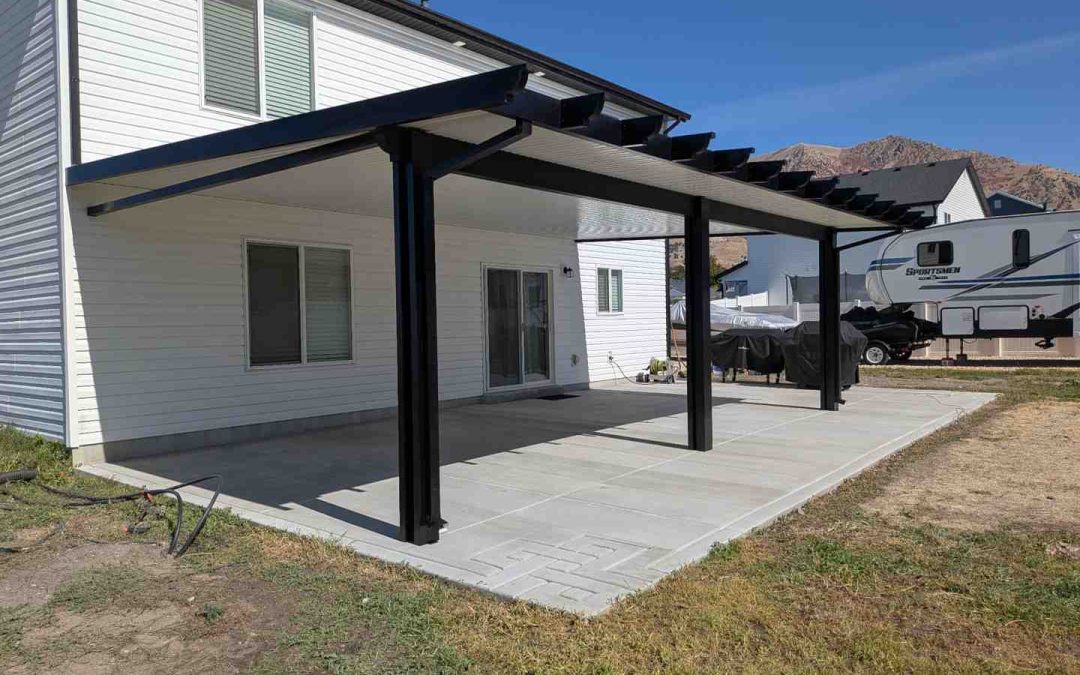
Why Eagle Mountain Homeowners Are Searching for Patio Cover Companies Right Now
Eagle Mountain is one of Utah’s fastest-growing cities — and with that growth comes a surge of homeowners looking to make the most of their outdoor space. A well-built patio cover does more than add shade. It protects your furniture, extends your usable living area, and holds up against Utah’s harsh winters and intense summer sun.
The challenge is finding a company you can actually trust. Between licensing, materials, warranties, and local permit requirements, there’s a lot to sort through before you sign anything. When evaluating patio cover companies in Eagle Mountain, here are the key criteria you should consider:
| Feature | What to Look For | Why It Matters |
|---|---|---|
| Licensing & Insurance | Active Utah contractor license & general liability | Protects you from liability and ensures code compliance |
| Local Experience | Decades of experience along the Wasatch Front | Ensures structures are engineered for local snow and wind loads |
| Material Quality | High-grade Alumawood or aluminum | Maintenance-free durability that won’t rust, warp, or rot |
| Warranty | Lifetime material warranty & workmanship guarantee | Long-term peace of mind and protection for your investment |
As one of the leading patio cover companies serving Eagle Mountain, Awnings Unlimited has been helping Northern Utah homeowners create durable, beautiful outdoor spaces since 1976 — nearly 50 years of local experience backed by an industry-leading material warranty. In this guide, we’ll walk you through everything you need to know to make a confident decision.
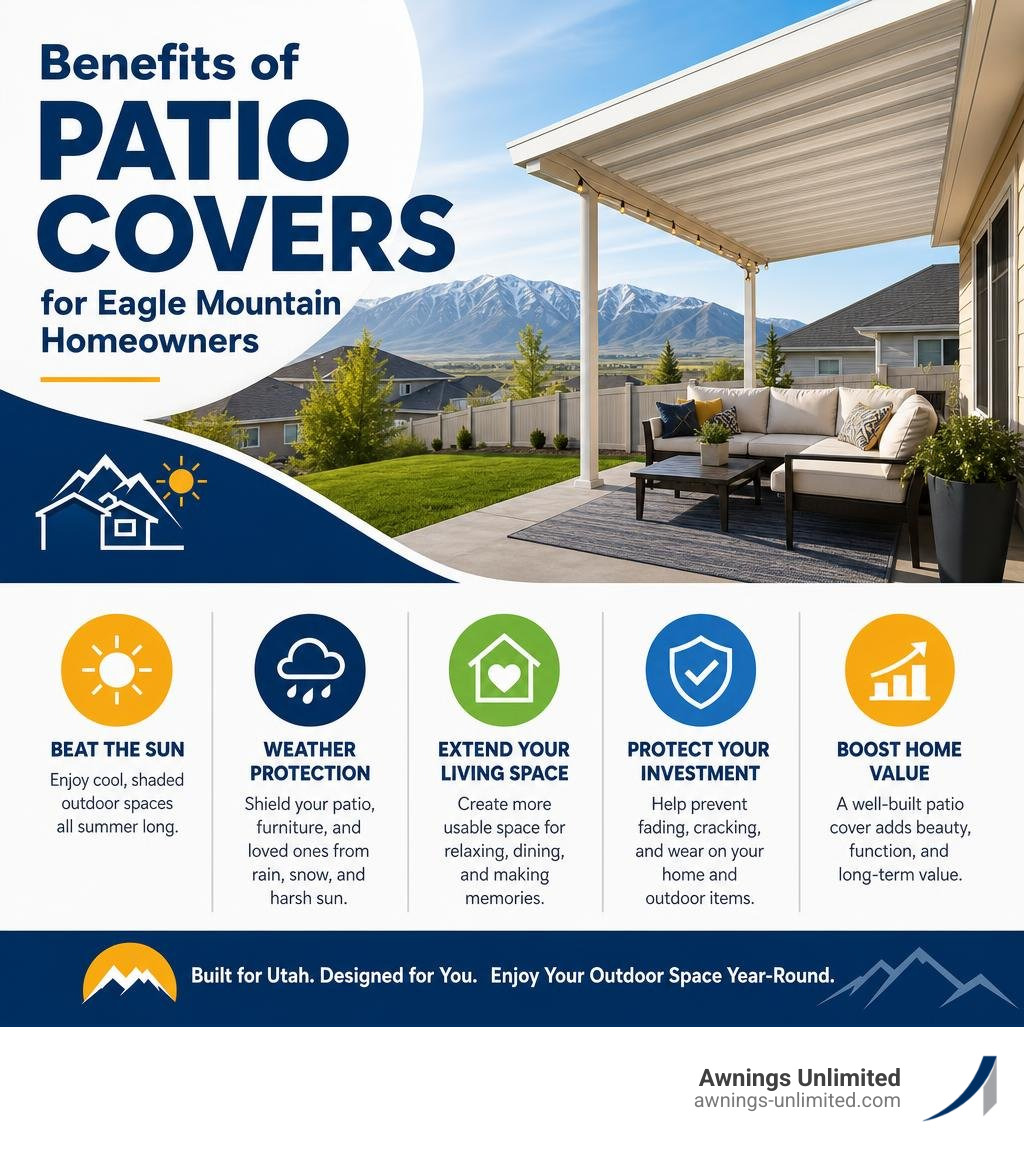
Choosing the Best Patio Cover Companies Eagle Mountain Homeowners Trust
When you begin your search for the right contractor to transform your backyard, the sheer number of options can feel overwhelming. Selecting a team to handle your home improvement project is a major decision. You aren’t just buying a product; you are making a long-term investment in your property’s structural integrity and overall value.

To protect your hard-earned money, you need to filter out the fly-by-night operations and focus strictly on established companies. A great starting point is understanding the step-by-step process of vetting local builders. For a comprehensive look at how to evaluate your options, check out our Patio Cover Builders Complete Guide.
First and foremost, never work with an unlicensed or uninsured contractor. In Utah, any reputable patio cover company must carry an active contractor’s license and comprehensive general liability insurance. This protects you from being held liable for any accidental property damage or on-site injuries during the construction process.
Additionally, look closely at local reviews from Eagle Mountain homeowners. Because our local climate brings unique challenges—such as high wind gusts sweeping off the Oquirrh Mountains and heavy winter snow accumulation—you want a team that is highly praised for building structures that stand up to these exact conditions.
What to Look for in Patio Cover Companies Eagle Mountain Residents Recommend
Excellent workmanship and local experience are the twin pillars of a successful build. When looking for a Patio Cover Installation Near Me, pay close attention to how long the contractor has been operating in the Wasatch Front. A company that has survived and thrived in Utah for decades understands the specific engineering requirements needed to handle our extreme weather shifts.
Workmanship can be evaluated by asking to see a portfolio of completed local projects. A skilled builder will show you clean connection points, seamless integration with existing rooflines, and sturdy column configurations that complement the home’s original architecture rather than looking like an afterthought.
Comparing Patio Cover Companies Eagle Mountain Services and Warranties
Not all patio covers are created equal, and neither are the warranties that back them. When comparing companies, look beyond the initial price tag and scrutinize what happens after the installation is complete.
A reputable provider should offer two distinct types of protection:
- Material Warranties: These cover fading, chipping, peeling, or structural warping. High-quality materials like Alumawood typically carry limited lifetime material warranties.
- Labor/Workmanship Guarantees: This is the installer’s promise that the structure was put together correctly. If a leak develops or a joint loosens due to installation errors, the company should cover the repair costs.
Before signing a contract, ensure the company clearly outlines their post-installation support and has a solid history of serving your specific area. You can view our full coverage map on our Areas Served page.
Types of Patio Covers, Materials, and Winter Weather Resistance
Eagle Mountain experiences the full spectrum of Utah weather: blazing summer afternoons where the sun beats down relentlessly, and freezing winter storms that dump heavy, wet snow. Your patio cover must be engineered to handle both extremes without requiring hours of tedious maintenance.

The material you choose plays the biggest role in how your structure performs over time. While traditional wood covers offer a rustic look, they require constant scraping, painting, and sealing to prevent rotting, warping, and insect damage.
This is why modern homeowners overwhelmingly choose Alumawood and high-grade aluminum systems. These structures give you the beautiful embossed texture of natural wood but are completely maintenance-free. They do not rust, burn, peel, or warp, and they are engineered to withstand wind gusts up to 110 mph.
To help you decide which style fits your lifestyle, here is a quick breakdown:
| Feature | Solid Roof Covers | Lattice Covers | Louvered Systems |
|---|---|---|---|
| Shade Level | 100% full shade | 40% to 60% partial shade | Adjustable (0% to 100%) |
| Snow Protection | Excellent (completely dry below) | None (snow falls through) | Excellent (when closed) |
| Ventilation | Moderate | Excellent (allows breezes) | Excellent (adjustable airflow) |
| Maintenance | Virtually none | Virtually none | Low (mechanical parts) |
Solid Roof Patio Covers
If your primary goal is to create a fully protected outdoor living room where you can sit outside during a rainstorm or keep your patio furniture completely shielded from snow, a solid roof is the way to go. These structures offer maximum shade, lowering the ambient temperature of your patio significantly during hot July afternoons.
Solid covers are heavily engineered to handle the heavy snow loads common in Utah County. To learn more about how solid roofs perform and how they are designed, read through our Patio Covers Complete Guide 2026.
Lattice and Louvered Systems
If you prefer a balance of sun and shade, a lattice cover provides a classic pergola aesthetic while blocking out a significant portion of harmful UV rays. This style allows warm air to escape upward, keeping the patio area breezy and comfortable.
For the ultimate in flexibility, louvered systems feature motorized or manual slats that can rotate up to 160 degrees. With the touch of a button, you can open the louvers to let the morning sun filter through, angle them to block the midday glare while maintaining ventilation, or close them completely when an unexpected rainstorm rolls over the mountains.
Eagle Mountain Building Codes, Permits, and HOA Requirements
One of the most critical-yet frequently overlooked-aspects of installing a patio cover is compliance with local municipal codes and Homeowners Association (HOA) guidelines. Failing to secure the proper permits can result in costly fines, paused construction, or even a legal order to tear down the structure.
In Eagle Mountain, the Building Department is responsible for ensuring all residential structures are safe and built to code. The city operates under the 2021 International Residential Code (IRC), alongside specific Utah state amendments. Homeowners who want to understand the baseline residential code framework can review the 2021 International Residential Code through the International Code Council, though local city requirements and amendments should always be confirmed before construction begins.
Here are the key rules you must keep in mind:
- Permits are Mandatory: A building permit is required for all attached awnings, patio covers, and decks that are 30 inches or more above grade.
- Setback Requirements: Your patio cover must respect local zoning setbacks, meaning it cannot extend too close to your property lines. These measurements vary depending on your specific subdivision.
- Engineering Documents: When submitting your permit application, you must provide detailed site plans and engineering documents proving the structure can handle local snow and wind loads.
If you are planning a larger backyard renovation, you may also want to coordinate with other outdoor living specialists. For example, if you are looking to install a custom deck or hardscaping alongside your new shade structure, planning these projects together ensures a cohesive design and a seamless installation process.
Additionally, if you live in one of Eagle Mountain’s many master-planned communities, you will need to submit your design plans to your HOA architectural control committee for approval before any work begins. A professional installation company will help you navigate this paperwork to ensure a hassle-free approval process. For more local resources, visit our dedicated page for Areas Served Eagle Mountain.
Frequently Asked Questions About Eagle Mountain Patio Covers
To help you plan your upcoming project, we’ve gathered answers to some of the most common questions we hear from local homeowners. For a deeper dive into regional considerations, check out our Patio Covers Utah County Guide 2026.
Do I need a building permit for a patio cover in Eagle Mountain?
Yes. Because a patio cover is attached to your home, it alters the structural footprint of the building. Eagle Mountain City requires a building permit to ensure the design meets local wind and snow load safety standards. Professional installers handle this entire permitting process on your behalf, saving you time and stress.
How long does the patio cover installation process take?
The physical installation of a standard aluminum or Alumawood patio cover typically takes 1 to 2 weeks once construction begins. However, the pre-construction phase—which includes custom design consultations, HOA approvals, and city permit processing—can take several weeks. Planning ahead is key to enjoying your shade by the time summer arrives. To learn why DIY kits can’t match this speed and precision, read our article on Why Choose Professional Patio Cover Installation.
What is the best low-maintenance material for Utah winters?
Without a doubt, Alumawood is the superior choice for Utah’s climate. Unlike wood, it never needs to be painted, stained, or treated, and it won’t rot when exposed to melting snow. Unlike cheap vinyl, it won’t become brittle and crack during freezing January temperatures. It provides a beautiful, permanent finish that looks pristine year after year. For more tips on selecting materials for our local climate, explore our guide on Patio Covers Utah County.
Conclusion
Investing in a high-quality patio cover is one of the best ways to enhance your home’s value, curb appeal, and overall livability. Whether you want a solid roof cover to block out the summer heat or an elegant pergola to host weekend barbecues, choosing the right partner makes all the difference.
At Awnings Unlimited, we’ve spent nearly 50 years perfecting our craft. As a family-owned business serving the Wasatch Front since 1976, we take pride in delivering custom-designed, professionally installed Alumawood patio covers, carports, and structural awnings that are built to last a lifetime. We handle everything from initial design and HOA permitting to the final screw, ensuring a seamless and stress-free experience.
Ready to transform your backyard into the ultimate outdoor oasis? Contact our team today to schedule your free estimate, or explore our beautiful custom shade solutions by visiting our page on custom pergolas and patio structures.