


Why an Aluminum Patio Cover Is a Smart Outdoor Upgrade
An aluminum patio cover is a durable, low-maintenance roof structure that adds dependable shade and weather protection to a patio, deck, or outdoor living area. It can be attached to the home or built as a freestanding structure, with designs ranging from solid insulated roofs to open lattice covers and adjustable-louver pergolas.
| If you want… | An aluminum patio cover can provide… |
|---|---|
| Reliable shade and rain protection | A solid, water-shedding roof with integrated gutters |
| A look that fits your home | Clean modern finishes or wood-grain aluminum styles |
| Less upkeep than wood | Powder-coated surfaces that resist rust, peeling, and rot |
| A structure for changing weather | Engineered options designed for local wind and snow conditions |
| A more usable backyard | Space for dining, relaxing, grilling, and gathering outdoors |
The right cover is not just about appearance. It must fit your patio, attach or anchor correctly, and be designed for the weather it will face. Aluminum stands out because it is lightweight, corrosion-resistant, and able to deliver the finished look of painted wood without wood’s ongoing maintenance needs.
At Awnings Unlimited, we have designed and installed custom aluminum patio cover systems across Northern Utah since 1976. We use durable Alumawood by Amerimax materials and build each project around the home, lifestyle, and demanding Utah climate.
Types of Aluminum Patio Covers: Styles and Structural Designs
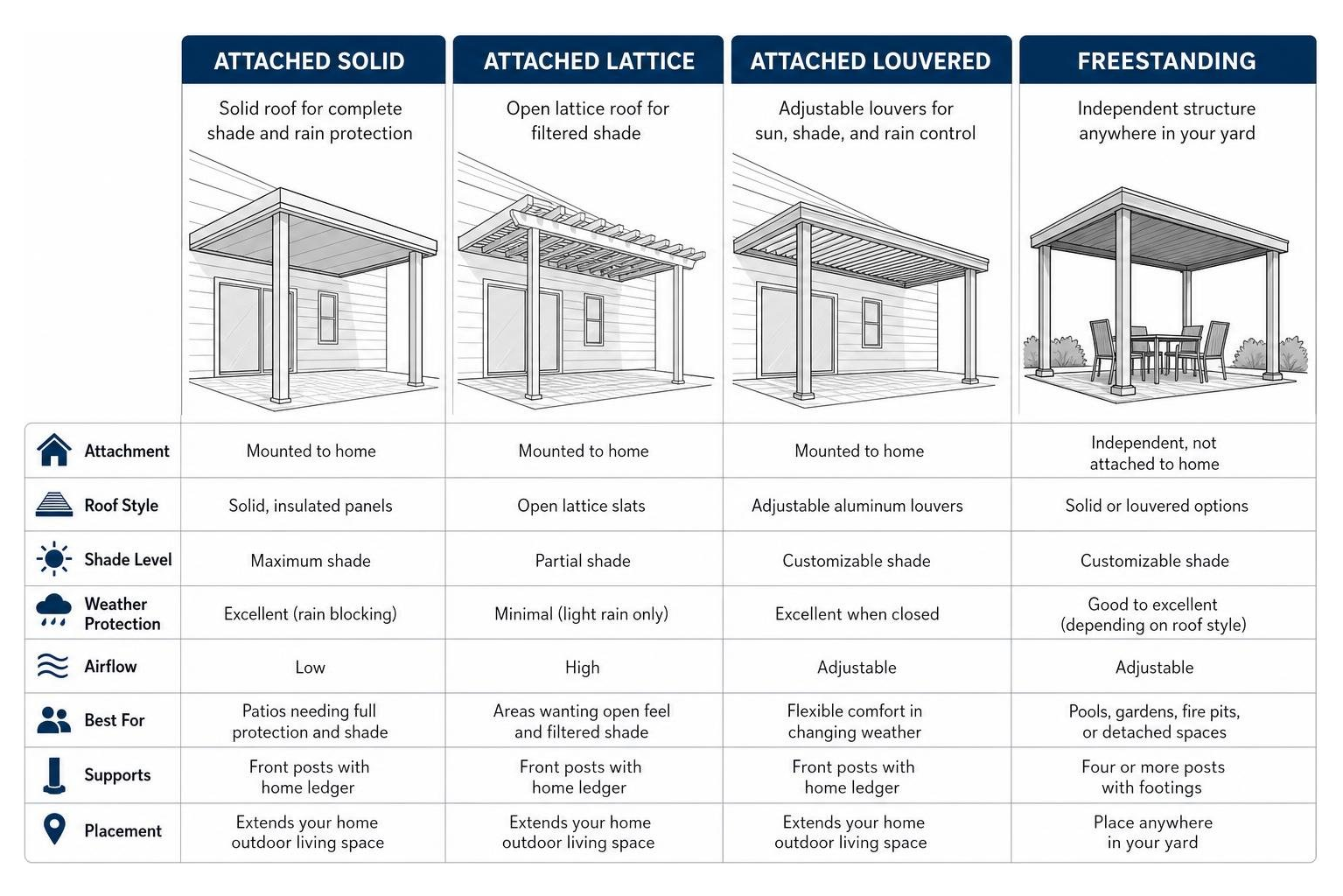
Choosing an aluminum patio cover starts with selecting the right structural design for your backyard space. Outdoor living preferences vary widely—some homeowners want full shade and 100% rain block, while others prefer filtered sunlight or an independent structure set near a pool or fire pit.
For an overall look at outdoor structures, explore our Aluminum Shade Structures Complete Guide and read The Ultimate Guide To Patio Cover Types Insulated Modern Freestanding And More to see how different styles match architectural aesthetics.
Attached Solid Aluminum Patio Cover Options
An attached solid aluminum patio cover mounts directly to your house using a heavy-duty ledger board secured to wall studs or structural trusses. On the opposite side, high-strength aluminum posts fixed in concrete footings support the load.
Solid covers come in two main configurations:
- Solid Insulated Panels: Built with a dense high-density foam core sandwiched between baked-enamel aluminum skins. They deaden sound from rain, eliminate heat transfer, and support overhead fixtures like ceiling fans and recessed lighting.
- Flat Pan & V-Pan Covers: These engineered roll-formed aluminum panels interlock tight to create a sleek, seamless ceiling profile. You can learn more about these versatile structures in our guide on Flat Pan Awnings And Patio Covers.
Attached designs offer superior stability against harsh mountain winds across the Wasatch Front, acting as an extension of your indoor living room.
Louvered Pergolas and Freestanding Aluminum Structures
If you want absolute control over light and airflow, louvered pergolas and freestanding structures offer distinct functional advantages:
- Louvered Pergola Systems: Adjustable louvers rotate up to 140 degrees with a hand crank or motorized remote control. Open them to enjoy morning sunlight or close them tight when a rain shower begins.
- Freestanding Structures: Independent gazebos and shade shelters sit anywhere on your property without requiring an existing wall attachment. They are perfect for framing an outdoor kitchen, shielding a hot tub, or building a standalone poolside retreat in places like Park City or Salt Lake City.
Whether attached or freestanding, wood-grained aluminum materials like those detailed in our Alumawood Patio Covers Ultimate Guide combine classic timber texture with lifelong aluminum durability.
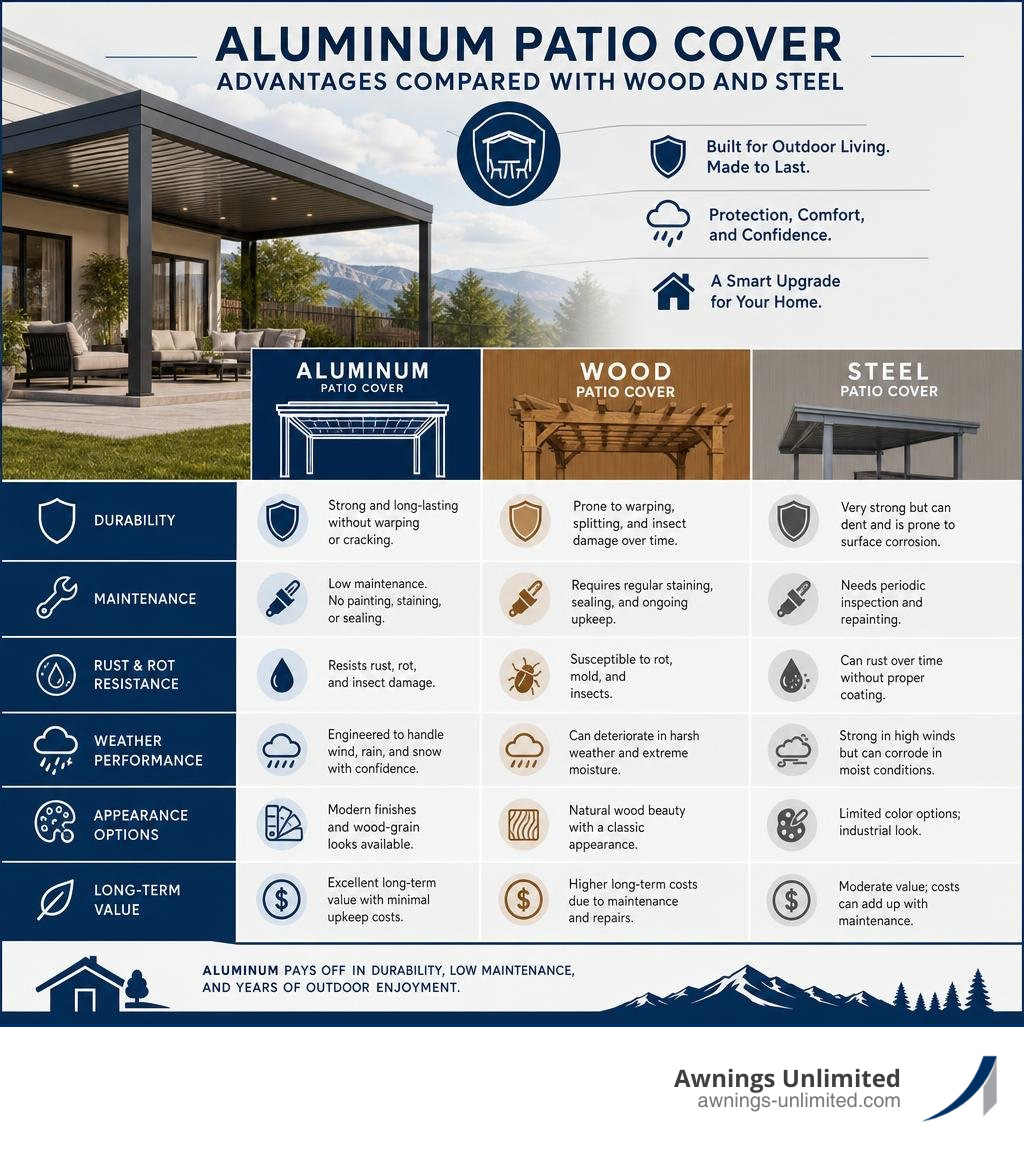
Aluminum vs. Wood and Steel: Key Benefits and Material Comparison
When planning an outdoor cover, homeowners typically weigh three core structural materials: aluminum, wood, and steel. While traditional wood offers rustic charm and steel offers extreme weight-bearing capacity, aluminum consistently emerges as the most balanced option for long-term value, weather resilience, and low maintenance.
To compare how various shade materials hold up over time, read our detailed breakdown on Patio Covers 101 Materials Styles And Maintenance Tips.
| Feature / Material | Aluminum (e.g., Alumawood) | Traditional Wood | Steel Structures |
|---|---|---|---|
| Maintenance Demands | Low (occasional rinse with water) | High (requires sealing/painting every 2–3 yrs) | Moderate (must treat rust spots immediately) |
| Rot & Termite Resistance | 100% Resistant | Susceptible to rot, warping, & insects | 100% Resistant |
| Weight & Load Ratio | High strength-to-weight ratio | Heavy; places high load on foundations | Very heavy; requires substantial footings |
| Lifespan | Decades with minimal finish wear | 10–15 years without aggressive upkeep | 15–25 years depending on corrosion prevention |
| Installation Efficiency | Fast precision kit & custom installs | Labor-intensive custom carpentry | Labor-intensive; requires heavy hoisting |
Unlike wood, an aluminum patio cover will never twist, warp, crack, or attract wood-boring pests. Unlike painted steel, high-grade powder-coated aluminum will never develop flaking rust spots when exposed to meltwater and mountain rain in places like Sandy, Bountiful, or Ogden.
Choosing the Right Aluminum Patio Cover Size and Performance Features

Selecting the proper size for your cover depends on how you plan to use your patio. Popular dimensions range from modest 10′ x 12′ patio covers ideal for small seating nooks to expansive 20′ x 12′ or 10′ x 30′ multi-zone living spaces that accommodate dining tables, outdoor kitchens, and lounges.
Commercial product options like the 20 ft. x 12 ft. Dark Gray Aluminum Patio Cover or polycarbonate hybrid kits like the Aluminum Patio Cover 10’ x 16’ with Clear Panels, TMG-LPC16 – TMG highlight the huge range of footprints available. However, choosing a custom-engineered cover ensures your structure directly integrates with your home’s roofline, eaves, and foundation layout.
Key Features and Customization Accessories
An aluminum patio cover can be tailored with functional accessories to maximize usability:
- Integrated Gutters & Drainage: Concealed gutter channels collect rainwater and channel it neatly away from your house foundation through matching downspouts.
- Privacy Curtains & Insect Netting: Track-mounted side curtains shield your space from low evening sun and keep insects away during outdoor dinners.
- Lighting & Ceiling Fans: Heavy-duty internal structural beams let you install overhead ceiling fans and LED lighting, with internal electrical channels keeping wires hidden from view.
Weather Performance Across All Climate Conditions
Outdoor structures in Utah must handle extreme weather shifts—from searing summer sun in Draper and South Jordan to heavy winter snow loads in Heber City and Logan.
- Snow Load Ratings: Engineered solid aluminum covers are designed to support heavy snow accumulation safely without sagging or bending.
- High Wind Resistance: Attached aluminum posts anchored deep into concrete footings easily withstand high canyon winds without structural fatigue.
- UV Protection: Thermally applied baked-enamel and powder-coated finishes block 100% of harmful UV rays, keeping the space underneath comfortably cool while shielding outdoor furniture from fading.
- Rain Noise Dampening: Thick insulated aluminum panels soften falling rain into a faint, gentle patter rather than the harsh drumming associated with uninsulated metal roofs.
Pricing, Cost Factors, and Installation Pathways
The total investment required for an aluminum patio cover depends on structural scope, roof type (insulated vs. single-skin flat pan), custom post wraps, lighting packages, and ground prep requirements.
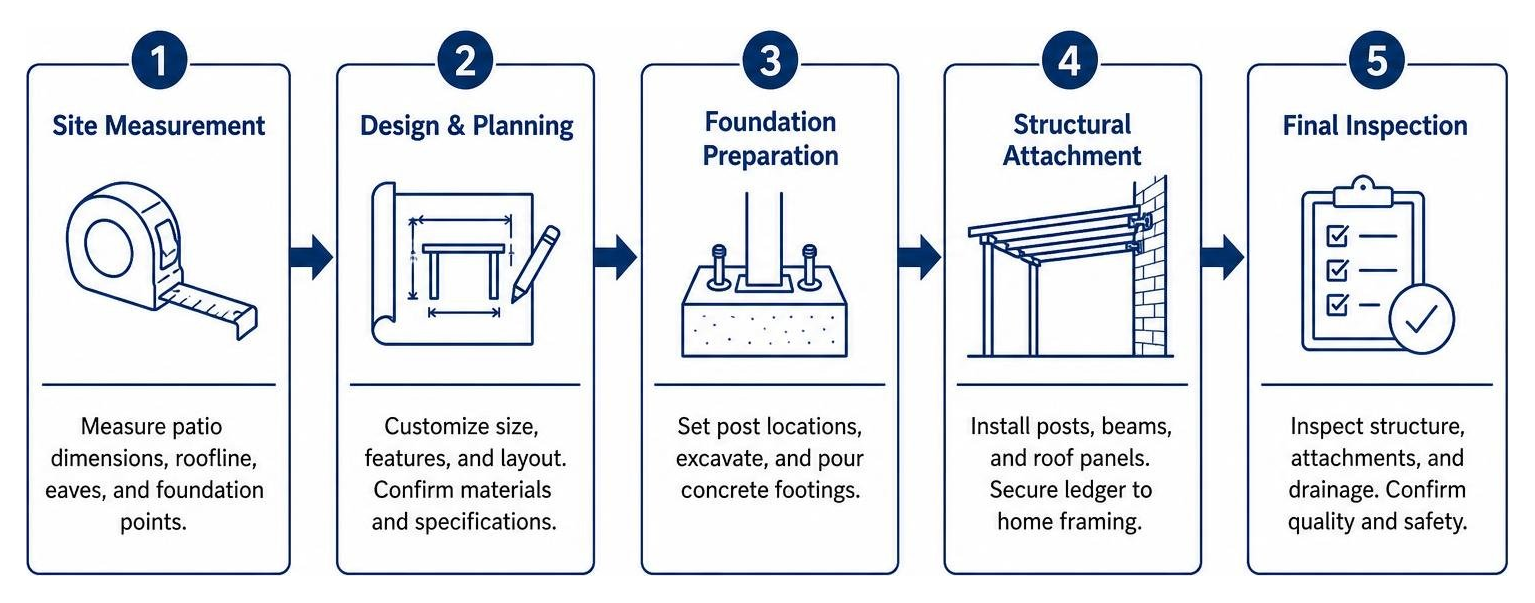
While pre-packaged DIY kits exist, custom outdoor living additions require careful planning, solid concrete foundations, and precise attachment to your home’s framing. You can learn more about proper structural preparation in our Aluminum Pergola Installation Guide and our overview for hiring expert Patio Cover Installers Complete Guide.
Professional Aluminum Patio Cover Installation Considerations
Attempting a DIY cover installation often exposes homeowners to unexpected structural challenges. Working with a dedicated structural installer offers distinct advantages:
- Building Permits & Zoning Compliance: Professional contractors handle local municipal permit applications across Northern Utah cities like Layton, Orem, and Saratoga Springs, ensuring structural engineering compliance.
- Proper Structural Anchoring: Professional teams ensure ledger bolts hit solid wall studs and post footings match regional frost line requirements.
- Warranty Protection: Expert installation preserves material warranties, giving you long-term peace of mind.
To evaluate what to look for in a team, read our full Patio Cover Builder Complete Guide.
Maintenance Tips to Extend the Lifespan of Your Patio Cover
One of the best benefits of an aluminum patio cover is its hassle-free upkeep. Unlike wood structures that demand tedious scraping, staining, and painting, caring for aluminum is simple:
- Seasonal Washing: Rinse structural beams and ceiling panels twice a year using a standard garden hose to clear away dust, pollen, and cobwebs.
- Mild Detergent Rinsing: For stubborn dirt or bird droppings, scrub gently with a soft-bristle car wash brush and a bucket of warm water mixed with mild dish soap, then rinse clean.
- Clear Gutter Channels: Check integrated gutter troughs each autumn to clear out fallen leaves, twigs, and debris so rainwater flows freely through downspouts.
- Inspect Structural Anchors: Do a quick visual check of post bases and wall mounts once a year to ensure bolts remain secure after winter thaw cycles.
Frequently Asked Questions About Aluminum Patio Covers
Can ceiling fans and light fixtures be installed on an aluminum patio cover?
Yes! Solid insulated aluminum patio covers feature internal structural foam cores and rigid aluminum extrusions designed to support ceiling fans, light fixtures, and heaters. Electrical wiring can be routed through internal raceways inside the roof beams, hiding power lines out of sight for a clean, professional finish.
How long does a powder-coated aluminum patio cover last?
A high-grade powder-coated or baked-enamel aluminum patio cover is built to last 30 years or more. Because aluminum does not rust, rot, or absorb moisture, the finish holds up against sun exposure, ice, and heavy rain without cracking or peeling. At Awnings Unlimited, our Alumawood structures come backed by industry-leading manufacturer warranties.
Will rain make a loud noise hitting an aluminum patio cover?
While thin single-wall metal sheets can amplify rain sounds, insulated aluminum roof panels deaden impact noise dramatically. The dense foam core absorbs sound waves, turning loud rainfall into a quiet, relaxing background murmur.
Conclusion
Investing in an aluminum patio cover is one of the most rewarding upgrades you can make to your home. It creates an inviting outdoor living space protected from summer heat, unexpected rain showers, and harsh winter snows—all while requiring virtually zero maintenance over its long lifespan.
Since 1976, Awnings Unlimited has helped homeowners across Salt Lake City, the Wasatch Front, and Northern Utah transform their backyards into multi-season retreats. Our custom Alumawood patio covers are custom-built to match your home’s architecture, backed by professional installation and reliable warranty coverage.
Ready to shade your space? Get a Quote today, or visit our homepage at Awnings Unlimited to explore our full line of outdoor shade solutions!