


What Are Pergolas — and Are They Right for Your Outdoor Space?
Pergolas are one of the most popular ways to add shade, style, and real value to a home’s outdoor living area. As a premier type of structural awning, they offer a beautiful alternative to solid patio covers. But with so many options — from traditional wood to modern aluminum — it can be hard to know where to start.
Here’s a quick overview to answer the most common questions:
| Question | Quick Answer |
|---|---|
| What is a pergola? | An outdoor structure with vertical posts and an open or louvered roof, used for shade and defining outdoor spaces |
| How is it different from a patio cover? | Patio covers provide full overhead protection; pergolas offer partial or adjustable shade |
| Best material? | Aluminum and Alumawood offer the best durability with lowest maintenance |
| How long do they last? | Wood: up to 12 years on average; aluminum/metal: decades |
| Do they add home value? | Yes — an average of around $10,000 in added home value |
| Do I need a permit? | Often yes — requirements vary by city and HOA |
Whether you want a shaded seating area, a covered patio, or a structure to grow climbing plants on, a pergola can be designed to fit almost any outdoor space and budget.
At Awnings Unlimited, we’ve been designing and installing custom pergolas and patio covers across Northern Utah since 1976 — using durable, low-maintenance materials built to handle harsh Utah winters and blazing summers. In this guide, we’ll walk you through everything you need to know to choose, install, and enjoy the right pergola for your home.
Understanding Pergolas: Definition, History, and Key Differences

To truly appreciate what pergolas can bring to your backyard, it helps to understand exactly what they are. In outdoor design, people often confuse them with other structures like gazebos, arbors, or green tunnels.
According to Pergola – Wikiwand, a pergola is an outdoor garden feature forming a shaded walkway, passageway, or sitting area. It consists of vertical posts or pillars that support crossbeams and a sturdy open lattice.
Unlike a gazebo, which is typically a freestanding, octagonal structure with a fully closed, solid roof, a traditional pergola features an open-roof design. This open structure allows light and air to flow freely while still offering a defined space. If you are looking for a way to define your patio without completely boxing it in, there are plenty of Want a Pergola? 8 Reasons You Should Own One that make these structures an exceptional choice for modern backyards.
The History and Evolution of Pergolas
The use of these elegant structures is far from a modern trend. The word itself originates from the Late Latin pergula, which referred to a projecting eave or a protective booth. Historically, they were used in ancient Roman, Egyptian, and Greek gardens to provide shaded walkways and support heavy grapevines.
In historical European gardens, these structures often evolved into “green tunnels” — long, shaded pathways formed by training flexible tree branches or climbing plants over a wooden frame. They experienced a major design revival during the 19th and early 20th centuries, becoming staples of grand estate landscaping.
Today, as detailed by the Pergolas: Design and Garden Uses | RHS Advice, they remain beloved for their ability to blend architectural beauty with nature. While early historical versions were built strictly from timber or stone, modern engineering has introduced materials like aluminum, vinyl, and composite materials that mimic the look of wood without the heavy maintenance.
Pergola vs. Patio Cover: Structural Differences
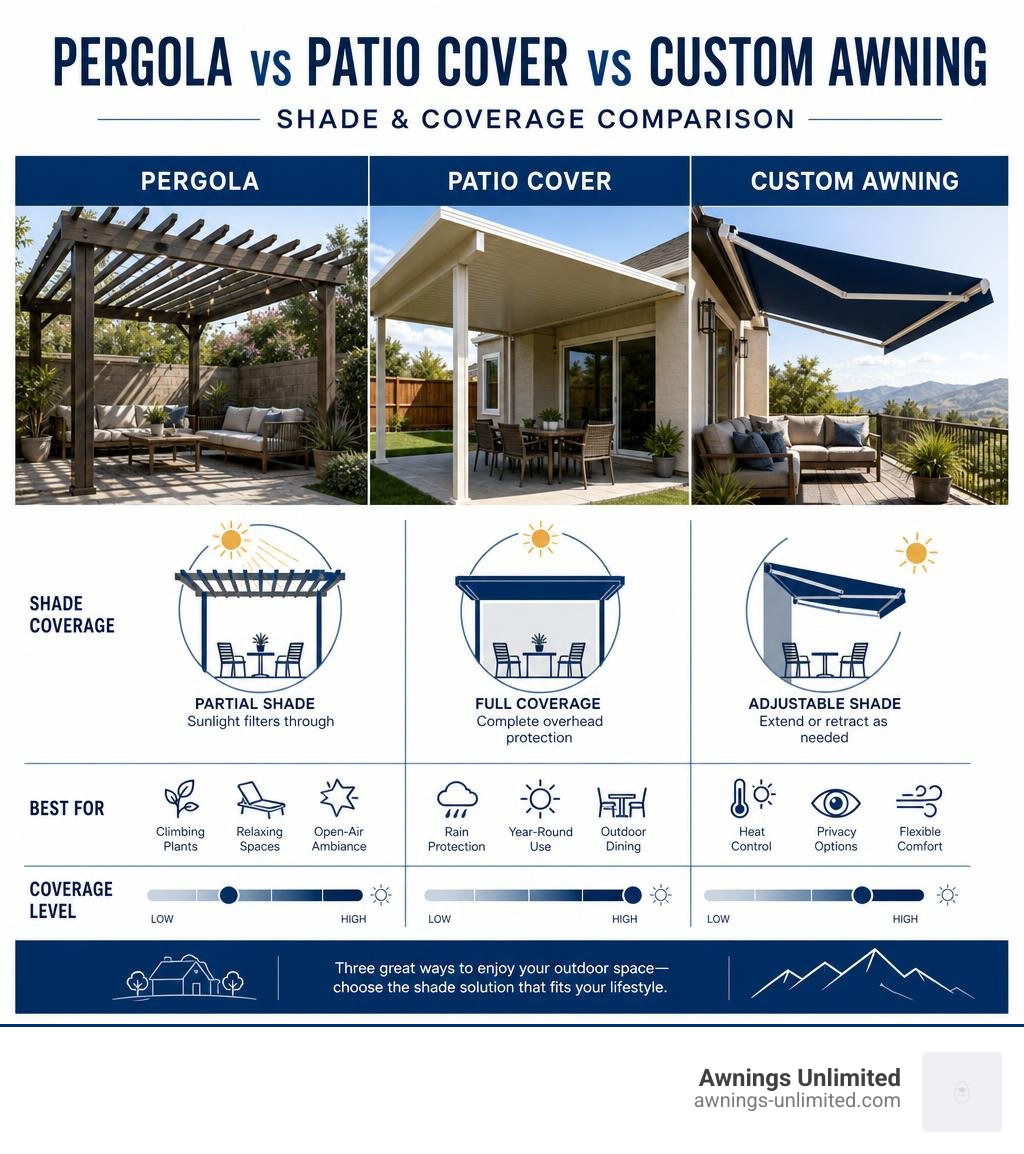
When planning your backyard upgrade along the Wasatch Front, you will likely find yourself choosing between a pergola and a traditional patio cover—both of which are excellent options for structural awnings. While they look similar at a glance, they serve different functional purposes:
- Pergola: Characterized by its open-topped canopy, slatted beams, and rafters. It is designed to provide filtered shade and ventilation. It feels airy and open, making it perfect for staging cozy seating areas, framing garden paths, or hosting lively outdoor gatherings. You can explore how these open designs adapt to different uses in our guide on The Versatility of Pergolas for Various Outdoor Events.
- Patio Cover: A patio cover features a solid, fully closed roof that is typically attached directly to your home. It provides 100% protection from rain, snow, and direct sunlight.
For homeowners who want the best of both worlds, modern advancements have bridged this gap. You can now choose solid-roof designs that mimic the side profile of a classic timber frame while offering the absolute weather protection of a solid patio cover.
Choosing the Right Materials and Design Configurations
Choosing the right material for your structure is the most critical decision you will make. It determines not only how your patio looks, but also how much work you will have to put into maintaining it over the years.
| Feature | Alumawood | Powder-Coated Aluminum | Traditional Wood (Cedar/Redwood) |
|---|---|---|---|
| Aesthetic | Rich, embossed wood-grain texture | Modern, sleek, and contemporary | Natural, rustic warmth |
| Maintenance | None (no painting, staining, or sealing) | None (occasional rinse with a hose) | High (requires staining/sealing every 1-3 years) |
| Durability | Decades; won’t rust, rot, warp, or split | Decades; completely rust-proof | 10-12 years on average before rot or decay sets in |
| Pest Resistance | 100% termite and insect proof | 100% termite and insect proof | Susceptible to termites and wood-boring pests |
| Fire Resistance | Non-combustible | Non-combustible | Highly combustible |
To dive deeper into how these materials compare and how they are customized for local homes, check out our Ultimate Custom Alumawood Pergola Guide.
Alumawood and Aluminum: The Modern Standard
For decades, wood was the default choice for outdoor structures. However, in our dry Utah climate, wood takes a beating. The intense summer UV rays combined with freezing winter snows cause natural timber to crack, warp, and fade rapidly.
That is why high-quality aluminum and Alumawood have become the industry gold standard. Alumawood is heavy-gauge aluminum that has been factory-finished and embossed with a realistic wood-grain texture. It gives you the exact look of painted or stained wood but is completely maintenance-free.
Aluminum profiles are also incredibly structurally stable. They do not sag over time, they are completely termite-resistant, and they do not require any of the sanding, painting, or weatherproofing that traditional wood demands. You can customize these modern materials with various color options and custom end-cut profiles to match your home’s architectural style, as shown in our breakdown of Pergola Design Options for Your Home.
Why Alumawood Outperforms Traditional Wood
While a brand-new cedar structure looks beautiful on day one, keeping it that way is a chore. Natural wood structures last an average of up to 12 years, and that is only if you are diligent about sanding, staining, and sealing them every couple of seasons. Without this intense upkeep, moisture will seep into the joints, leading to wood rot, warping, and structural failure.
Alumawood completely eliminates these headaches. It features a baked-on paint finish that resists peeling, blistering, and flaking. It won’t absorb moisture, meaning it will never rot, split, or harbor mold. Over a ten-year period, the money and time saved on paint and sealant make Alumawood a far more cost-effective and valuable investment for your property. To see why so many local homeowners are making the switch, read more about how Alumawood preserves Want a Pergola? 8 Reasons You Should Own One.
Top Reasons to Choose Freestanding Pergolas
When planning your layout, you can configure your structure as either wall-mounted (attached directly to your home) or freestanding.
Freestanding designs are completely self-supporting, meaning they can be placed anywhere in your yard. They are perfect for creating distinct “zones” in your landscaping. You can use a freestanding structure to frame an outdoor kitchen, cover a poolside lounge area, or create a quiet, shaded retreat at the far end of your garden. Because they don’t rely on your home’s structural framing, they offer endless design flexibility. Discover how to utilize these versatile structures in our guide on the Top Reasons to Choose a Free-Standing Pergola for Your Outdoor Space.
Louvered, Retractable, and Solid Roof Designs
If you love the open-air feel of a traditional lattice but still want protection when the weather turns, you have several fantastic design options:
- Louvered Pergolas: These feature an adjustable roof made of rotating aluminum slats (often rotating up to 120 or 135 degrees). Using a simple manual hand crank or a motorized remote, you can open the louvers to let in the winter sun, angle them to block the harsh afternoon glare, or close them completely to form a watertight seal when it rains.
- Retractable Canopy Pergolas: These utilize durable, outdoor-grade fabric canopies that slide open or closed along integrated tracks, letting you choose between full sun and full shade.
- Solid Roof Designs: These combine the classic perimeter look of a pergola (complete with decorative rafter tails) with a solid, insulated patio cover roof. This is highly recommended for homeowners in snowy regions who want zero-maintenance shade and 100% protection from the elements year-round.
Explore these high-performance options further on our Pergolas Salt Lake City Utah service page.
Installation, Maintenance, and Weather Resistance
Living along the Wasatch Front means our outdoor structures must be engineered to handle extreme, rapidly changing weather. From heavy winter snows in Salt Lake City and Park City to high canyon winds in Bountiful and Ogden, proper installation and structural integrity are non-negotiable. To learn more about how local trends are adapting to these demands, read our guide on Pergola Installation Trends in Utah.
Why Professional Installation Outperforms Pre-Fabricated Kits
It can be tempting to order a cheap, pre-fabricated DIY kit online. However, these kits often present significant challenges:
- Time and Labor: Even “simple” kits can take multiple days to assemble, requiring specialized tools, ladders, and at least two or three helpers.
- Structural Integrity: Many cheap kits use thin-gauge metals or low-quality wood that cannot withstand heavy snow loads or high winds.
- Anchoring Issues: A pergola is essentially a giant sail. If it is not anchored correctly into deep concrete footings or a reinforced deck, a strong wind storm can lift it up and damage your home or your neighbor’s property.
- Permits and Codes: Professional installers handle the complicated engineering drawings, site planning, and local municipal building permits required to ensure your structure is fully legal and safe.
Weighing the options? We break down the long-term return on investment in our article: Is Custom Pergola Installation Worth the Cost?.
Engineering Ratings for Wind, Snow, and Rain
When purchasing an outdoor structure in Utah, you should always look at its official engineering and wind ratings.
Premium, professionally installed aluminum and Alumawood structures are designed and tested to withstand incredible environmental forces. High-end systems can be engineered to handle wind speeds up to 100 mph (and in some specialized heavy-duty configurations, up to 165 mph) when properly anchored to concrete or structural wood decks.
Additionally, they are rated for heavy snow loads — often up to 50 pounds per square foot (psf). This ensures that when the winter storms roll off the Great Salt Lake, your structure won’t buckle under the weight of wet, heavy snow. Integrated drainage designs, like custom gutter and downspout systems, also ensure that rainwater is channeled away quietly and efficiently, keeping your patio dry.
For a complete look at local building requirements and weatherproofing standards, see our Pergola Builders Utah Complete Guide.
Frequently Asked Questions
How much value does a pergola add to a home?
On average, a professionally designed and installed custom pergola can enhance a home’s overall market value by approximately $10,000. Beyond the dollar amount, it dramatically improves your home’s “curb appeal” and expands your usable square footage, making your property much more attractive to future buyers. For more information on maximizing your home’s outdoor appeal, check out our Pergola Builders Utah Complete Guide.
How long do different pergola materials last?
Traditional, well-maintained wood structures typically last around 10 to 12 years before rot, UV damage, and structural warping require them to be replaced. On the other hand, high-quality, powder-coated aluminum and Alumawood structures are virtually indestructible and can easily last for decades with nothing more than an occasional rinse with a garden hose.
Do I need a building permit to install a pergola?
In most parts of Northern Utah, yes — especially if the structure is attached to your home or exceeds a certain size (typically 120 to 200 square feet). Local municipalities have strict rules regarding setback lines (how close the structure can be to your property line) and snow-load engineering. If you live in an HOA-controlled community, you will also need to submit your design plans for architectural approval before construction begins.
Conclusion
Adding a pergola to your backyard is one of the best ways to transform an underutilized patio into a beautiful, functional outdoor living room. Whether you want a classic, wood-grain Alumawood design to filter the summer sun, a freestanding retreat in your garden, or a heavy-duty patio cover to handle the winter snow, choosing the right materials and professional installation is the key to a structure that lasts a lifetime.
At Awnings Unlimited, we have spent the last 50 years helping families across Salt Lake City, the Wasatch Front, and Northern Utah design and install custom structural awnings and patio covers. We pride ourselves on using only the most durable, low-maintenance materials — backed by professional engineering and a leading warranty.
Ready to design your dream backyard oasis? Contact us today for a free estimate and let’s build something beautiful together!