

Why Patio Awnings Are One of the Best Investments for Your Outdoor Space
Patio awnings are shade structures attached to the exterior wall of a home to cover and protect an outdoor living area. Here’s a quick overview:
What you need to know at a glance:
- Types: Solid patio covers, lattice pergolas, attached awnings, freestanding pavilions
- Best materials: Structural aluminum, Alumawood, insulated panels
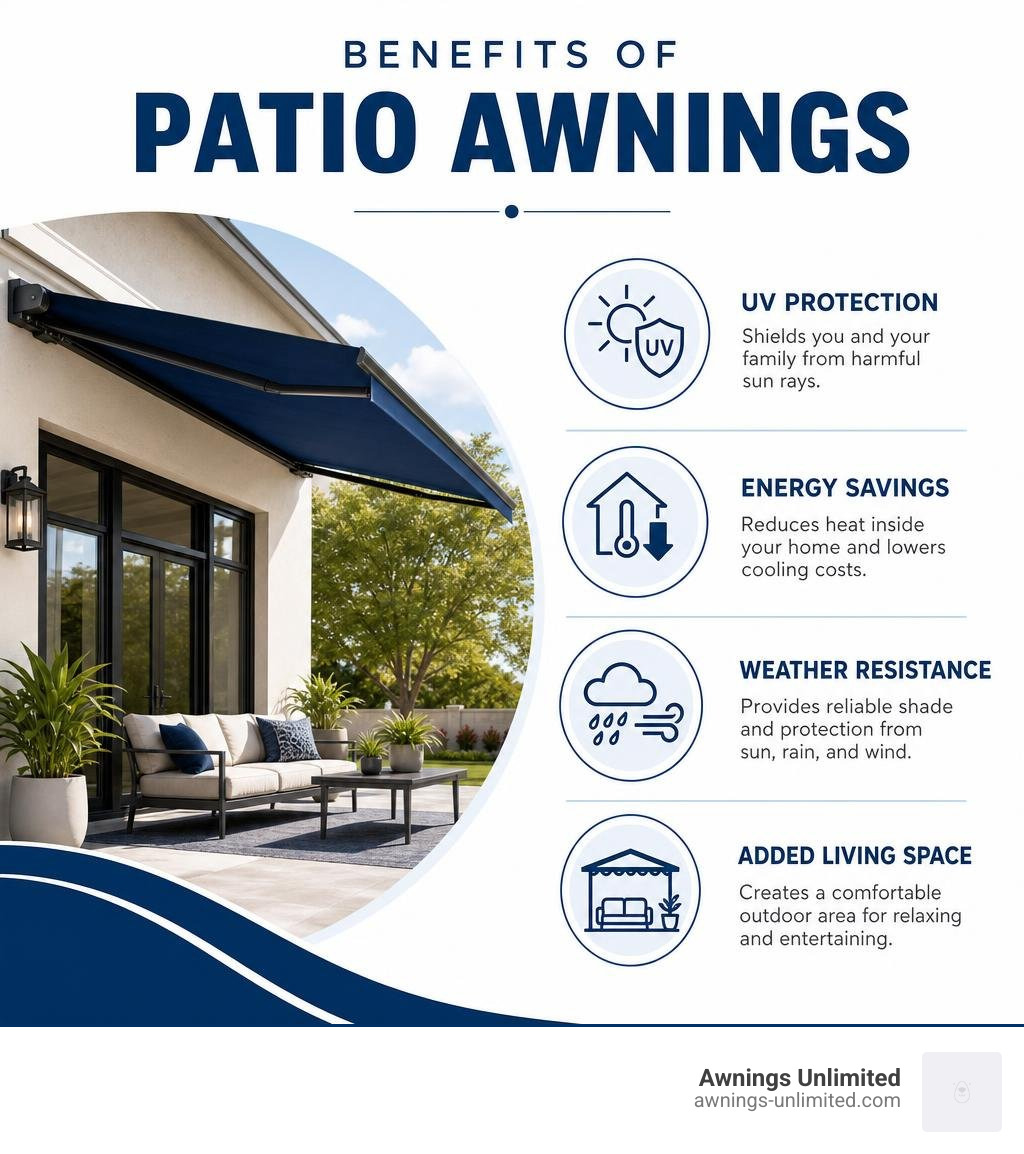
- Key benefits: UV protection, heat reduction, energy savings, added living space, curb appeal
- Installation: Professional installation recommended for structural, permanent covers
- Cost range: Custom structural covers vary widely based on size, material, and design
Your outdoor space has real potential. A quality patio cover turns a hot, exposed backyard into a comfortable, usable room — one your family can enjoy all summer long and that holds up through harsh winters.
The right shade structure does more than block the sun. It protects your home, reduces indoor cooling costs, and adds lasting value to your property. Whether you’re looking at a solid patio cover, a lattice pergola, or a custom structural awning, the options are broader — and more durable — than most homeowners expect.
At Awnings Unlimited, we’ve been helping Northern Utah homeowners find the right patio awnings and custom shade solutions since 1976, using industry-leading materials like Alumawood by Amerimax. In this guide, we’ll walk you through everything you need to make a confident, informed decision for your outdoor space.
Key Types of Patio Covers and Structural Awnings
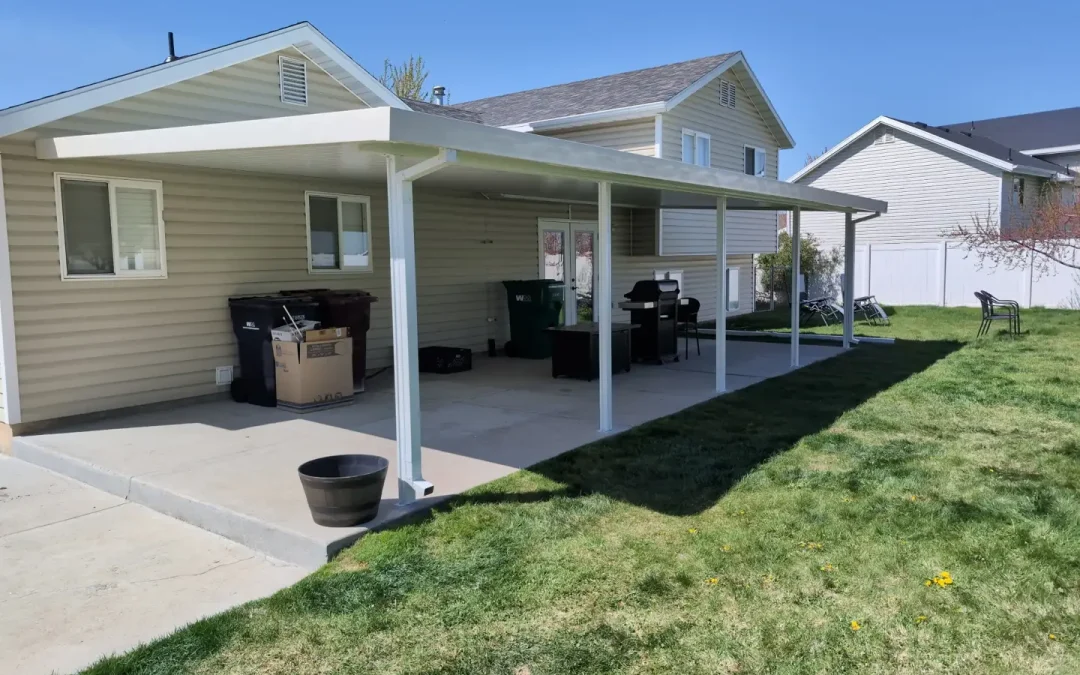
When looking to shade your backyard, understanding the different types of permanent shade structures is the first step toward achieving total backyard comfort. For true longevity and weather resistance, permanent structural patio awnings offer unmatched design flexibility and structural integrity, especially when handling the intense weather along the Wasatch Front.
Solid Patio Covers vs. Lattice Pergolas
The choice between a solid roof patio cover and a lattice pergola comes down to how much shade control and weather protection you want.
- Solid Roof Patio Covers: These structures provide 100% shade and complete protection from rain and snow. Built with durable structural aluminum or insulated panels, solid covers create a true outdoor room. They allow you to enjoy your patio during a summer downpour or keep your outdoor furniture completely dry during winter.
- Lattice Pergolas: If you prefer a balance of sun and shade, Alumawood pergolas are an exceptional choice. By adjusting the spacing of the lattice tubes, you can customize the exact percentage of shade your patio receives. This style offers a beautiful, classic aesthetic that lets warm, filtered light through while still protecting you from direct overhead glare.
To explore which style matches your lifestyle, check out our guide on Choosing the Right Awning for Your Home.
Attached vs. Freestanding Structural Awnings
Where and how your shade structure is mounted will impact both its look and utility.
- Attached Patio Covers: These are mounted directly to your home’s exterior wall or fascia. Attached structures are incredibly secure, utilizing the structural strength of your home to support the awning. They create a seamless extension of your indoor living space, making it feel like a natural part of your home’s architecture.
- Freestanding Pavilions: If you want to shade an area away from the house—like a poolside deck, a garden fire pit, or a standalone outdoor kitchen—a freestanding pavilion is the perfect solution. Supported by heavy-duty structural aluminum posts, these permanent structures bring comfort to any corner of your yard.
Choosing the Best Materials for Durability and Weather Resistance
The material you choose determines how much time you will spend maintaining your cover versus actually enjoying it. In Northern Utah and Wyoming, where weather swings from scorching summer heat to heavy winter snow, selecting the right material is vital.
| Material | Durability | Maintenance Required | Weather Resistance | Est. Lifespan |
|---|---|---|---|---|
| Alumawood (Aluminum) | Excellent | Virtually None | Outstanding (Snow & Wind) | 30+ Years |
| Traditional Wood | Good | High (Sanding, Painting) | Moderate (Prone to Rot) | 15–20 Years |
| Polycarbonate | Moderate | Low | Good (Shatter-Resistant) | 10–15 Years |
| Insulated Panels | Excellent | Low | Outstanding (Thermal Shield) | 30+ Years |
While traditional wood has a rustic charm, it requires constant scraping, staining, and painting to prevent warping, cracking, and rotting.
Alumawood, on the other hand, gives you the gorgeous embossed texture of real wood grain but is constructed from heavy-duty structural aluminum. It won’t rust, warp, rot, or host termites. Combined with a factory-finished paint system, it never needs to be repainted. For those looking for maximum comfort, insulated panels are another premium choice, featuring a foam core that blocks the sun’s heat from radiating downward onto your patio.
For a deeper dive into selecting the ideal materials for your specific property, read our resource on The Perfect Awning for Your Home and How to Find It.
Key Benefits of Installing a Patio Cover or Awning

Beyond just keeping you out of the sun, installing a permanent patio cover or structural awning comes with a host of everyday benefits:
- Maximum UV Protection: High-quality structural covers block 100% of harmful UVA and UVB rays, keeping your family safe while preventing your outdoor rugs and expensive patio furniture from fading.
- Substantial Energy Savings: Did you know that shading your windows and glass doors can dramatically lower your indoor temperatures? By blocking the sun before it hits your glass, you can significantly Save Money on Energy Bills with a New Utah Awning.
- Enhanced Curb Appeal: A custom-designed Alumawood cover instantly elevates your home’s exterior design, making your property stand out in the neighborhood.
- Expanded Living Space: With a solid cover, your patio becomes a multi-functional outdoor living room where you can host dinners, work from home, or relax, regardless of the weather.
For more information on how these structures elevate your lifestyle, read about the 4 Reasons Why Your Home Needs an Awning and why they are considered 5 Reasons Awnings are a Must-Have for Utah Homes.
Installation and Maintenance: DIY vs. Professional

While lightweight retail kits might seem like a tempting weekend project, permanent structural covers require a high level of precision.
Building a permanent structural awning involves securing heavy posts, anchoring brackets into your home’s framing, and ensuring the entire structure is perfectly level. In areas like Park City, Heber City, or Salt Lake City, structures must be engineered to withstand rigorous local building codes, high wind speeds, and heavy snow loads.
Professional installation ensures your cover is safely anchored, fully permitted, and backed by a reliable warranty. To learn more about what the process looks like, browse our Residential Awning Installation Guide and discover Why Professional Awning Installation is Worth It.
Maintaining Your Awning for Longevity
One of the greatest benefits of choosing a structural aluminum or Alumawood patio cover is how easy it is to maintain. Unlike wood, which demands seasonal sanding and sealing, metal covers require very little effort to keep looking brand new:
- Routine Rinsing: Use a garden hose once or twice a year to wash away accumulated dust, pollen, and debris.
- Gentle Cleaning: For stubborn spots, scrub gently with a soft-bristled brush and a mixture of warm water and mild soap. Avoid harsh abrasive cleaners.
- Clear Debris: Keep the top of your solid cover clear of heavy accumulations of wet leaves or pine needles to ensure proper drainage through the built-in gutter systems.
To ensure your investment lasts for decades, read our guide on the Importance of Proper Maintenance for Your Utah Awning.
Frequently Asked Questions about Patio Covers
How do I choose the right size awning for my patio?
To determine the ideal size, measure the width of the patio area you want to shade and the “projection” (how far out from the house you want the cover to extend). We recommend extending the cover at least 1 to 2 feet beyond your main seating area to account for the angle of the afternoon sun.
Can structural patio covers withstand heavy snow and wind?
Yes, when they are professionally engineered. Our custom structural aluminum and Alumawood covers are designed and anchored specifically to meet or exceed the heavy snow load and high wind requirements of Northern Utah and Wyoming.
How much do custom patio covers cost?
The cost of a custom cover varies depending on the overall dimensions, the materials chosen (such as solid insulated panels versus lattice), and any custom design features. Because these are permanent home improvements, they add direct equity to your home, making them a highly cost-effective investment over time.
Conclusion
Investing in a high-quality patio cover is one of the best ways to unlock the full potential of your backyard. Whether you love the partial shade of a lattice pergola or the year-round protection of a solid insulated roof, the right structure will turn your patio into your family’s favorite gathering spot.
With fifty years of local experience across the Wasatch Front and Northern Utah, we understand how to design and build shade structures that handle our unique mountain climate beautifully.
If you are ready to transform your outdoor space, read our advice on How to Choose an Awning Company for Your Salt Lake Home to see what sets a quality builder apart. You can also explore how Residential Awnings Boost Your Curb Appeal and Comfort or dive deep into our complete guide to Salt Lake patio covers to start planning your dream outdoor oasis today!