


Why Metal Carport Installation is a Smart Investment for Utah Homeowners
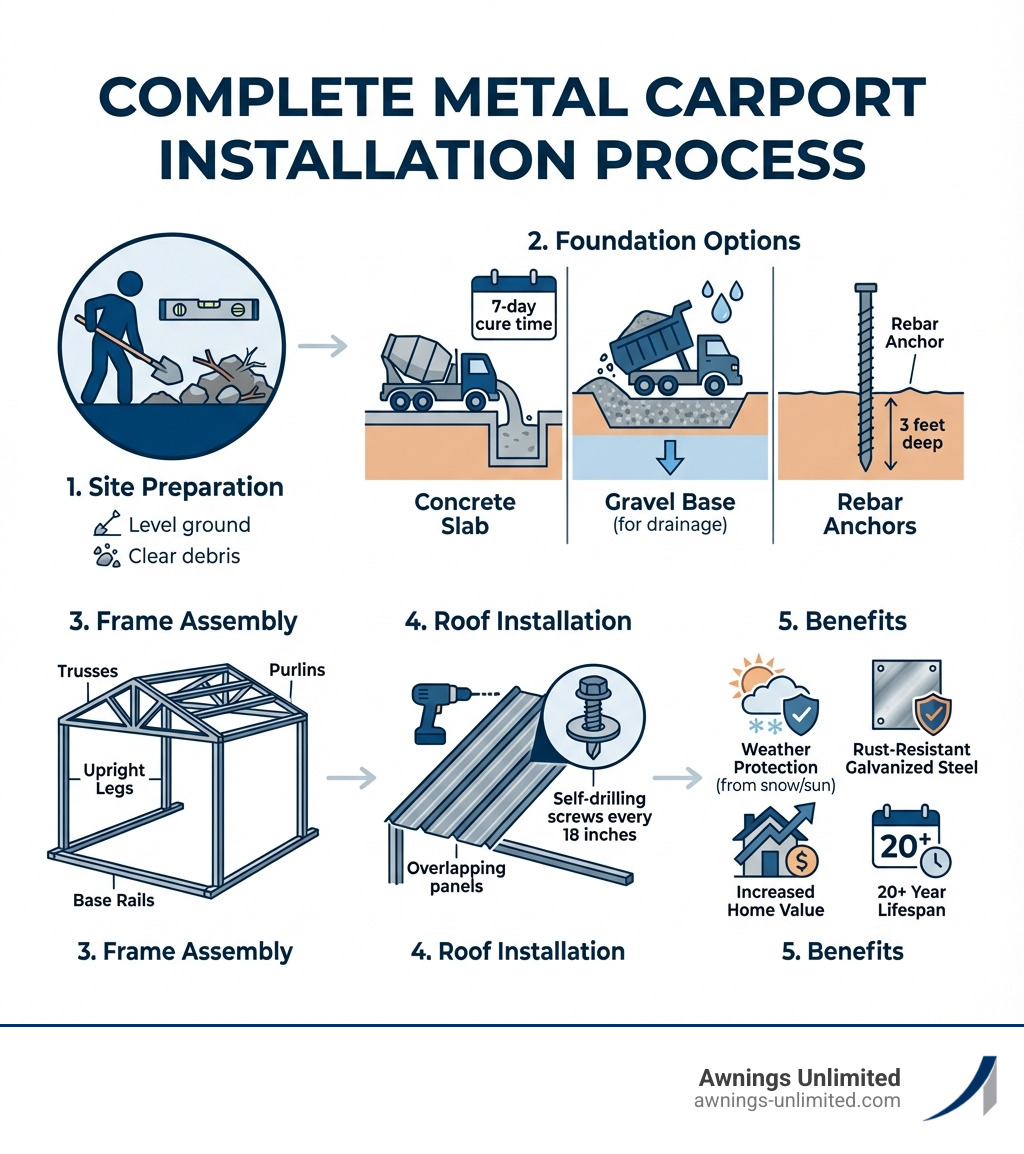
Metal carport installation is a straightforward process that involves preparing a level foundation, anchoring a steel frame to the ground, assembling the structure’s trusses and purlins, and securing roof panels to create a durable shelter. The entire project can typically be completed in a few hours to a full day, depending on size and complexity.
Key Steps for Metal Carport Installation:
- Planning – Check permits, choose location, and prepare the site
- Foundation – Install concrete slab, gravel base, or ground anchors
- Base & Frame – Position base rails, attach legs, and assemble trusses
- Roof & Panels – Install roof panels with proper overlap and secure fasteners
- Finishing – Add side panels, trim, gutters, and conduct final inspection
Metal carports offer exceptional value for Utah homeowners. They’re durable enough to withstand harsh winters, cost-effective compared to traditional garages, and require minimal maintenance. Unlike wood structures that rot or fabric covers that tear, a properly installed metal carport can protect your vehicles, RVs, and outdoor equipment for decades while adding property value.
This guide walks you through the complete installation process, from preparing uneven ground to attaching a carport to your home. You’ll learn about foundation options, essential tools, frame assembly, and the finishing touches that make your carport both functional and attractive.
Since 1976, Awnings Unlimited has been Northern Utah’s trusted source for custom carports and patio covers, bringing nearly five decades of expertise to every metal carport installation project. Our team understands Utah’s unique climate challenges and uses industry-leading Alumawood materials backed by exceptional warranties to ensure your carport stands strong through every season.
Before You Build: Essential Planning and Preparation
Proper planning is the secret to a smooth metal carport installation. This initial phase is crucial, covering site selection, ground preparation, local regulations, and gathering the right tools. A little foresight avoids headaches down the road.
Understanding Your Metal Carport: Key Components & Materials
A metal carport is an engineered structure designed for durability and easy assembly. The main components include:
- Galvanized Steel Frame: The skeleton of your carport, made of sturdy galvanized steel for strength and weather resistance. It’s often pre-cut and pre-drilled for quick assembly.
- Base Rails: These form the foundation of the frame, running along the ground for stability.
- Upright Legs: Vertical supports connecting the base rails to the roof structure.
- Trusses and Purlins: Trusses are triangular or arched structures supporting the roof, while purlins are horizontal beams connecting trusses for roof panel attachment.
- Roof Panels: Corrugated or ribbed metal sheets that form the protective cover.
- Siding (optional): Side panels or full walls for added protection.
- Fasteners: A variety of screws, bolts, and anchors to hold everything together.
The steel gauge, or thickness, is a key factor in your carport’s strength and longevity.
- 14-Gauge Steel: The industry standard, measuring 2 ½” x 2 ½” in diameter. It’s robust and suitable for many applications.
- 12-Gauge Steel: Thicker and stronger, 12-gauge steel measures 2 ¼” x 2 ¼” in diameter. It has higher tensile strength and better wind/snow load ratings. We recommend 12-gauge for mountainous regions in Utah and Wyoming, or for carports 10 feet or taller, to ensure resilience against heavy snow and strong winds.
Understanding these differences helps you select the right custom carport.
Navigating Permits, Local Codes, and HOA Rules
This step is critical. Before breaking ground, check with your local government and Homeowners’ Association (HOA).
- Zoning Laws and Building Permits: Most areas in Utah, Wyoming, and surrounding states have zoning laws dictating structure placement, setbacks, size, and height. While many carports don’t require permits, it’s always best to verify. Some jurisdictions require certified structures.
- Certified Buildings: These are engineered to meet specific wind and snow load ratings, often required by local ordinances for safety. For challenging winters in places like Park City or Logan, a certified building ensures compliance and peace of mind.
- HOA Guidelines: HOAs often have rules for exterior structures, including materials, colors, and design. Neglecting them can lead to fines or forced removal.
A quick call to your local municipality or HOA before ordering can save headaches and rescheduling.
Choosing the Right Spot and Preparing the Site
Choosing the right spot ensures longevity and convenience. Here’s what to consider:
- Ease of Access: Choose a location near your driveway for easy parking and maneuvering.
- Drainage: A well-drained area prevents water pooling, which can cause erosion and structural issues.
- Ground Slope: A level area is ideal. Significant slopes may require grading for stability and appearance. We’ll discuss uneven ground in the foundation section.
- Obstructions: Check for overhead wires (at least 15 feet of clearance), underground utilities (mark before digging), trees, or other structures that could interfere with installation.
- Sunlight and Wind: Consider sun and wind patterns for vehicle protection and structural stability.
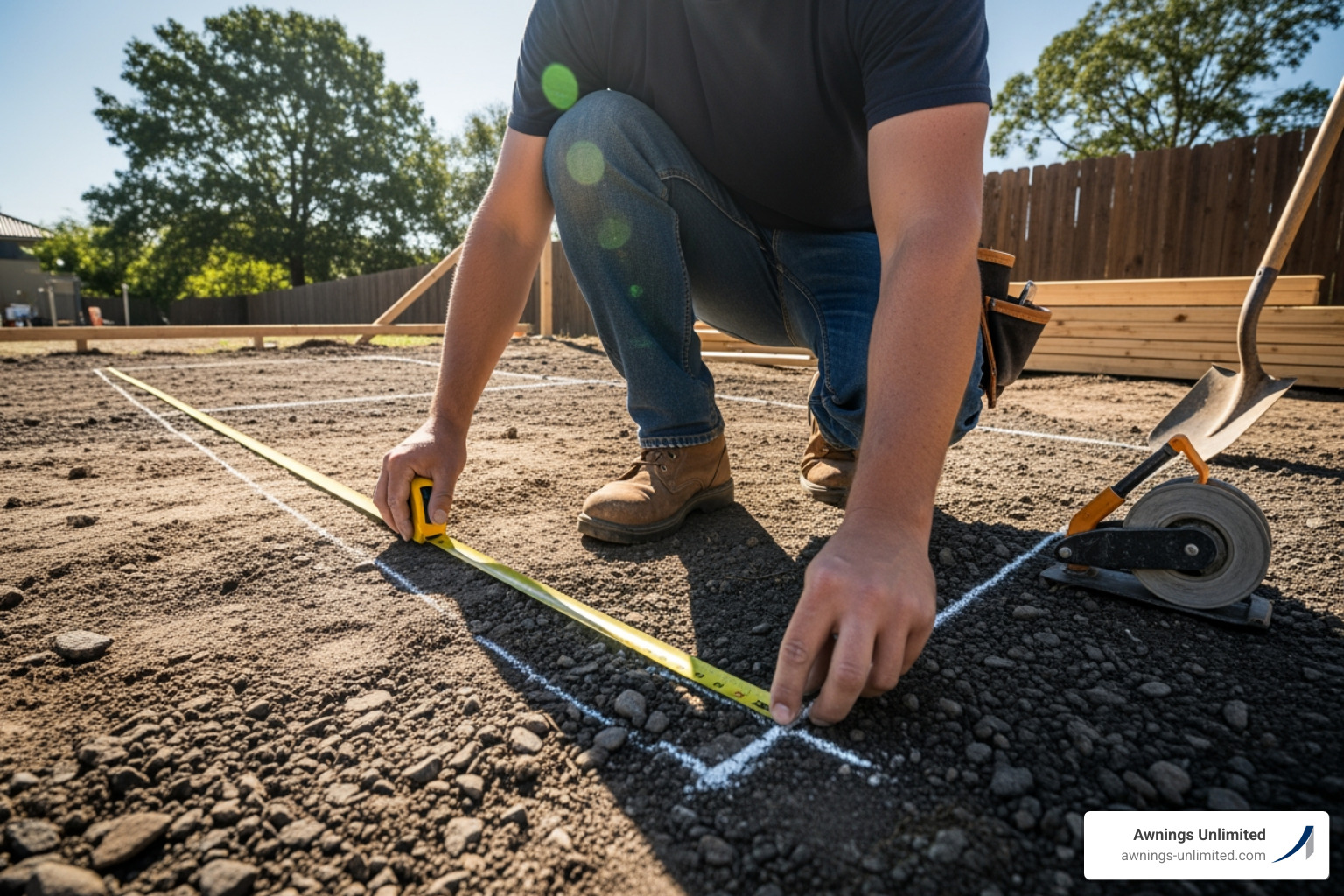
Once the spot is chosen, prepare the site by clearing debris, rocks, and vegetation. Outline the area with stakes and string. The site must be level for a safe metal carport installation. If the ground isn’t flat, light grading may be needed to create a level pad.
Foundation Options: From Concrete Slabs to Ground Anchors
The foundation is the bedrock of your carport, providing stability against Utah’s weather. The best option depends on your budget, permanence, and soil conditions.
| Foundation Type | Durability | Cost | Drainage | Best Use Case |
|---|---|---|---|---|
| Concrete Slab | High | High | Excellent | Permanent structures, maximum stability, heavy loads |
| Gravel Base | Medium | Medium | Very Good | Semi-permanent, good drainage, budget-friendly |
| Asphalt | Medium | Medium | Good | Permanent, solid surface, good for vehicles |
| Ground Anchors | Low-Medium | Low | Varies | Temporary/semi-permanent, quick installation |
- Concrete Slab: The most durable and stable option. A concrete slab provides a perfectly level surface and excellent anchoring. We recommend pouring the pad slightly wider (about 3/4″) and the same length as the frame. Concrete needs at least 7 days to cure before installation.
- Gravel Base: A budget-friendly alternative that provides good drainage and a stable surface for semi-permanent carports. It’s easy to install and a great option if you might relocate the carport later.
- Asphalt or Paver Bases: These offer a solid, durable surface, similar to concrete but with a different aesthetic. They may require professional installation.
- Ground Anchors: For installations on grass, dirt, or stone, ground anchors are used. Standard installations use 3-foot rebar anchors. For high-wind areas or certified units, we may recommend mobile home anchors (double helix auger anchors) for superior hold.
For any metal structure over 24 feet wide, we recommend concrete footers for improved stability, even if a full pad isn’t used.
Essential Tools and Materials for Metal Carport Installation
Having the right tools on hand ensures a smooth metal carport installation. Here’s a typical list:
- Measuring tape and chalk line: For accurate layout.
- Level: To ensure everything is plumb and square.
- Hammer drill with bits: For drilling into concrete.
- Socket wrench set and screwdrivers: For frame assembly.
- Ladder: For reaching the roof and upper frame.
- Safety gear: Gloves, safety glasses, and sturdy footwear.
- Carport kit components: All pre-cut and pre-drilled pieces.
- Anchors: The correct type for your foundation (rebar, concrete wedge, or mobile home).
- Self-drilling screws with rubber washers: For watertight roof panel attachment.
- Weatherproof caulk: For sealing gaps or joints.
With these tools and materials, you’re ready for installation.
The Step-by-Step Metal Carport Installation Process
With planning complete, it’s time to build. This section covers freestanding structures; for attached carports, see the next section. Prefabricated metal carports are engineered for efficiency with pre-cut, pre-drilled pieces, making assembly faster than traditional construction. A small carport might take a few hours, while a larger one could take a full day. Installation time depends on dimensions, roof slope, and insulation.
Step 1: Laying the Base Rails and Anchoring
Your site preparation pays off here. A level surface is paramount.
- Positioning Base Rails: Lay out the base rails to form the carport’s perimeter, following the manufacturer’s instructions.
- Squaring the Frame: Use a measuring tape to ensure the frame is square by measuring the diagonals—they must be equal. This is critical for a sound structure.
- Installing Anchors: Once the base is square and level, secure it with the appropriate anchors for your foundation.
- For concrete slabs, use concrete wedge anchors.
- For ground installations (grass, dirt, gravel), drive 3-foot rebar anchors into the ground.
- For asphalt, use specialized asphalt anchors.
- For certified units or extreme weather, use mobile home/high-wind anchors for extra security.
A firmly anchored, level base is the key to the structure’s stability.
Step 2: Assembling the Frame
Here, your carport starts to take shape.
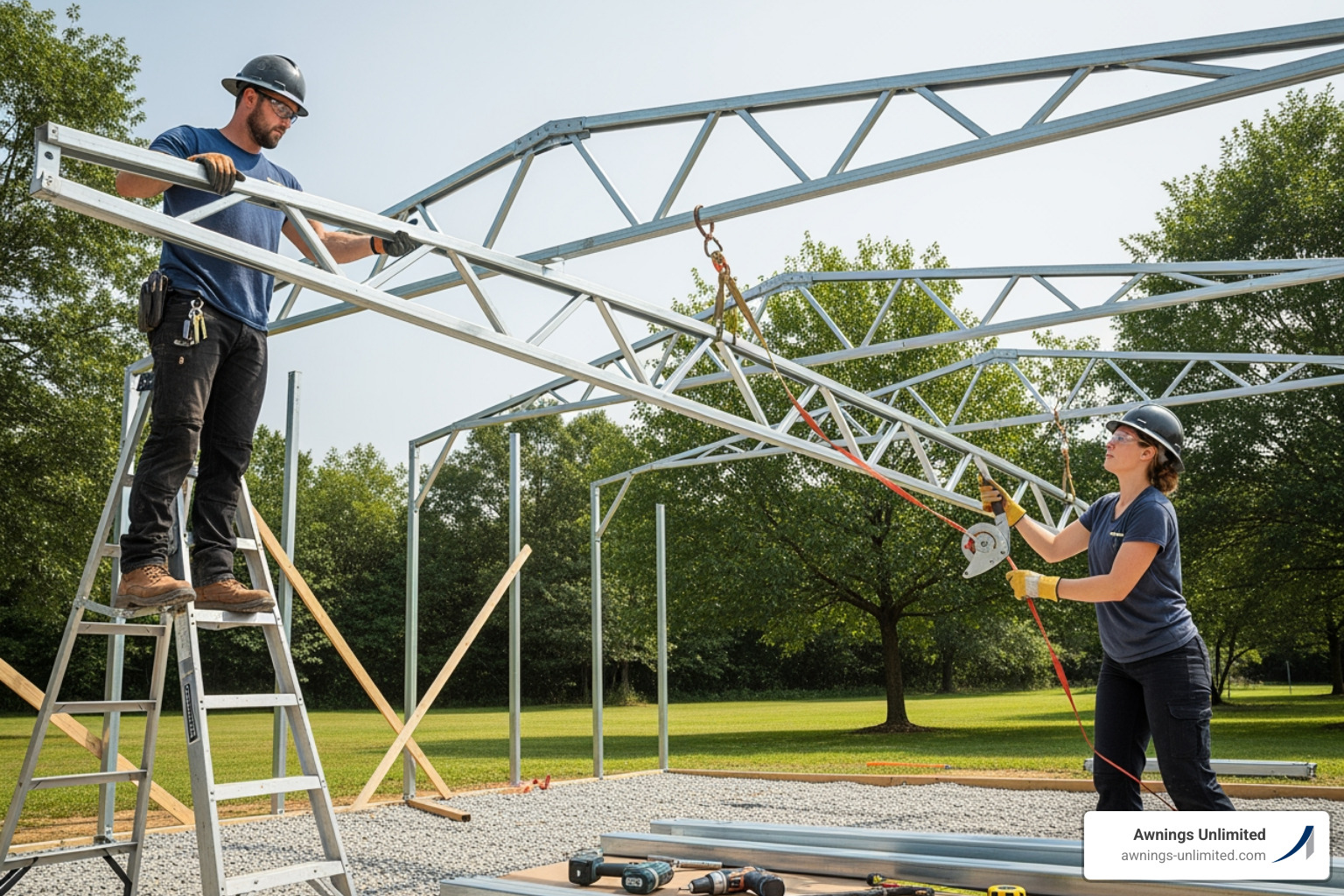
- Attaching Legs to Base Rails: Attach the upright legs to the secured base rails with bolts or self-tapping screws.
- Installing Trusses and Bows: Raise and connect the roof trusses or bows to the tops of the legs. This step often requires at least two people. Ensure all connections are tight.
- Attaching Purlins: Install purlins horizontally to connect the trusses, providing the framework for the roof panels.
- Securing All Connections: Use a level to check that all components are plumb and square. Tighten all fasteners to the recommended torque. Install diagonal bracing at the corners for added strength, which is crucial in windy Utah canyons.
Step 3: Installing Roof Panels and Siding
With the frame complete, it’s time to add the roof and siding.
- Starting with the First Panel: Begin installing roof panels from one end, ensuring the first panel is square to the frame to set the alignment.
- Overlapping Panels: Overlap each panel according to the manufacturer’s guidelines to create a watertight seal.
- Securing Panels: Use self-drilling screws with rubber washers to fasten panels to the purlins. The washers prevent water penetration. Space screws about every 18 inches for maximum weather resistance.
- Installing Side Panels (Optional): If you chose side panels, gables, or end walls, install them next using the same principles of proper alignment and secure fastening. They offer better protection and add structural support.
Attaching a Carport to Your Home: A Special Guide
Attaching a carport to your home creates a seamless extension that boosts curb appeal and functionality. This type of metal carport installation is more complex than a freestanding unit, as it must integrate with your home’s design. Carports can be a great addition to any home, offering vehicle protection and extra space.
Key Differences from Freestanding Installation
When attaching a carport, you’re integrating it with your home. This means:
- No Paneling on the House-Facing Side: The side of the carport adjacent to the house typically won’t have paneling, allowing easier installation and preventing interference with your home’s exterior.
- Adjusting for Overhangs: The standard 6-inch roof overhang often needs to be adjusted or eliminated on the house-facing side to prevent interference with gutters or the wall.
- Sealing the Connection Point: This is critical for preventing water intrusion. Proper flashing and sealant create a watertight seal, directing rainwater away from your home’s foundation.
- Ensuring Proper Water Runoff: The carport’s roof slope, gutters, and downspouts must be designed to channel water away from both structures, preventing moisture damage.
Designing for a Seamless Look
The goal is aesthetic integration, making the carport look like a natural extension of your home.
- Matching Roof Pitch: The carport’s roof pitch should ideally align with or complement your home’s existing roofline for a cohesive look.
- Color Coordination: Choosing colors for panels, trim, and frame that match your house’s exterior is crucial for curb appeal. We offer a wide range of colors to ensure a beautiful blend.
- Trim and Finishing Details: Thoughtful trim and finishing details create clean lines that integrate with your home’s architectural style. Our custom carports are a stylish solution for vehicle protection.
Overcoming Common Challenges
Attaching a carport to a house presents unique challenges, but experience helps steer them:
- Working Around Existing Gutters and Downspouts: These often need to be altered or rerouted to accommodate the carport. We plan this carefully to maintain your home’s drainage.
- Avoiding Windows and Doors: We strategically position the carport to avoid blocking windows or doors, preserving natural light and access.
- Ensuring Structural Integrity of the House Wall: While carports are self-supporting, any direct attachment for flashing is done without compromising your home’s wall integrity.
- Flashing and Weatherproofing: This is the most critical challenge. We use professional flashing and high-quality sealants to create a durable, weatherproof barrier against leaks.
After the Build: Finishing Touches and Long-Term Care
Congratulations, your metal carport installation is complete! A final inspection and ongoing care will ensure your investment lasts for decades, protecting your vehicles and enhancing your property. Let’s keep your carport in top shape!
Custom Improvements for Style and Function
Once the structure is up, you can improve your carport’s function and style.
- Adding Side Panels or Walls: You can add side panels later for more protection from wind, rain, or sun, or enclose sides to create a semi-garage.
- Installing Lighting: Motion-activated or solar-powered lights improve safety and usability at night.
- Gutters and Downspouts: Adding these improves drainage by directing rainwater away from the structure.
- Storage Solutions: Add hooks, shelving, or cabinets to the frame for convenient storage.
- Decorative Trim: Finishing touches like decorative trim can improve the carport’s appearance to better match your home. These innovative carport installation ideas can shield your vehicle in style.
Best Practices for Maintaining Your Carport
Metal carports are low-maintenance, but a little attention ensures their longevity.
- Regular Inspections: Inspect your carport twice a year (spring and fall) for loose fasteners, rust, or debris.
- Cleaning Routine: Clean regularly with mild soap and water to remove dirt and grime that can degrade the finish. Avoid abrasive cleaners.
- Checking for Loose Fasteners: Tighten any loose screws to maintain structural integrity.
- Removing Debris from the Roof: Regularly clear leaves, branches, and especially snow from the roof to prevent stress from excess weight.
- Addressing Rust Spots Promptly: Treat any isolated rust spots with rust-inhibiting paint to prevent them from spreading.
- Seasonal Adjustments: After heavy storms, check anchoring points. Trim nearby tree branches to prevent them from falling on the carport.
DIY vs. Professional Metal Carport Installation
The decision to DIY or hire a professional for your metal carport installation depends on several factors.
- Assessing Project Complexity: Simple, small carports may be a manageable DIY. Larger structures, attached carports, or those on uneven ground are more complex.
- Time Commitment: A professional crew can complete an installation in a fraction of the time a DIY project might take.
- Required Skills and Tools: Proper installation requires specific tools and construction knowledge to ensure a safe, stable build.
- Benefits of Professional Installation: A professional installer ensures correct site prep, foundation, code adherence, and a structurally sound installation, providing peace of mind.
- Warranty: Manufacturer warranties can be voided by improper installation. Professional installers often provide a labor warranty, adding another layer of protection.
At Awnings Unlimited, we pride ourselves on professional installation, ensuring your carport is built to last with a leading warranty. For complex projects, professional help is the smartest choice.
Conclusion
You’ve now seen the complete metal carport installation journey, from planning and foundation prep to frame assembly and finishing touches that make your carport unique.
Whether protecting your vehicles from Utah’s sun or snow, a metal carport installation is a smart investment for your home. It’s practical, durable, adds property value, and provides peace of mind knowing your vehicles are protected.
The key to a carport that lasts for decades is proper planning and proper installation. Checking permits, preparing your site, choosing the right foundation, and securing every connection are the foundational steps for a structure that will serve you for twenty years or more.
While some homeowners enjoy a DIY metal carport installation, there’s no substitute for professional expertise, especially for larger structures, attached carports, or challenging sites. For complex projects or a flawless finish and guaranteed peace of mind, hiring a pro is the way to go.
That’s where we come in. Since 1976, Awnings Unlimited has been the trusted partner for custom carports in Northern Utah and surrounding states like Wyoming, Nevada, Idaho, and Colorado. Our team brings nearly five decades of experience, using industry-leading Alumawood materials and backing our work with exceptional warranties.
We create lasting solutions that protect your assets and improve your home. Our professional installation ensures your carport is built right the first time, with every detail secured to withstand the elements.
Ready to give your vehicles the protection they deserve while adding valuable covered space to your home? Explore our custom carport options and get a professional installation quote today! Let’s build something great together.