


Choose the Right Awning Carport for Lasting Vehicle Protection
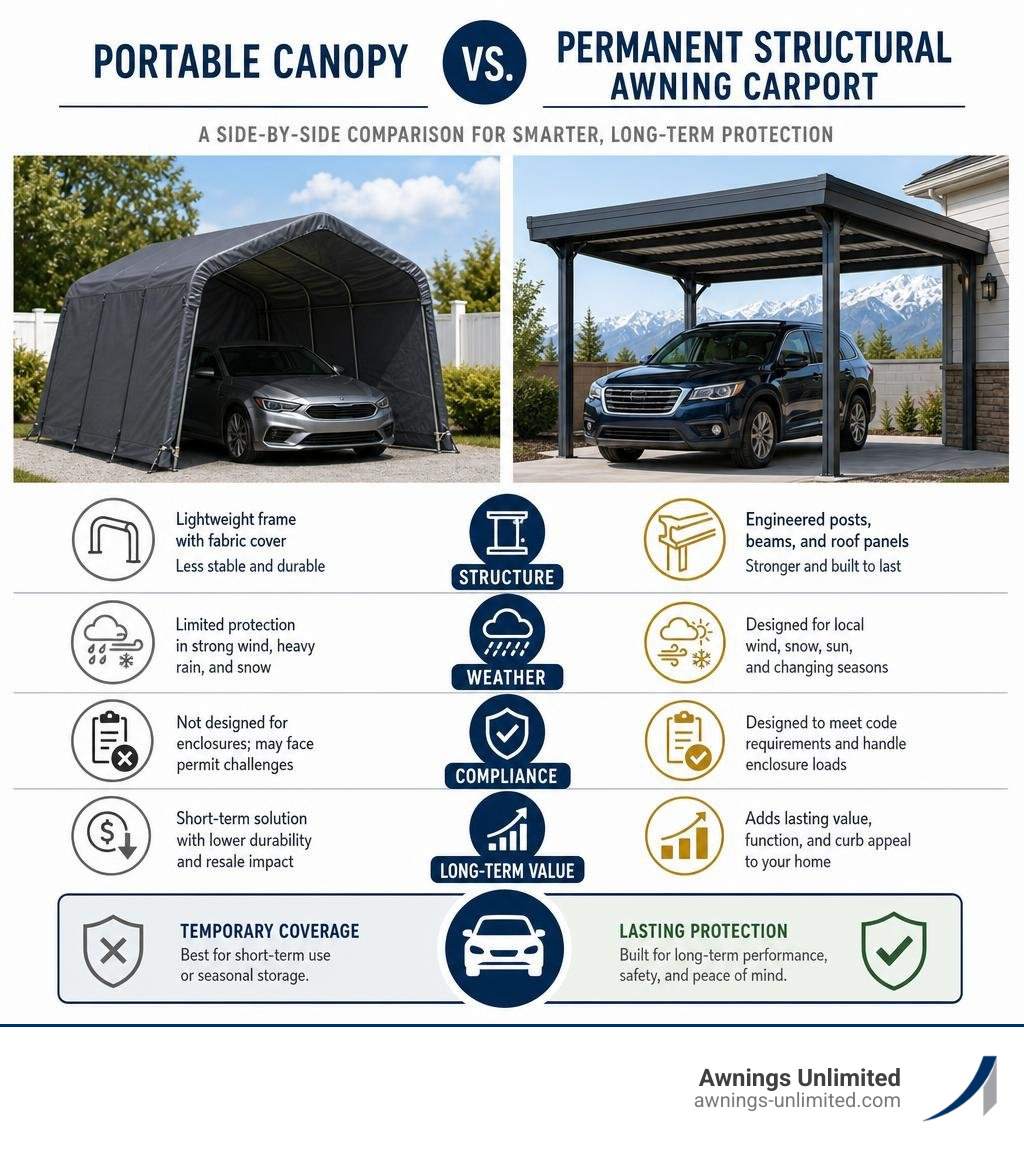
For reliable, year-round vehicle coverage, choose an engineered structural awning or patio-cover carport rather than a fabric canopy. Portable canopies can work for short-term shade or seasonal storage, but permanent metal carports are built for site-specific wind, snow, and attachment loads.
When comparing awning and carports, focus on these essentials:
- Structure: Permanent posts, beams, and roof panels offer more dependable protection than fabric stretched over light tubing.
- Weather: A structural carport is the better fit for Utah snow, wind, sun, and changing seasons.
- Compliance: Adding sidewalls or enclosing a carport can trigger code and permit requirements. A side enclosed beyond 50% may be treated as an enclosure unless the structure was designed for the added loads.
- Long-term value: A custom carport can extend usable outdoor space, protect vehicles, and complement the look of your home.
Awnings Unlimited has served Northern Utah since 1976 with custom structural awnings, patio covers, and durable Alumawood solutions. We help homeowners create lasting, code-conscious shade structures designed around their home, vehicles, and local weather.
Types of Awning and Carports for Residential Vehicles
When evaluating shade and shelter options for your driveway or side yard, understanding the fundamental differences between product categories is essential. Many homeowners begin their search looking at popular boxed retail canopies, such as the Walsunny 12×20 ft Heavy Duty Carport Canopy, Auto Shelter with Removable Sides & Doors, Roll-up Windows, Portable Garage – Walmart.com , only to realize that temporary fabric shelters serve an entirely different purpose than permanent, engineered shade systems.
To make an informed decision for your property, explore our carports complete guide 2026 or review how structural designs stack up against temporary covers in the comparison below.
| Feature / Specification | Temporary Fabric Canopies | Engineered Permanent Structural Awnings & Patio Covers |
|---|---|---|
| Primary Framing Material | Lightweight 1.5-inch steel tubing (thin-gauge) | Heavy-duty structural aluminum or embossed Alumawood |
| Roof Covering | 180g polyethylene (PE) or polyester fabric tarp | Heavy-gauge insulated or solid aluminum flat-pan roof panels |
| Foundation & Anchoring | Guy lines, ground stakes, or portable sandbags | Concrete footings, secure slab anchoring, or ledger attachment |
| Snow Load Rating | Minimal to none; requires manual snow clearance | Fully engineered to meet specific regional ground snow loads |
| Wind Resistance | Prone to uplift, frame bending, and tarp tearing | Structurally calculated for local wind-exposure ratings |
| Permit & Code Compliance | Temporary personal property; cannot be legally enclosed | Engineered to meet local building codes and zoning requirements |
| Lifespan | 1 to 3 seasons (fabric degrades under strong UV) | Decades of maintenance-free service |
| Home Value Impact | Zero added equity; often restricted by local HOAs | Enhances architectural curb appeal and real property value |
Comparing Portable Canopies to Permanent Awning and Carports
Temporary shelters are designed for mobility and short-term utility. If you need weekend shade for a backyard gathering or a brief dust cover for a project vehicle over the summer, an entry-level canopy can serve a basic role. However, relying on lightweight fabric covers for everyday vehicle shelter quickly highlights their physical limitations.
A retail canopy relies on thin steel tubing and woven polyethylene fabric held together by elastic ball bungees. Because these structures lack permanent footings, they depend on tension lines and sandbags to resist wind forces. Over time, constant exposure to atmospheric pressure changes and wind buffeting causes the frame joints to loosen and the fabric to stretch.
In contrast, permanent structural awnings and patio covers function as architectural extensions of your home. Built from structural aluminum or heavy-duty components, these systems attach directly to your home’s fascia or wall studs via engineered ledger boards, or stand independently on robust support posts anchored deep into concrete footings.
Investing in permanent overhead shelter provides lasting security. As highlighted in our guide on how carports protect your vehicles and add value to homes, permanent structures safeguard your paint from intense high-altitude UV rays, shield windshields from tree sap, and eliminate the morning routine of scraping winter frost—all while adding tangible equity to your residential property.
Materials and Engineering in Modern Awning and Carports

The performance of an outdoor shelter comes down to the materials used in its construction. Modern structural awnings utilize high-grade aluminum alloys and advanced composite systems like Alumawood. Unlike wood, which requires regular sanding, staining, and painting to prevent rot and termite damage, structural aluminum delivers the rich texture of painted wood grain without any of the maintenance headaches. It will never crack, warp, peel, or burn.
Engineering is what separates a temporary shade product from an architectural structure capable of enduring harsh mountain climates. Along the Wasatch Front and throughout Northern Utah, winter weather demands serious structural resilience. A standard temporary fabric tent cannot bear accumulating snow; even a modest snowfall can buckle lightweight tubing and collapse the shelter onto the vehicle parked beneath it.
Permanent structural carports are custom-engineered to meet specific regional snow loads and uplift criteria. Roof panels feature interlocking pans that channel precipitation into integrated, heavy-duty gutter systems, directing rain and melting snow safely away from your foundation and driveway. To discover how a dedicated shelter handles regional winter conditions, read why a Salt Lake City carport is the best winter investment for your home.
Building Codes and Legal Enclosure Rules for Carport Structures

A common question among homeowners is whether they can convert an open carport into a fully enclosed garage by adding walls. While enclosing a carport might seem like a simple weekend DIY project, doing so significantly alters the aerodynamics and structural loading of the entire system.
When an open structure is enclosed, it catches wind like a sail. Wind that previously flowed freely through the structure now exerts massive lateral pressure against the walls and upward force against the roof panels. For this reason, building codes enforce strict structural load calculations before any carport can be legally enclosed.
Building standards establish clear boundaries for structural safety:
- Structural Integrity Mandates: An awning or carport can only be enclosed if the framing, connections, and footings have been specifically engineered and constructed to withstand the additional forces imposed by wall enclosures.
- The 50 Percent Enclosure Threshold: Under established structural safety standards, if an awning or carport is enclosed more than 50% on any given side, it is legally classified as an enclosed structure rather than an open shade shelter. Exceeding this threshold without dedicated engineering calculations renders the structure unsound.
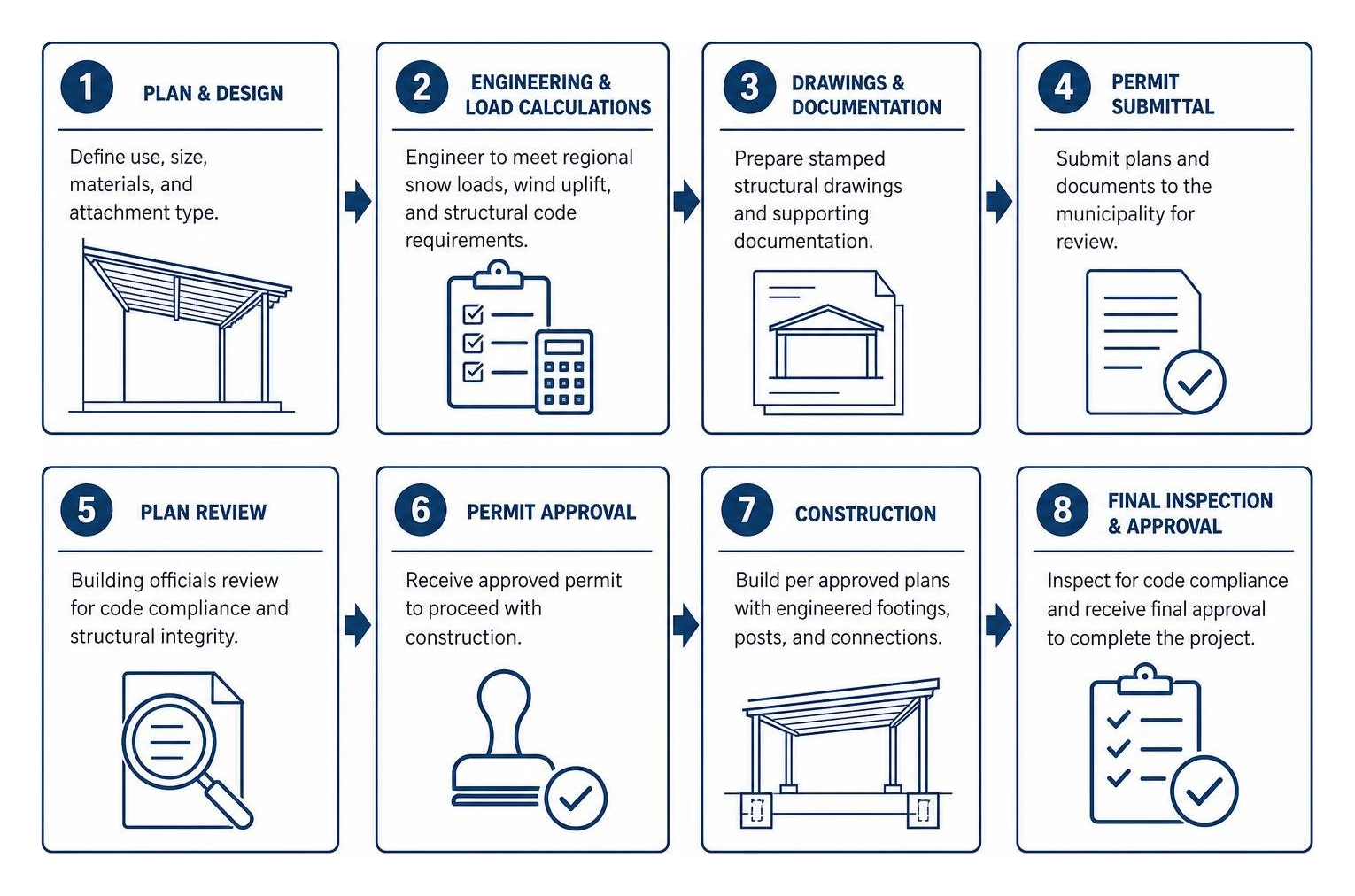
Before adding solid wall panels, lattice screens, or privacy louvers to your shade structure, review our carport installation 101 guide before you start. Securing the proper municipal permits and verifying engineering calculations ensures your shelter remains safe, compliant, and fully protected under your homeowner’s insurance policy.
Durability and Weather Performance: Fabric vs. Metal Solutions
When evaluating the total cost of ownership between portable fabric canopies and permanent structural shade systems, long-term durability is the deciding factor. While entry-level portable garages are inexpensive upfront, their service life is severely limited by common material vulnerabilities.
Customer experiences with retail canopy products illustrate these challenges. For example, consumer reviews for standard 10×20 ft portable carports show an average rating of 3.9 out of 5 stars across 360 reviews. While 58% of owners rate them well for short-term shade, approximately 17% give them a 1-star rating. The most frequent failure points cited include:
- Grommet Failure: Metal grommets pulling away from the polyethylene tarp under routine wind tension.
- Seam Separation: Heat-welded fabric seams splitting after prolonged exposure to summer sun and temperature swings.
- Frame Buckling: Thin 1.5-inch steel tubing bending under sudden wind gusts or light accumulation of rain and snow.
Fabric canopies are susceptible to UV degradation. Over time, solar radiation breaks down the chemical bonds in polyethylene tarps, causing the material to become brittle, fade, and tear. In enclosed fabric canopies without proper ventilation, condensation accumulates rapidly along the interior ceiling, dripping moisture directly onto vehicle paint.
Permanent metal carports eliminate these durability issues. Manufactured with baked-on enamel finishes and heavy-gauge structural aluminum, solid patio-cover carports resist corrosion, resist wind uplift, and easily carry heavy winter snow loads without sagging. For expert advice on selecting a dependable system, check out the ultimate guide to hiring an experienced carport installer.
Frequently Asked Questions About Awning Carports
What is the 50 percent enclosure rule for carports?
The 50 percent enclosure rule is a structural building standard stating that if any side of an awning or carport is enclosed more than 50%, the structure is no longer classified as an open canopy. Instead, it is treated as an enclosed room or garage. Because enclosing a side dramatically increases wind resistance and structural load, building codes require formal engineering calculations and municipal permits to ensure the frame and footings can safely handle the added forces.
How do roll-up sidewalls affect carport classification?
Temporary roll-up fabric sidewalls and zippered doors on portable canopies are designed to provide temporary privacy and weather shielding. However, when deployed during severe weather, they catch high winds and transfer severe lateral strain to the lightweight frame. On permanent structures, installing permanent solid walls or heavy screens changes the structure’s legal classification, requiring the system to be designed from the ground up for enclosed wind-load standards.
Can portable fabric carports handle heavy snow and wind?
No. Standard portable fabric carports are not engineered for significant snow loads or severe wind storms. Light-gauge tubing and fabric covers will easily sag or collapse under the weight of wet snow, potentially causing catastrophic damage to the vehicle parked underneath. For areas that experience heavy seasonal snow and gusty canyon winds, a permanently anchored, engineered structural aluminum carport is necessary for year-round protection.
Conclusion
Choosing the right overhead shelter for your vehicle comes down to the balance between short-term convenience and long-term protection. While temporary fabric canopies offer quick, portable shade for weekend events, they lack the structural strength, wind resistance, and snow-bearing capacity needed for year-round peace of mind.
A custom, professionally installed metal carport transforms your driveway into a functional, protected space that safeguards your vehicles and enhances your home’s curb appeal for decades. Since 1976, Awnings Unlimited has delivered high-quality craftsmanship, durable Alumawood materials, and tailored shade installations across Northern Utah and beyond.
If you are ready to upgrade your property with dependable, code-compliant vehicle shelter, explore our selection of engineered permanent carports and request a custom quote for your home today.