


Why Window Awnings Belong on Every Utah Home
Window awnings are one of the most practical upgrades you can add to your home’s exterior. Here’s a quick summary of what you need to know:
- What they are: Structural covers mounted above windows to block sun, rain, and snow
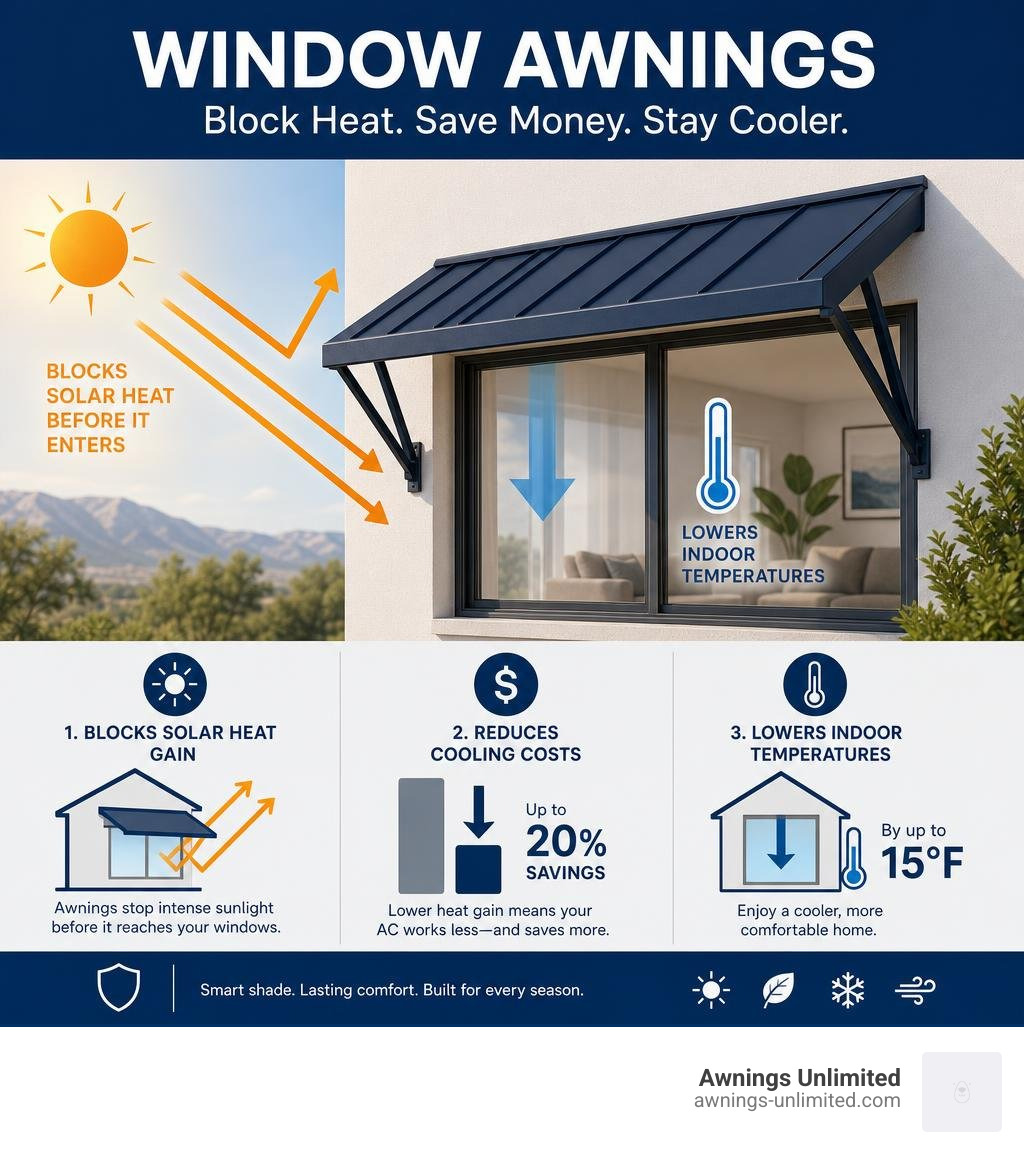
- Top benefit: Reduce solar heat gain through windows by up to 77%, lowering indoor temps by as much as 15°F
- Energy savings: Cut summer cooling costs by up to 20%
- Best materials: Aluminum, steel, and Alumawood — all rust-free and built to last
- Fixed structural design: Offers the most durability and the least maintenance
- Who installs them: Best results come from professional installation, especially in climates with heavy snow or wind
Window awnings do a lot more than just look good. They block heat before it ever enters your home, protect your furniture from UV fading, and add real architectural character to your exterior. Whether you’re dealing with Utah’s intense summer sun or its snowy winters, the right window awning is a durable, long-term solution.
At Awnings Unlimited, we’ve been designing and installing custom window awnings across Northern Utah since 1976, using industry-leading materials like Alumawood by Amerimax and backing every project with an industry-leading warranty. As you read through this guide, you’ll find everything you need to choose the right awning for your home — from materials and sizing to installation and maintenance.
What are Window Awnings?
If you have ever walked through a historic downtown street or admired a beautifully finished modern home, you have likely seen window awnings in action. But what exactly are they, and why are they experiencing a massive resurgence in 2026?
At their core, window awnings are exterior architectural fixtures mounted directly above your window frames. Unlike simple decorative trims, these structures project outward to cast a protective shadow over the glass. By creating a physical barrier between the sun’s rays and your window panes, they block intense solar heat and harmful UV light before it can penetrate your living space.
But do not confuse these protective covers with “awning windows.” This is a common mix-up for homeowners browsing home improvement ideas. An awning window is an actual replacement window with a sash hinged at the top that opens outward from the bottom. To explore that specific style of window, you can read more about Awning Replacement Windows | Acclaim Windows | Renewal by Andersen . On the other hand, a window awning is the protective structural cover that sits above any style of window to keep the elements at bay.
Defining Exterior Window Awnings
When we talk about high-quality exterior shading, we are referring to permanent, structural covers. Homeowners along the Wasatch Front need robust, long-lasting protection. Our custom structural window awnings are built using permanent metal frames, heavy-duty structural aluminum, or Alumawood.
These permanent frames are engineered to handle the unique climate challenges of Utah, from scorching summer afternoons in St. George to heavy snow loads in Park City. Because they are securely anchored to your home’s framing, they provide year-round weather protection without the need for constant adjustments. If you want to understand why so many of your neighbors are choosing these permanent structures over other options, take a look at our guide on Why Utah Locals Choose Awnings Over Other Shade Alternatives.
How Window Awnings Differ from Interior Window Treatments
It is easy to assume that a good set of interior blinds or heavy blackout curtains can solve your home’s heat problems. However, the physics of solar heat gain tell a very different story.
When sunlight passes through your window glass, it becomes trapped inside your home. Interior treatments like blinds, shades, or drapes only stop the light after it has already crossed the threshold of your home. The fabric or vinyl of the blinds absorbs that solar energy, turns it into heat, and radiates it directly into your rooms.
Exterior window awnings stop this process entirely. By blocking the sun’s rays before they ever touch the glass, they provide vastly superior thermal performance. While interior blinds are great for privacy, they simply cannot match the cooling power of a structural exterior cover. For homeowners in Bountiful UT looking to pair their exterior shade with elegant interior decor, consulting local experts like Allied Furnishings | Blinds, Shades, Shutters, Drapery | Bountiful, UT can help you achieve the perfect balance of interior privacy and exterior thermal protection.
Key Benefits of Structural Window Covers
Investing in structural covers for your windows is not just about keeping the sun out of your eyes during dinner. It is a smart, holistic home improvement decision that pays dividends in comfort, energy savings, and property value.
Energy Savings and Solar Heat Reduction
Let’s talk numbers, because the scientific data behind window awnings is incredibly impressive. According to extensive studies on residential energy efficiency, adding an exterior awning can reduce solar heat gain through south-facing windows by up to 65%, and through west-facing windows by an astonishing 77%.
What does this mean for your daily life along the Wasatch Front?
- Lower Indoor Temperatures: An awning can lower the temperature inside your home by up to 15 degrees Fahrenheit on a scorching summer afternoon.
- Reduced Cooling Costs: By taking the pressure off your air conditioning system, window covers can cut your summer cooling bills by up to 20%. In some homes, this translates to saving up to 25% on overall air conditioning power consumption.
- Less HVAC Wear and Tear: When your AC unit doesn’t have to run constantly to fight solar heat gain, it lasts longer and requires fewer repairs.
If you are ready to start keeping more money in your wallet during our hot dry summers, check out our tips on how to Save Money on Energy Bills with a New Utah Awning.
Weather Protection and Curb Appeal
Beyond energy efficiency, structural awnings act as a shield for your home’s exterior. Windows are highly vulnerable to water intrusion, wood rot, and UV damage. A durable structural cover deflects rain and heavy snow away from the window casing, sills, and sealant, significantly extending the lifespan of your window frames.
Additionally, the sun’s ultraviolet (UV) rays are notorious for fading hardwood floors, bleaching expensive carpets, and ruining upholstered furniture. By casting a consistent shadow, awnings preserve your interior investments.
And let’s not overlook the visual transformation. A custom-designed structural awning adds depth, texture, and architectural interest to flat, boring exterior walls. Whether your home is a classic brick rambler in Salt Lake City or a modern farmhouse in Draper, the right design can instantly elevate your home’s curb appeal. Learn more about maximizing these aesthetic benefits by reading about how Residential Awnings: Boost Your Curb Appeal and Comfort.
Materials, Styles, and Sizing Options
To get the most out of your investment, you need to select the right combination of materials, architectural styles, and measurements. Because we build custom structures, we can tailor every detail to match your home’s specific style and structural needs.
Choosing the Right Materials for Durability
The material you choose determines how long your awning will last and how much weekend maintenance you will have to perform. Let’s compare the most common materials used for structural window covers:
| Material | Durability | Maintenance Required | Best Suited For |
|---|---|---|---|
| Structural Aluminum | Outstanding (Never rusts, warps, or rots) | Virtually Zero (Occasional rinse with water) | All Utah climates; modern & traditional homes |
| Alumawood | Exceptional (Looks like wood, performs like metal) | None (Resists pests, cracking, and peeling) | Homeowners wanting a warm, rustic aesthetic |
| Steel | High (Extremely strong) | Moderate (Must be treated to prevent rust) | Industrial designs; heavy snow-load areas |
| Copper | Lifetime (Develops a beautiful natural patina) | Low | High-end custom homes; classic architecture |
For the vast majority of Utah homeowners, structural aluminum and Alumawood are the clear winners. They offer the perfect balance of strength, lightweight design, and complete immunity to rust and decay. To dive deeper into these high-performance options, explore our Aluminum Shade Structures: Complete Guide. If you are looking for premium mounting hardware and high-end artistic metal accents to complement your structure, you might also find inspiration through Awnings – Rustica Hardware .
Popular Styles of Window Awnings
Your home’s architecture should dictate the style of your window cover. A modern home with clean lines requires a very different look than a charming Tudor or a rustic mountain cabin. Here are the most popular structural styles:
- Fixed Flat Pan Awnings: These offer a clean, horizontal profile that blends seamlessly with modern and mid-century architecture. They are incredibly strong and provide a minimalist look.
- Standing Seam Metal Awnings: Featuring distinct vertical ribs, standing seam designs offer a classic, timeless look. They are exceptionally good at shedding heavy winter snow.
- Louvered Awnings: If you want to control the exact amount of light passing through while maintaining ventilation, louvered designs are an excellent choice.
- Custom Marquee Covers: Often used over entryways and large picture windows, these structures create a grand, welcoming focal point.
For a closer look at which designs hold up best against local weather patterns, check out our analysis of the 3 Awning Styles That Work Best in Utah’s Climate.
Sizing and Sizing Calculations
An improperly sized awning is either useless or an eyesore. To get the perfect amount of shade, you must calculate three critical dimensions:
- Width: The awning should extend at least 3 to 6 inches past the window casing on each side. This prevents early morning or late afternoon sun from “sneaking” around the edges.
- Projection: This is how far the awning extends out from the wall. For south-facing windows, a projection that is roughly 50% of the window’s height is usually ideal. For west-facing windows, you may need a deeper projection to block the lower evening sun.
- Drop: The drop is the vertical measurement from the mounting point to the lowest edge of the frame. This determines the angle (or pitch) of the awning, which is crucial for shedding rain and snow.
Before you order, make sure you have at least 3.5 inches of clear mounting space above your window trim. To learn more about getting these measurements exactly right, check out our guide on Choosing the Right Awning for Your Home.
Installation, Maintenance, and Weather Performance
Once you have chosen your style and materials, it is time to think about how that structure will get onto your wall and how it will perform when the weather turns wild.
Professional Installation vs. DIY
It can be tempting to buy a cheap DIY kit online and spend a Saturday on a ladder trying to install it. However, installing a structural awning along the Wasatch Front is not like hanging a picture frame.
Our local climate presents extreme challenges. A single winter storm can dump hundreds of pounds of heavy, wet snow onto your awning. In the spring, canyon winds can subject your home to intense updrafts. If an awning is not anchored directly into the structural framing of your home with the proper corrosion-resistant hardware, those forces can rip the structure off your wall, causing severe damage to your siding, sheathing, and windows.
When we handle your installation, we ensure that every bracket is perfectly sealed to prevent water intrusion and bolted securely into solid wood studs or structural headers. If you are weighing your options, take a look at our detailed comparison of DIY Awning Installation vs Hiring a Pro in Utah.
Maintenance and Weather Performance
One of the greatest benefits of choosing high-quality structural aluminum or Alumawood is how little you have to do to keep them looking brand new. These durable metal structures require almost no effort to maintain.
To keep your structural awnings in peak condition:
- Give them a rinse: Wash away accumulated dust, pollen, and salt residue once or twice a year with a standard garden hose.
- Clear heavy snow debris: While our structural designs are engineered to support heavy snow loads, clearing massive accumulations during historic blizzards is always a safe practice.
- Inspect the sealant: Once a year, take a quick look at the caulking along the mounting channel to ensure it remains watertight.
For more detailed tips on protecting your exterior investments year-round, read our expert advice on How to Extend the Life of Your Home’s Awning with These Tips
Frequently Asked Questions About Window Awnings
How much do window awnings cost?
The cost of custom window awnings varies depending on several factors, including the overall width, the projection depth, the chosen materials (such as aluminum vs. premium copper), and the complexity of the mounting surface. While a basic, small aluminum window cover might start in the low hundreds, large custom architectural structures require a larger investment.
It is important to view this as a long-term home improvement that adds real equity and lowers your monthly utility bills. For a complete breakdown of what to expect, read our Awning Installation Costs: Complete Guide.
Can window awnings be used on commercial buildings?
Absolutely! In fact, commercial window covers are one of the most effective ways for local businesses to stand out, cut down on operating costs, and protect interior merchandise from sun damage. A beautiful, structural aluminum awning over a storefront in downtown Salt Lake City or Ogden creates an inviting entrance while providing a perfect space for clean, professional signage. To learn more about how we help local business owners, check out The Top 5 Benefits of a Commercial Awning.
How do window awnings compare to other shading solutions?
When comparing different ways to cool your home, structural window covers consistently come out on top.
- Compared to interior blinds or shutters: Awnings block solar heat outside the glass, making them up to 70% more effective at cooling your home.
- Compared to shade sails: Shade sails are temporary, prone to sagging, and must be taken down every winter to prevent collapse from snow. Structural metal awnings stay up year-round.
- Compared to trees: While landscaping is beautiful, trees take years to grow, drop messy leaves, and can pose a hazard to your roof during high winds.
To see why so many homeowners along the Wasatch Front choose our custom structures over temporary alternatives, read our local perspective on Why Utah Locals Choose Awnings Over Other Shade Alternatives.
Conclusion
Adding high-quality window awnings to your home is one of those rare home improvement projects that checks every single box: it saves you money on your monthly energy bills, protects your property from harsh weather, and makes your home look absolutely stunning.
Since 1976, Awnings Unlimited has been Utah’s trusted partner for premium, custom-built shade solutions. As a family-owned business based right here in Salt Lake City, we understand the unique demands of our local climate. We pride ourselves on using the most durable materials on the market — like beautiful, maintenance-free Alumawood — and providing professional, worry-free installation backed by a leading warranty.
Whether you live in Sandy, Layton, Orem, or anywhere along the Wasatch Front, we are here to help you design the perfect shade solution for your home. Ready to transform your exterior and start saving on your cooling bills? Explore our custom options and get in touch with our local team at Window Awning Salt Lake. Let’s build something beautiful together!