


Why Understanding Carport Prices Installed Matters for Your Home
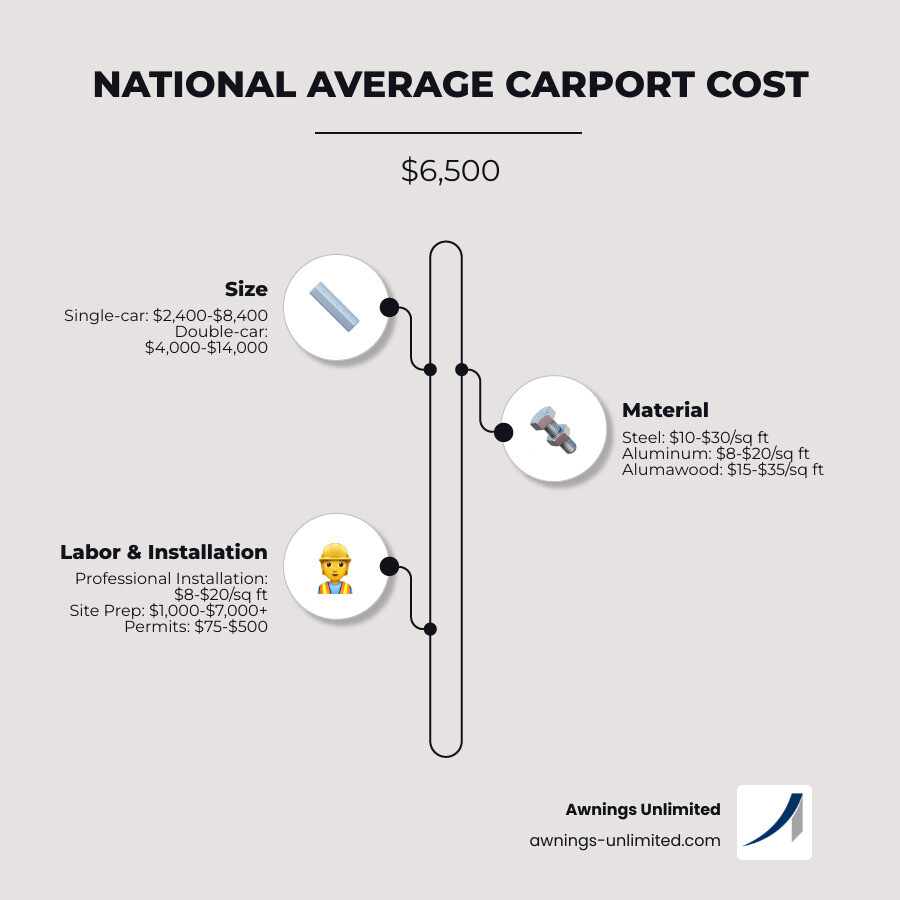
Carport prices installed typically range from $3,000 to $14,000 for most homeowners, depending on size, material, and features. Here’s what you need to know at a glance:
Quick Cost Breakdown:
- Single-car carport: $2,400 – $8,400 installed
- Double-car carport: $4,000 – $14,000 installed
- RV carport: $6,000 – $21,000 installed
- Average cost per square foot: $10 – $30 (materials + labor)
Key Cost Factors:
- Size – More square footage means higher material and labor costs
- Material – Steel, aluminum, and Alumawood each have different price points
- Labor & Installation – Professional installation adds $8 – $20 per square foot
- Site Prep – Foundation work can add $1,000 – $7,000+
- Permits – Building permits typically cost $75 – $500
If you’re looking to protect your vehicles from Utah’s harsh sun, heavy snow, and unpredictable weather while adding value to your property, understanding these costs upfront helps you budget wisely and avoid surprises.
At Awnings Unlimited, we’ve been installing custom carports across Northern Utah since 1976, giving us nearly five decades of experience helping homeowners understand carport prices installed and choose the right solution for their needs and budget. Our team specializes in durable Alumawood carports designed to withstand Utah’s extreme climate while enhancing your outdoor living space.
Understanding Average Carport Prices Installed
When considering a new carport for your home in Utah, Wyoming, or other parts of our service area, one of the first questions on your mind is likely: “What’s the average cost?” While a basic carport can start as low as $300 for a simple kit, the average carport prices installed typically land around $6,200 to $6,500. This figure can fluctuate, with most homeowners spending between $3,000 and $9,800. For more elaborate or custom designs, costs can exceed $25,000.
The cost per square foot for a professionally installed carport generally ranges from $10 to $30, encompassing both materials and labor. This wide range accounts for differences in materials, size, design complexity, and regional labor rates.
The primary difference between a standard, prefabricated carport and a custom-built one lies in flexibility and cost. Prefabricated kits are generally more budget-friendly, with prices for kits ranging from $1,000 to $6,000. These options offer a quicker setup but come with fewer customization choices. Custom carports, on the other hand, provide custom designs to perfectly match your home’s aesthetics and specific needs, though they come at a higher price point, typically $10 to $40 per square foot plus labor.
Compared to building a full garage, carports offer a significant cost advantage. A new garage can easily cost upwards of $20,000 to $50,000 or more. Carports provide many of the same benefits—vehicle protection, additional storage, and even improved curb appeal—at a fraction of the investment. We believe carports are an excellent, cost-effective solution for protecting your assets from the elements common in our region, like intense summer sun and heavy winter snow.
How Size and Features Affect Carport Prices Installed
The dimensions of your desired carport are a major factor in its overall cost. Simply put, the larger the carport, the more materials and labor required, leading to higher carport prices installed.
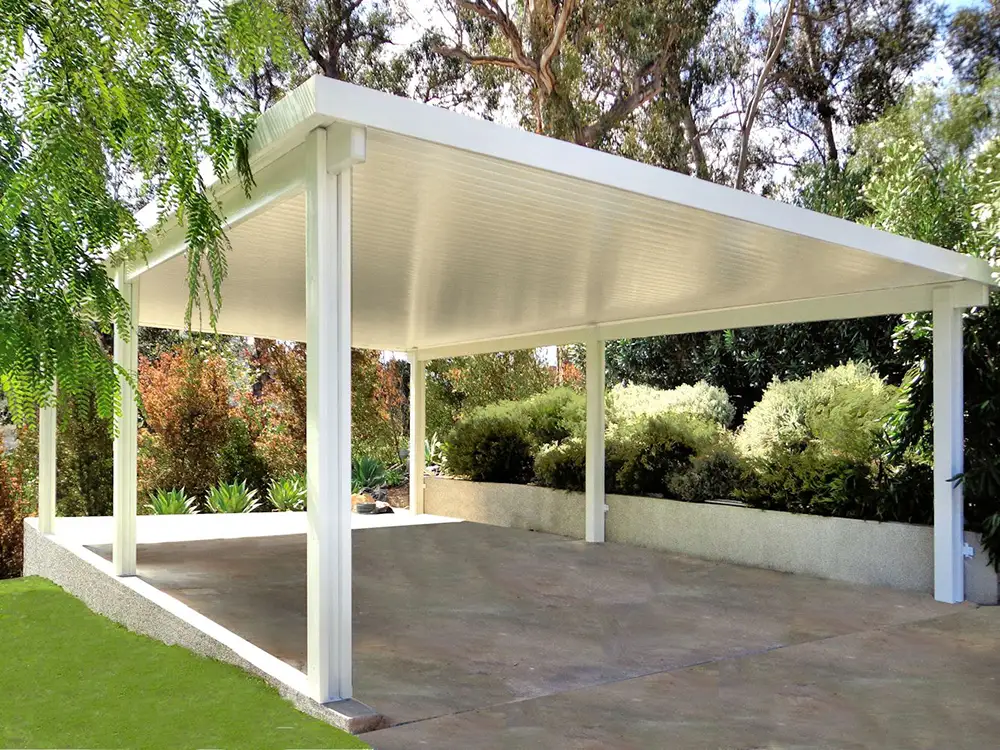
Here’s a breakdown of how size typically impacts costs:
- Single-car carport: These are generally 12’x20′ and cost between $2,400 and $8,400 installed. They offer sufficient protection for one standard vehicle.
- Double-car carport: Measuring around 20’x20′ to 20’x24′, a double-car carport can cost anywhere from $4,000 to $14,000 installed. This size is ideal for protecting two vehicles or providing extra space for storage or outdoor activities.
- RV carport: If you own an RV, boat, or other large recreational vehicle, you’ll need a specialty carport. These are significantly larger, often 18’x36′ or more, and taller (up to 12-14 feet high), with carport prices installed ranging from $6,000 to $21,000. RV carports are typically freestanding due to their size requirements.
Beyond basic dimensions, adding custom features can significantly influence the final price. These improvements not only improve functionality but can also lift the aesthetic appeal and versatility of your carport:
- Enclosed sides: While carports are typically open, enclosing one or more sides offers improved protection from wind, rain, and snow. Many manufacturers offer options for adding walls and even doors to create a more garage-like feel or a dedicated storage/workshop area.
- Gables: Adding gables to your carport roof can increase its architectural appeal and provide better weather deflection, typically adding 10-20% to the cost compared to a standard flat roof.
- Storage rooms: Integrating a small, secure storage room within or adjacent to your carport can provide a convenient space for tools, seasonal items, or outdoor equipment.
- Electrical work: Adding electrical outlets and lighting can transform your carport into a much more functional space, whether for charging an electric vehicle, powering tools, or illuminating evening gatherings. An electrician typically charges around $100 per hour, or $150-$350 per outlet, for this type of work.
The Impact of Materials on Your Budget
The material you choose for your carport is a critical factor in determining its durability, appearance, and ultimately, its installed cost. At Awnings Unlimited, we focus on high-quality, long-lasting materials like steel, aluminum, and our signature Alumawood, all designed to withstand the unique climate challenges of Utah and Wyoming.
| Material | Cost/Sq. Ft. Installed | Lifespan | Maintenance |
|---|---|---|---|
| Steel | $8 – $20 | 20-30+ years | Regular cleaning, check for rust, repaint |
| Aluminum | $8 – $20 | 20-30+ years | Regular cleaning, rust-resistant, no painting |
| Alumawood | $15 – $35 | 20-30+ years | Minimal (no painting, no rot, no insect damage) |
- Steel carports: Steel is a popular choice due to its strength and durability. It’s excellent for handling heavy snow loads and high winds, making it a reliable option for our region. Galvanized steel, which has a protective zinc coating, offers even greater resistance to rust and corrosion, prolonging its lifespan. Steel carports generally cost between $8 and $20 per square foot installed.
- Aluminum carports: Aluminum is a lightweight yet robust material known for its natural resistance to rust and corrosion. This makes it an excellent choice for areas with moisture, ensuring your carport remains pristine for years without the need for extensive maintenance. Aluminum carports typically fall within the same price range as steel, from $8 to $20 per square foot installed.
- Alumawood benefits: Our specialty, Alumawood, combines the aesthetic appeal of natural wood with the durability and low maintenance of aluminum. It’s a premium option that offers the look and feel of real wood without the typical drawbacks like rotting, warping, or insect damage. Alumawood carports require minimal maintenance—no painting or staining needed! This material is incredibly durable, designed to withstand UV rays and extreme temperatures, making it perfect for the varied weather we experience. While the initial carport prices installed for Alumawood might be higher, typically $15 to $35 per square foot, its longevity and reduced maintenance costs offer significant long-term value.
Carport Types and Their Associated Costs
Beyond materials, the type and design of your carport also play a significant role in the overall carport prices installed. We offer solutions that can be either attached to your home or free-standing, each with unique benefits and cost implications.
- Attached carports: These carports are built directly onto your home, often sharing a wall or roofline. They offer convenient, sheltered access to your house and can even help lower interior home temperatures by providing shade. Attached carports tend to be more expensive, ranging from $6,000 to $30,000, as their construction often involves integrating with existing structures and potentially requiring more complex engineering and permits.
- Freestanding carports: As independent structures, freestanding carports offer greater flexibility in placement. They can be located anywhere on your property, providing shade and protection not just for vehicles, but also as a patio cover, an outdoor gathering space, or a sheltered area for equipment. These are generally less expensive than attached options, with carport prices installed typically from $2,000 to $12,000, depending on size and features. Their versatility makes them a popular choice for many homeowners.
The style of your carport’s roof also impacts both cost and functionality, especially given the heavy snowfall in many of our service areas:
- Regular roof: This is the most basic and often the most affordable roof style, characterized by a rounded or horizontal panel design. While cost-effective, it may not be ideal for areas with significant snow accumulation as it doesn’t shed snow as efficiently.
- Boxed-eave roof: Featuring an A-frame design, the boxed-eave roof offers a more traditional and aesthetically pleasing look. It’s stronger than a regular roof and provides better water and snow runoff. This style typically adds 10% to 20% to the overall cost.
- Vertical roof: This is the strongest and most efficient roof style for shedding snow and water, featuring vertical panels that run from the ridge to the eaves. It’s highly recommended for regions with heavy snowfall, like Utah and Wyoming, as it prevents snow and debris buildup. The vertical roof can add 15% to 30% to the carport prices installed but offers superior protection and longevity in harsh climates.
Factoring in Additional Installation Expenses
While the size, material, and type of carport are the major cost drivers, several additional expenses can influence the final carport prices installed. These often overlooked costs can significantly impact your budget, so it’s crucial to consider them from the outset.
Site Preparation and Foundation Costs
Before any construction can begin, the site needs to be properly prepared. The condition of your chosen location will dictate these costs:
- Land clearing: If your desired spot is overgrown with brush or small trees, you might incur costs for land clearing, which can be around $950 for a quarter-acre of light brush.
- Leveling and grading: A level surface is essential for proper carport installation and stability. Minor ground leveling might cost around $150, but extensive regrading could range from $200 to $1,000 or more.
- Concrete slab cost: A poured concrete slab is considered the “gold standard” for a carport foundation due to its superior durability and stability. It prevents shifting in freeze-thaw conditions common in our region and provides a solid base for anchoring. Concrete slabs typically cost $4 to $10 per square foot. For a single-car carport, a concrete slab could add $1,200 to $2,800 to your overall cost.
- Gravel pad cost: A gravel pad offers a more budget-friendly alternative to concrete. For a two-car carport driveway, a gravel pad might cost between $600 and $1,800. While less durable than concrete, it provides good drainage and a stable surface.
- Dirt foundation: While the most budget-friendly option, a bare dirt foundation offers the least stability and durability. We generally recommend at least a gravel pad or, ideally, a concrete slab for lasting performance, especially in areas subject to heavy weather.
Permits, Labor, and Other Hidden Fees
Beyond site preparation, several other factors contribute to the overall carport prices installed:
- Building permits: In most cases, building a permanent carport requires a permit from your local municipality in Utah, Wyoming, or other service areas. Permit costs typically range from $60 to $800 or more, depending on your location and the size/complexity of the project. Obtaining permits ensures your carport complies with local zoning laws and building codes, protecting you from potential fines or future issues. It’s also wise to check with your Homeowners’ Association (HOA) for any specific rules or restrictions before planning your installation.
- Average labor costs: Labor is a significant component of installed carport prices. For professional installation, labor rates can range from $8 to $10 per square foot, or $35 to $80 per hour. For custom builds, labor can even go up to $20 per square foot due to increased complexity.
- Delivery fees: While some quotes might include delivery, confirm whether material delivery to your site is part of the total cost or an additional fee. Sites more than 50 feet from the road, or those with difficult access for delivery trucks, might incur extra charges, sometimes around $50 or more.
- Electrical installation: If you plan to add lighting, outlets, or an EV charging station to your carport, you’ll need a licensed electrician. This can add $100 per hour or $150-$350 per outlet to your costs.
- Gutter installation: Adding gutters and downspouts is a smart investment, especially for attached carports or those near your home’s foundation. Gutters help direct rainwater away from your property, preventing erosion and water damage. They typically cost $5 to $30 per linear foot.
DIY vs. Professional: A Look at Carport Prices Installed
Many homeowners wonder if they can save money by installing a carport themselves. While a DIY approach might seem appealing for basic kits, it’s crucial to weigh the potential cost savings against the required effort, risks, and long-term benefits of professional installation.
The Cost of a DIY Carport Project
- Prefabricated kit prices: If you’re a seasoned DIYer, buying a prefabricated carport kit is generally the most budget-friendly option, with kits costing anywhere from $1,000 to $6,000. These kits come with all the necessary components and instructions for self-assembly.
- Tool rental costs: Unless you own all the specialized tools required for assembly and site preparation, you’ll likely need to rent some equipment, which can add $100 to $500 to your project budget.
- Potential for mistakes: DIY installation, especially for larger or more complex carports, carries significant risks. Incorrect assembly can lead to structural instability, weather damage, or even collapse, posing safety hazards and requiring costly repairs.
- Lack of warranty: Most professional installation warranties won’t cover damage resulting from DIY assembly.
- Time investment: Even a small prefab carport can take 1 to 2 weeks to build for an experienced DIYer. A larger or custom project can take several weeks, demanding a substantial time commitment.
While you might save $300 to $900 in labor costs by doing it yourself, we generally don’t recommend DIY installation for anything beyond the simplest, most temporary carports. The weight of materials and the precision required for proper assembly make it a challenging and potentially risky endeavor for the average homeowner.
The Value of Hiring a Professional Installer
For most homeowners in Utah and Wyoming, investing in professional installation for your carport provides invaluable peace of mind and ensures a high-quality, long-lasting structure.
- Guaranteed quality: Professional installers have the expertise and experience to ensure your carport is built correctly, securely anchored, and meets all manufacturer specifications. Our team at Awnings Unlimited has been installing carports since 1976, bringing decades of experience to every project.
- Code compliance: Professionals are familiar with local building codes and permit requirements in Salt Lake City, Ogden, Provo, Rock Springs, and other areas we serve. We handle the permit process, ensuring your carport is insurable, well-built, and safe.
- Efficiency: An experienced team can complete most carport installations in two days or less, minimizing disruption to your daily routine.
- Safety: We handle the heavy lifting and complex assembly, eliminating safety risks for you.
- Access to better materials: Professional installers often have access to higher-grade materials, including custom options like our durable Alumawood, which might not be readily available to the public.
- Warranty protection: Professional installation typically comes with a warranty on both materials and workmanship, offering protection against defects or installation issues.
When choosing a professional, we encourage you to ask thorough questions to ensure you’re getting the best service and value for your carport prices installed:
- How many years of experience do you have installing carports in our region?
- Can I see your references list and photos of past installations?
- Do you recommend steel, aluminum, or Alumawood for my specific needs and local climate conditions?
- How long will the carport construction take?
- Which carport designs are strong enough to withstand typical Utah/Wyoming storms or snow loads in my area?
- How will you anchor my new carport to ensure its stability?
- What are the maintenance requirements for the materials you use?
- Does your estimate include all materials, labor, delivery, and cleanup fees?
- Do you often incur additional costs on a job like mine, and if so, what are they?
- Do you handle the permit process, or is that my responsibility?
- Are your installers licensed, insured, and bonded?
- What warranty is included with the carport installation?
The Long-Term Value and Costs of a Carport
While the initial carport prices installed are a significant consideration, it’s equally important to look at the long-term value and ongoing costs associated with owning a carport. A well-chosen and professionally installed carport is more than just a shelter; it’s an investment in your home and lifestyle.
Does a Carport Add Value to Your Home?
A carport can certainly add value to your home, though perhaps not in the same way a full garage does. We’ve seen carports provide a return on investment (ROI) of 50% or more. Here’s how:
- Increased home value: While a carport might not dramatically boost your appraisal, a high-quality, well-maintained carport undeniably improves your home’s appeal to potential buyers. It provides a functional shelter that many buyers appreciate, especially in areas with harsh weather.
- Buyer appeal: Covered parking is a highly desirable feature. It protects vehicles from sun damage, hail, snow, and keeps them cooler in the summer, which is a major selling point. It fills what might otherwise be an empty driveway space, making your property more attractive and competitive on the market.
- Functional benefits: Beyond vehicle protection, a carport can serve as additional covered outdoor space for hobbies, storage, or entertaining. This versatility adds practical value to your home.
- Property marketability: A carport demonstrates that your property offers convenience and protection, which can make it stand out.
- Aesthetic integration: A carport that is thoughtfully designed and aesthetically integrated with your home’s existing style, perhaps using our beautiful Alumawood, improves curb appeal significantly. A poorly maintained carport, however, can have the opposite effect, so proper upkeep is essential.
Ongoing Costs: Maintenance, Insurance, and Taxes
While carports are generally low-maintenance, there are some long-term costs to consider:
- Maintenance:
- Cleaning: Regularly cleaning your carport to remove dirt, debris, and snow is crucial, especially in our climate. For our Alumawood carports, this is typically a simple wash-down.
- Repainting/Sealing: While our Alumawood carports never need painting or sealing, steel or aluminum structures might require occasional touch-ups or sealing, depending on their finish and exposure to the elements.
- Inspections: Periodically inspect your carport for any signs of damage, loose fasteners, or wear and tear, and address them promptly.
- Snow Removal: In our service areas, prompt removal of heavy snow from your carport roof is vital to prevent structural strain and damage.
- Tree Trimming: Trimming any trees or shrubs that overhang your carport can prevent damage from falling branches.
- Homeowners insurance: It’s important to inform your homeowners insurance provider once your carport is installed. As a permanent structure, it will likely be covered under your policy, but your premiums may see a slight adjustment. We recommend reviewing your policy to understand the coverage details.
- Property taxes: A permanent carport can be considered an improvement to your property, which may lead to a slight increase in your property taxes. This is a small trade-off for the added value and functionality it brings to your home.
Frequently Asked Questions about Carport Installation Costs
How much cheaper is a carport than a garage?
Carports are significantly more affordable than traditional garages. While a new garage can cost anywhere from $20,000 to $50,000 or more, carport prices installed typically range from $3,000 to $14,000 for standard sizes, and up to $25,000 for large, custom models. This makes carports a cost-effective alternative for protecting vehicles and adding covered space.
Do I need a permit to build a carport?
Yes, in most cases, you will need a building permit to construct a carport in Utah, Wyoming, Eastern Nevada, Southern Idaho, or Colorado. Permit costs can range from $60 to $800 or more, depending on your specific location and the size and complexity of the structure. We always advise checking with your local municipality and Homeowners’ Association (HOA) before starting any project. Our professional team can often assist with navigating the permit process.
What is the best and most durable material for a carport?
The “best” material often depends on your priorities and local climate. Steel is highly durable and excellent for heavy snow loads and high winds, making it ideal for our region. Aluminum is rust-resistant and lightweight, offering great longevity with minimal maintenance. Our specialty, Alumawood, offers the best of both worlds: the beautiful aesthetic of wood combined with the exceptional durability, UV resistance, and low maintenance of aluminum, making it an outstanding choice for long-lasting performance in our diverse weather conditions. Galvanized steel is also an excellent option for improved rust resistance.
Conclusion: Is a Professional Carport Installation Worth It?
Understanding the true carport prices installed involves more than just the sticker price of materials. It encompasses site preparation, labor, permits, and the long-term value and maintenance. While DIY options exist, the complexities, safety risks, and potential for costly mistakes often outweigh the initial savings.
Investing in a professionally installed carport ensures you receive a high-quality, durable structure that complies with local regulations and is built to withstand the unique climate challenges of Utah, Wyoming, and our surrounding service areas. With nearly five decades of experience, we at Awnings Unlimited pride ourselves on delivering custom carport solutions that offer superior protection, improve your home’s curb appeal, and provide lasting peace of mind.
Ready to protect your vehicles and improve your outdoor living space? Get a free estimate for your custom carport project