

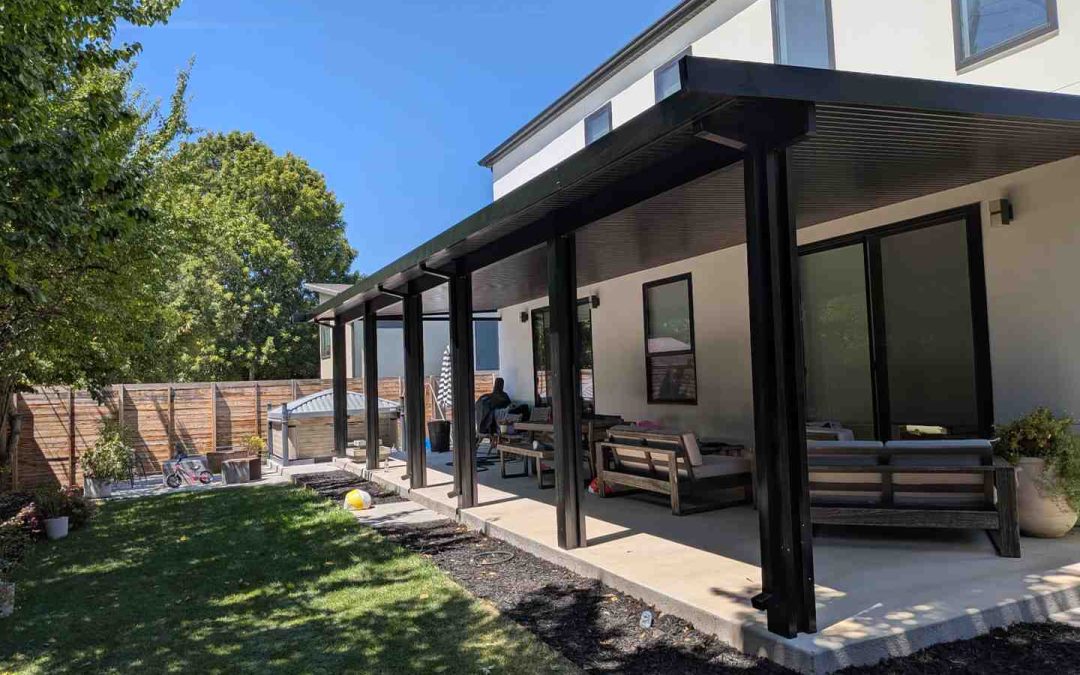
Why Choosing the Right Patio Cover Style Matters for Utah Homeowners
Patio covers transform your outdoor space into a comfortable, year-round living area that protects against Utah’s harsh weather while adding significant value to your home. Whether you’re exploring solid aluminum structures, lattice designs, modern freestanding options, or other styles, understanding the key differences helps you select the perfect solution for your needs.
Key patio cover types to consider:
- Solid Aluminum Covers – Durable, maintenance-free protection with embossed wood-like textures
- Lattice Patio Covers – Partial shade with open-air feel, ideal for filtered sunlight
- Modern Freestanding Structures – Independent pavilions that create distinct outdoor zones
- Attached Patio Covers – Seamless extensions from your home for added living space
- Custom Configurations – Custom dimensions, colors, and features to match your home
Each style offers unique benefits in terms of weather protection, aesthetics, maintenance requirements, and cost. Solid aluminum structures provide complete coverage from rain and snow, while lattice designs allow airflow and natural light. Modern freestanding options create standalone entertainment areas, and attached covers extend your home’s footprint.
Since 1976, Awnings Unlimited has helped Northern Utah homeowners select and install the perfect patio cover style for their outdoor living goals, offering durable Alumawood structures built to withstand harsh winters while providing comfort all summer long. Our expert team guides you through material options, structural designs, and custom features to create your ideal outdoor space.
Understanding Insulated Patio Covers and Their Construction
When we talk about the “gold standard” of outdoor protection, insulated patio covers are often at the top of the list. But what exactly makes them different from a standard piece of aluminum or wood? The secret lies in their “sandwich” construction.
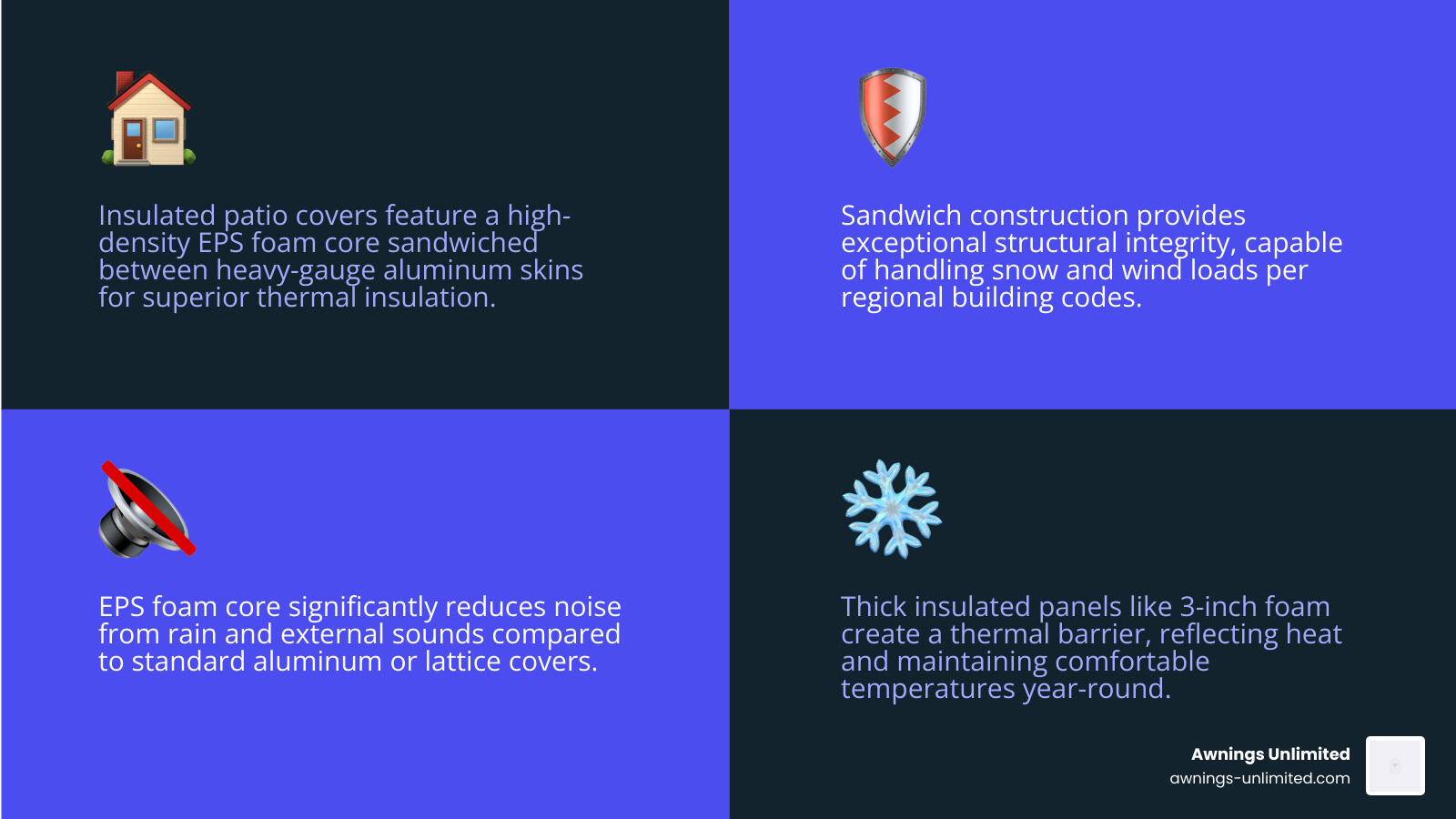
An insulated roof panel is a technological marvel designed to act as a thermal barrier. It consists of a high-density expanded polystyrene (EPS) foam core. This core is then securely bonded between two layers of heavy-gauge, textured aluminum skins. This lamination process creates a single, incredibly strong panel that provides both structural integrity and superior insulation.
One of the most impressive features of these systems is the Snap-Lock technology. These panels are designed to interlock tightly, creating an enduring seal that eliminates leaks and the need for messy H-bar connectors. For homeowners in the Wasatch Front, this means a roof that doesn’t just look good but performs like a part of the home’s original construction.
Materials Used in Insulated Patio Covers
We believe in using materials that can go the distance. The aluminum used in these covers is typically a heavy-gauge alloy (like ASTM 3105 or 6063-T6), which provides the strength needed to span long distances without sagging. To ensure they stay beautiful through decades of Utah sun and Wyoming wind, the aluminum features a baked-on enamel finish. This finish is often enhanced with a clear coat (like Krystal Kote) to prevent chalking, peeling, or corrosion.
For those who love the look of natural materials but hate the weekend chores, many of these panels come with a cedar embossed texture. This mimics the grain of real wood while offering the low-maintenance benefits of metal. According to sustainable materials guides, choosing durable, recyclable materials like aluminum is also a win for the environment, as it reduces the need for frequent replacements and chemical stains.
Engineering for Snow and Wind Loads
In places like Park City, Heber City, or Logan, a patio cover isn’t just about shade—it’s about survival against the snow. Insulated patio covers are engineered specifically for high weight capacities.
Panel thickness is the primary factor here. Standard thicknesses include:
- 3-inch panels: Great for standard spans and moderate snow loads.
- 4.5-inch panels: Provide extra strength for longer projections.
- 6-inch panels: The heavy-hitters. These can support significant weight, with some designs capable of handling up to 80-97 lbs. per square foot depending on the span.
For Utah Patio Covers, we ensure every installation meets or exceeds regional building codes. These structures aren’t just “propped up”; they are engineered to withstand wind loads of up to 120 mph (and even higher in specialized hurricane-rated configurations), ensuring your investment stays rooted even when the canyon winds start howling.

Comparing Insulated Patio Covers to Other Structural Styles
Choosing a patio cover is a bit like choosing a car—you need to match the features to your lifestyle. We often help our clients steer the choices between insulated panels, lattice, and solid non-insulated aluminum.
| Feature | Insulated Patio Covers | Lattice (Pergola) Style | Solid Aluminum (Non-Insulated) |
|---|---|---|---|
| Shade Level | 100% Solid Shade | 40% – 60% Partial Shade | 100% Solid Shade |
| Weather Protection | Full (Rain, Snow, Heat) | Minimal (Sun only) | Full (Rain, Snow) |
| Thermal Barrier | Yes (Blocks heat/cold) | No | No (Can radiate heat) |
| Noise Reduction | High (Dampens rain) | N/A | Low (Rain can be loud) |
| Maintenance | Very Low | Very Low | Very Low |
| Enclosure Ready | Yes (Can add walls later) | No | Limited |
As noted in our Patio Covers 101 – Materials, Styles, and Maintenance Tips, the aesthetic appeal of each varies. Lattice offers a classic, romantic look, while insulated covers provide a clean, finished ceiling that looks like an interior room.
Modern and Freestanding Design Options
While many people opt for an attached structure that extends directly from the house, freestanding pavilions are becoming increasingly popular in Utah backyards. These independent structures allow you to create a “destination” in your yard—perhaps a poolside lounge in Draper or a quiet retreat in the corner of a large lot in Spanish Fork.
Our The Ultimate Guide to Custom Patio Covers highlights how architectural integration is key. Modern designs often feature sleek lines, square posts, and hidden gutter systems. Whether attached or freestanding, these layouts are incredibly versatile, allowing for “L-shaped” wraps around your home or multi-zone covers that include both a solid insulated section for dining and a lattice section for your garden.
Benefits of Choosing Insulated Patio Covers
Why go with the insulated route? It comes down to comfort.
- Noise Reduction: If you’ve ever sat under a tin roof during a rainstorm, you know it can be deafening. The 3-inch or 4-inch foam core in an insulated cover acts as a muffler, dampening the sound of rain and hail.
- Energy Efficiency: By blocking the sun’s rays before they ever hit your windows or sliding glass doors, you can Save Money on Energy Bills with a New Utah Awning. This creates a thermal barrier that keeps your patio—and your home—significantly cooler in the summer.
- Year-Round Comfort: In the winter, that same insulation helps trap a bit more heat if you’re using outdoor heaters, making the space usable even when there’s a chill in the air.
Customization and Upgrades for Your Outdoor Space
A patio cover shouldn’t just be a “lid” for your deck; it should be a fully functional living room. Because insulated patio covers are made of solid panels, they offer customization options that other styles simply can’t match.
One of the most popular upgrades is the integration of electrical channels. These are internal “raceways” built into the foam core that allow us to run wiring safely and invisibly. This means you can have:
- Recessed LED Lighting: For a clean, modern look.
- Ceiling Fans: To keep the breeze moving on those still July afternoons in St. George or Orem.
- Smart Home Controls: Imagine telling your smart speaker to dim the patio lights as the sun sets.
We also focus heavily on the “unseen” features, like high-capacity gutter systems and leaf guards. These ensure that even during a heavy downpour, water is channeled away from your foundation without overshooting the gutter. For the tech-forward homeowner, some premium systems even allow for solar panel compatibility, turning your shade structure into a power plant.
Enhancing Home Value and Energy Efficiency
We are often asked if a patio cover is a good investment. The answer is a resounding yes. According to our research on How a Patio Cover in Salt Lake County Adds Value to Your Home, these structures add “usable square footage.” While it might not count as “finished” indoor space on an appraisal, it significantly increases the “buyer attraction” and curb appeal.
The thermal protection provided by insulated patio covers is a major selling point. By reducing the heat gain on your home’s exterior walls, you’re not just making the backyard better; you’re lowering the strain on your AC unit. In the long run, the ROI comes from both the increased property value and the monthly energy savings.
Frequently Asked Questions about Patio Covers
Can you walk on insulated patio covers for maintenance?
Yes! One of the standout benefits of the laminated panel system is its strength. Unlike thin aluminum pans or lattice, high-quality insulated panels are designed to support the weight of a person. This makes it much easier to clean your second-story windows, clear off debris, or maintain your home’s siding. However, we always recommend using caution and checking with the manufacturer’s specific weight limits first.
Do these structures require building permits and footings?
In almost all jurisdictions across Utah and Wyoming—from Salt Lake City to Cheyenne—structural patio covers require a building permit. Because these are permanent structures that must withstand snow and wind loads, they also require proper footings. This usually involves digging below the frost line and pouring concrete piers to ensure the structure doesn’t “heave” or shift during the winter-to-spring thaw. At Awnings Unlimited, we handle the professional installation and can help guide you through the permitting process.
How do I maintain an aluminum patio cover?
Maintenance is delightfully simple. Unlike wood, which requires sanding, staining, and sealing every few years to prevent rot, aluminum just needs an occasional wash. A quick spray with a garden hose to remove dust and cobwebs is usually all it takes. The baked-on finish is designed to resist fading and scratching, keeping your cover looking new for decades.
Conclusion
At Awnings Unlimited, we’ve seen how the right shade solution can change a family’s lifestyle. Whether you are looking for the heavy-duty protection of insulated patio covers, the sleek look of a modern pavilion, or a custom-designed Alumawood structure, our goal is to provide a space that lasts.
Since 1976, we have remained a family-owned business dedicated to the Wasatch Front and beyond. We don’t just sell covers; we build durable, custom-engineered retreats that allow you to Utah Patio Covers – Enjoy Your Outdoor Space Year-Round.
If you’re ready to stop retreating indoors when the sun gets too hot or the snow starts to fall, let’s design something together. From Bountiful to Spanish Fork and everywhere in between, we’re here to help you take back your backyard.